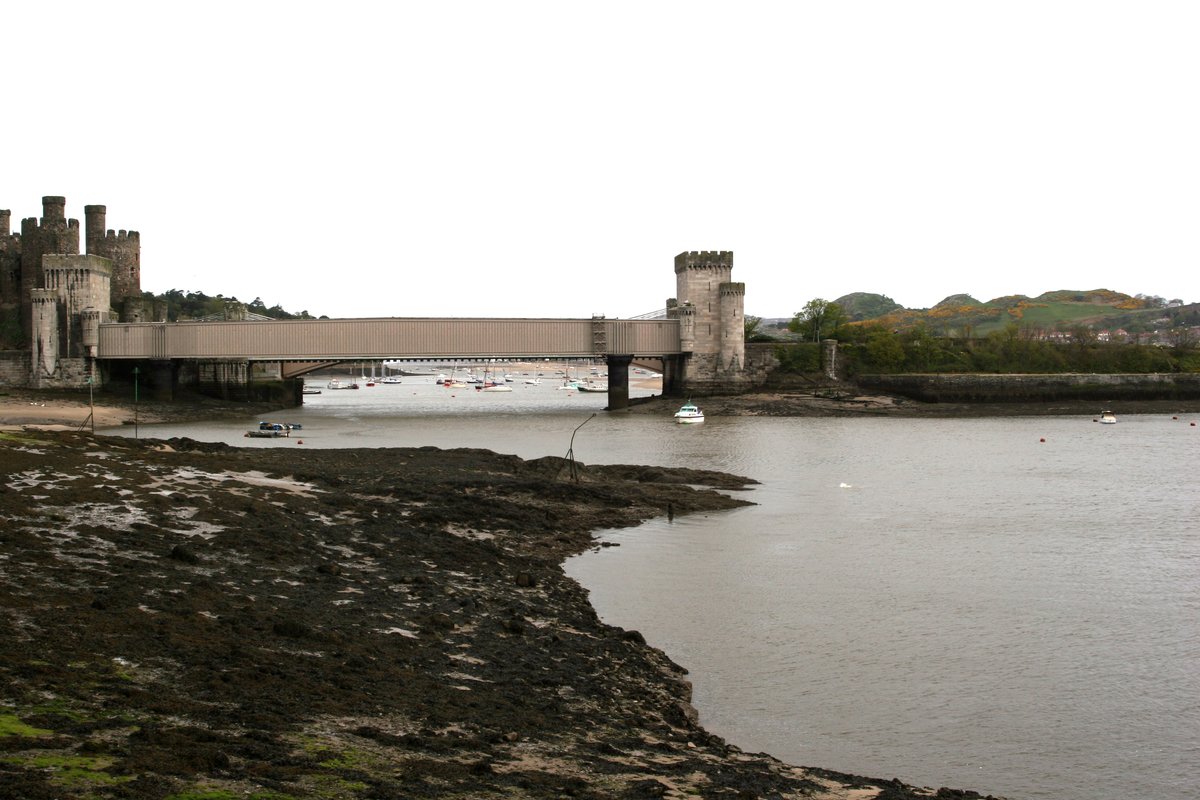
Conwy Railway Bridge, located in Conwy, Wales, serves as a testament to 19th-century engineering innovation. What was originally envisioned as a suspension bridge is now the last remaining example of the wrought-iron box-girder structure pioneered by Robert Stephenson, William Fairbairn, and Eaton Hodgkinson. This bridge stands out due to three distinct features:
1. Design Evolution: Initially facing design challenges, the Conwy Railway Bridge underwent a transformation, swapping its suspension design for a tubular box-girder structure, a novel approach unique at the time.
2. Modern Technology Integration: This innovative design enabled the bridge to support its own weight, providing a self-supporting span over the River Conwy. Essential to its construction were techniques borrowed from shipbuilding, particularly the use of steam-powered hydraulic engines.
3. Distinctive Aesthetics: The bridge’s design, orchestrated by architect Francis Thompson, includes barbicans, turrets, arrow slits, and bartizans, mirroring the nearby Conwy Castle. Its unique appearance has captivated visitors to this day.
Sources: Wikipedia, OpenStreetMap, Wikidata, Wikimedia Commons
Written by Nicolo Ciampini
Discuss this with the author and others
No comments yet. Be the first to start the conversation.