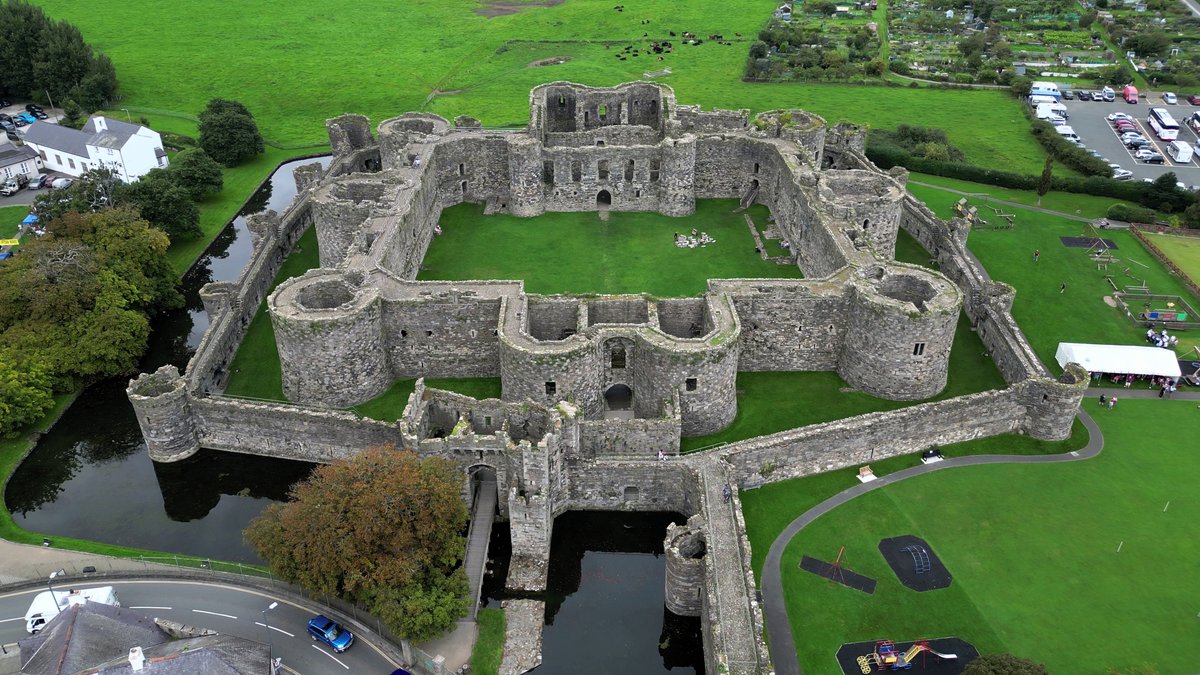

How does a king build Britain's most perfect symmetrical fortress and still leave it incomplete? Edward I planned Beaumaris Castle in 1284, but work only truly started in 1295 after a bloody rebellion. He hired James of St George to oversee the work, and for a while, it was a massive operation involving 1,800 workmen and 450 stonemasons.
It was part of Edward's campaign to conquer north Wales, but funding was soon diverted to his invasion of Scotland. Work stopped until it recommenced after an invasion scare in 1306. By 1330, a total of £15,000 had been spent, a huge sum for the period, but the castle remained incomplete.
The site survived the civil war and various sieges, only falling into ruin by the 1660s. Today, it is a UNESCO World Heritage Site where you can still walk the inner wards and see the D-shaped gatehouses. Historian Arnold Taylor described the fortification as Britain's most perfect example of symmetrical concentric planning, where the south gate could be reached by ship to allow the castle to be directly supplied by sea.
Sources: Wikipedia, OpenStreetMap, Wikidata, Wikimedia Commons

Written by Nicolo Ciampini
Discuss this with the author and others
No comments yet. Be the first to start the conversation.