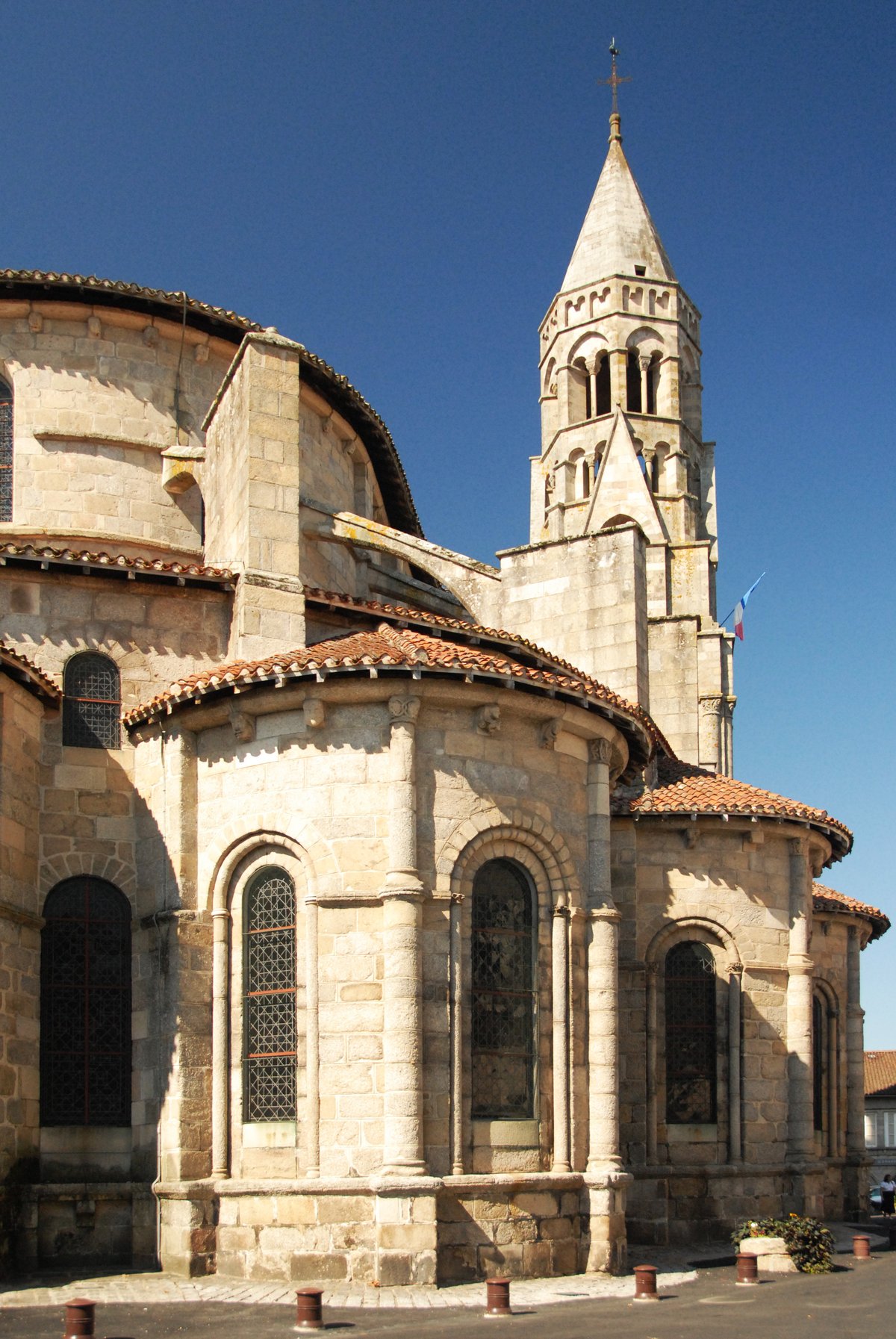

Saint-Léonard-de-Noblat, a small town in central France, is home to a Romanesque architectural marvel known as the Collégiale de Saint-Léonard. Classified as a historic monument, this church is a key part of the pilgrimage route to Santiago de Compostela in Spain. However, the fascinating story of this church goes beyond its architectural significance. It is the tale of a saint who, legend has it, dedicated his life to freeing prisoners and earning his place as the patron saint of prisoners.
Let's delve into the history of this remarkable church.<br><br>According to hagiography, Saint Léonard petitioned French king Clovis I to release worthy prisoners from captivity whenever he desired. Throughout his life, Léonard is said to have liberated a large number of prisoners and became their patron saint.<br><br>The church itself is a Romanesque architectural marvel, with several noteworthy features. The transept and octagonal tower lantern date back to the 11th century, while the choir, replacing an original from the 12th century, includes an ambulatory following the principle of pilgrimage churches and eight radial chapels.
The bell tower, a fine example of the Limousin style, rests on an open porch on two sides and is adorned with chapitaux. Inside the church, there is a polychrome statue of Saint Léonard, believed to have been made around 1520, as well as relics of the saint himself. The tomb of Saint Léonard, located in the southern transept, is topped with the chains he was once shackled with. According to tradition, women wishing to marry and have children touch the lock.<br><br>The Collégiale de Saint-Léonard is just one of many historic sites in the Haute-Vienne department, and its unique history makes it a must-visit for anyone interested in architecture, religious history, and pilgrimages.
Sources: Wikipedia, OpenStreetMap, Wikidata, Wikimedia Commons
Written by Nicolo Ciampini
Discuss this with the author and others
No comments yet. Be the first to start the conversation.