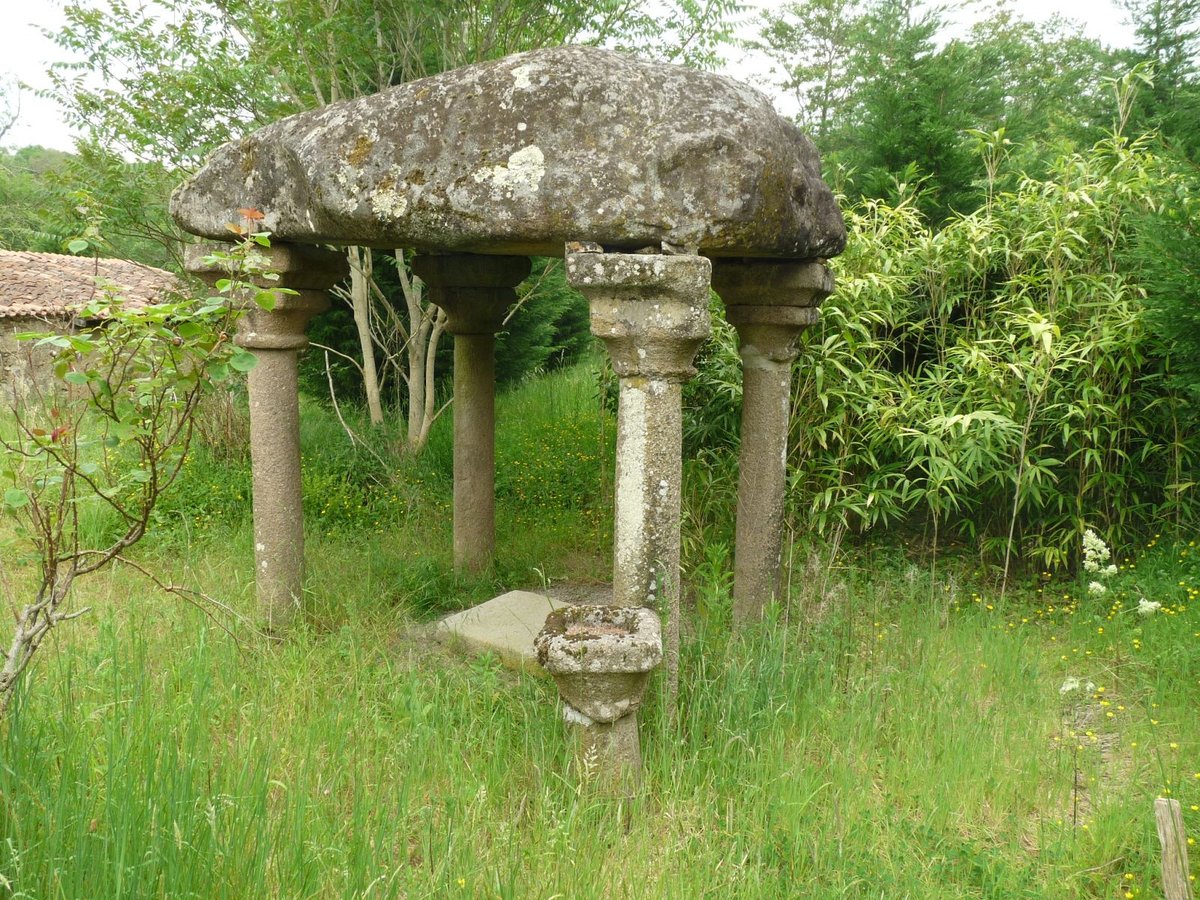

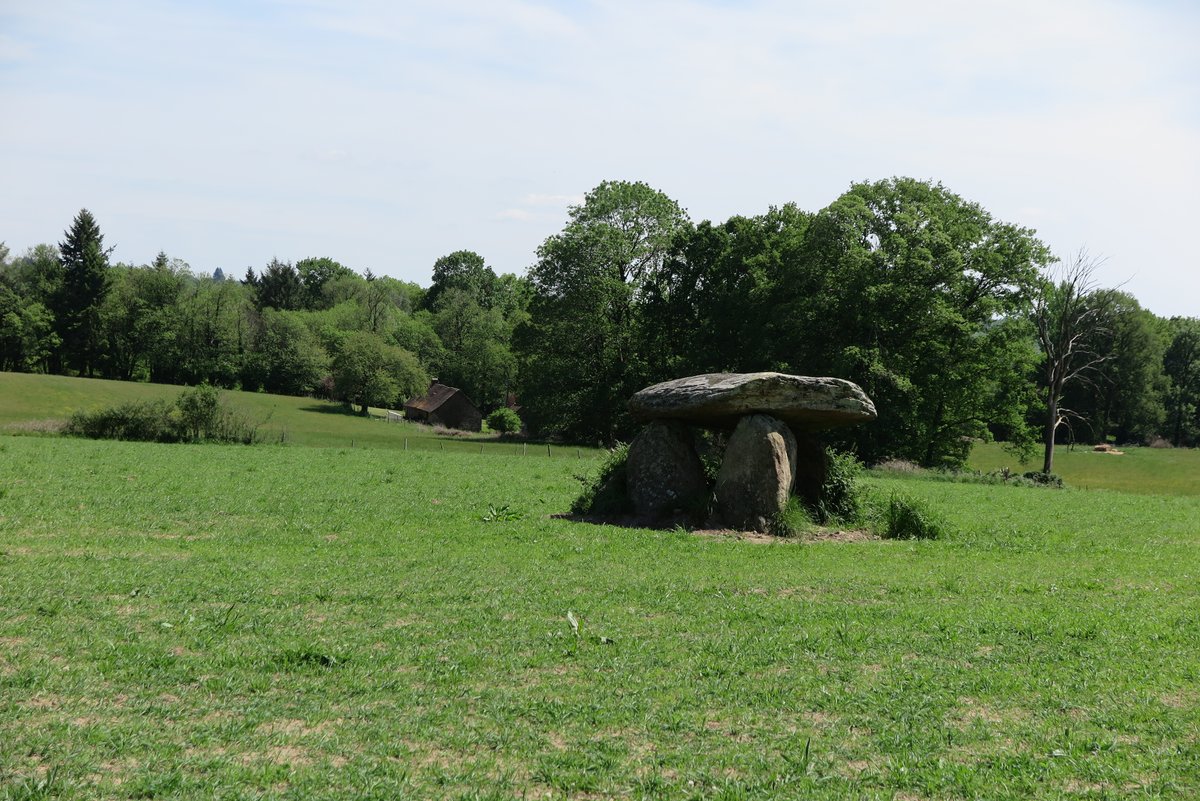
Nestled in the commune of Lessac, Charente, France, the Dolmen de Sainte-Madeleine, also known as Pierre-Madeleine or Tombeau de la Dame, carries a peculiar past. It is described as an ancient megalith repurposed to build a chapel, a construction that dates to the 11th century. Later, in the 19th century, the chapel was transformed into a cabaret. It has been classified as a historic monument since 1900.
The structure is situated on an island in the middle of the Vienne river, a few kilometers north of Confolens. The triangular stone slab is estimated to weigh 18 tons. It rests on four colonnettes, with the front ones spaced 2.40 meters apart and the back ones 2.15 meters apart. These colonnettes measure 2.70 meters in height and consist of a square base, a cylindrical shaft, a capital, and a square pedestal. A stone block visible at the rear of the monument is believed to be the remains of an altar. While some 19th-century researchers suggested the colonnettes were carved from ancient orthostates, archaeological excavations in 1878 found only a medieval burial containing human bones and glazed pottery. No archaeological traces confirm a megalithic construction existed on the site before the chapel was built.
Local folklore provides a colorful backdrop to the site. According to tradition, Sainte-Madeleine carried the slab on her head and the colonnettes in her apron pockets. She is said to have jumped across the Vienne river to reach the island, leaving a footprint on a rock on the left bank known as Pas de Sainte-Madeleine. Her sheep are also said to have left their prints in the same area.
Sources: Wikipedia, OpenStreetMap, Wikidata, Wikimedia Commons
Written by Nicolo Ciampini
Discuss this with the author and others
No comments yet. Be the first to start the conversation.