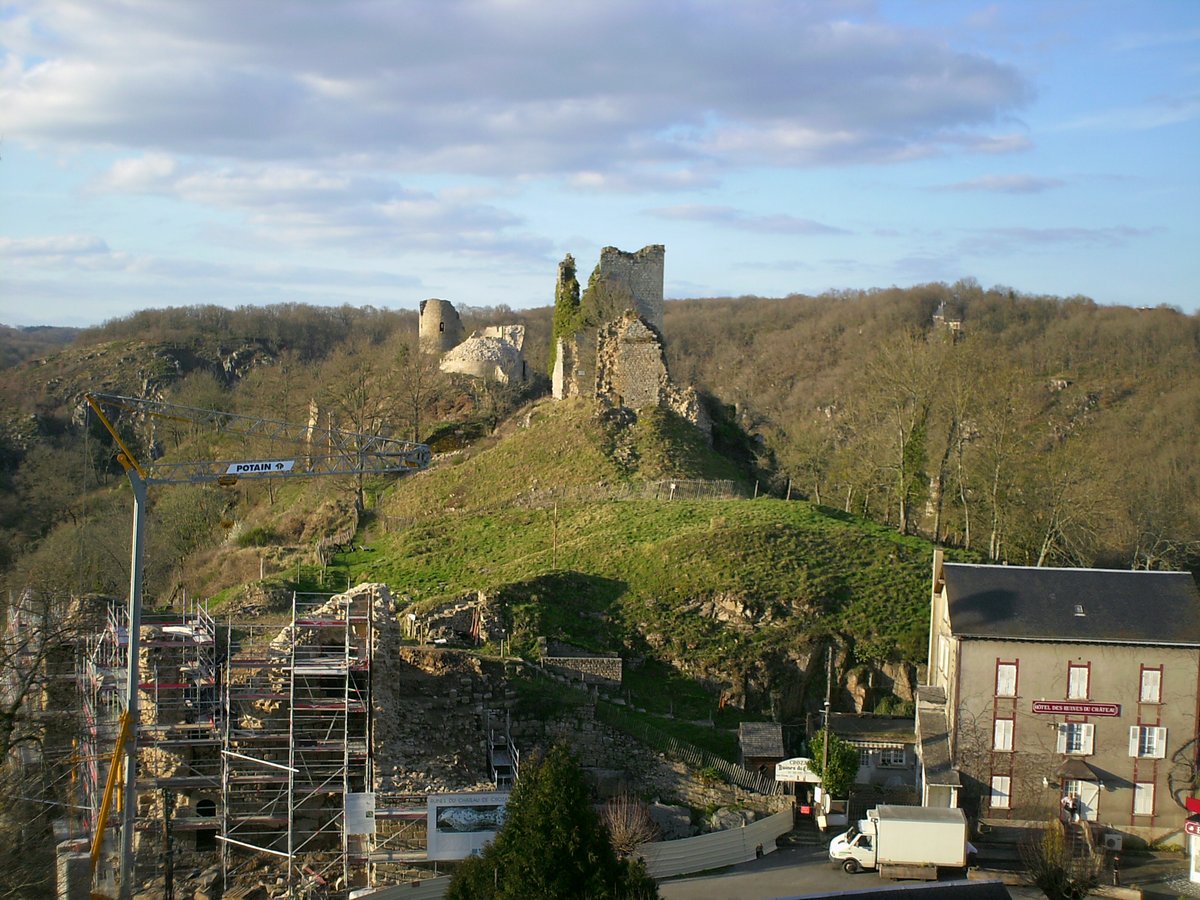

Inhabited during the protohistoric era and possibly fortified from 997 to 1018, the rocky outcrop of Château de Crozant is first mentioned in a charter from the years 1200-1210. One of the surviving towers from the first half of the 13th century bears the name Isabelle d'Angoulême. The counts of Marche had the fortifications built in the 13th and mid-15th centuries; in 1347, the count of Marche asked his captain-castellan to equip the site with men and reserves to ensure its defense against the English, whom they feared were attacking.
The ruins resisted attacks during the chevauchée of the Prince Noir in 1356, during which the Anglo-Gascons passed through and sacked the village. According to Joullietton, the castle may have been taken by Catholic extremists in 1588, causing the ruin of one tower. From 1606, the castle appeared to serve as a stone quarry for nearby inhabitants. A 1640 record noted the feudal estate was in a state of neglect. The ruins were acquired by Gabriel Foucault de Saint-Germain-Beaupré in 1646 and later by the commune.
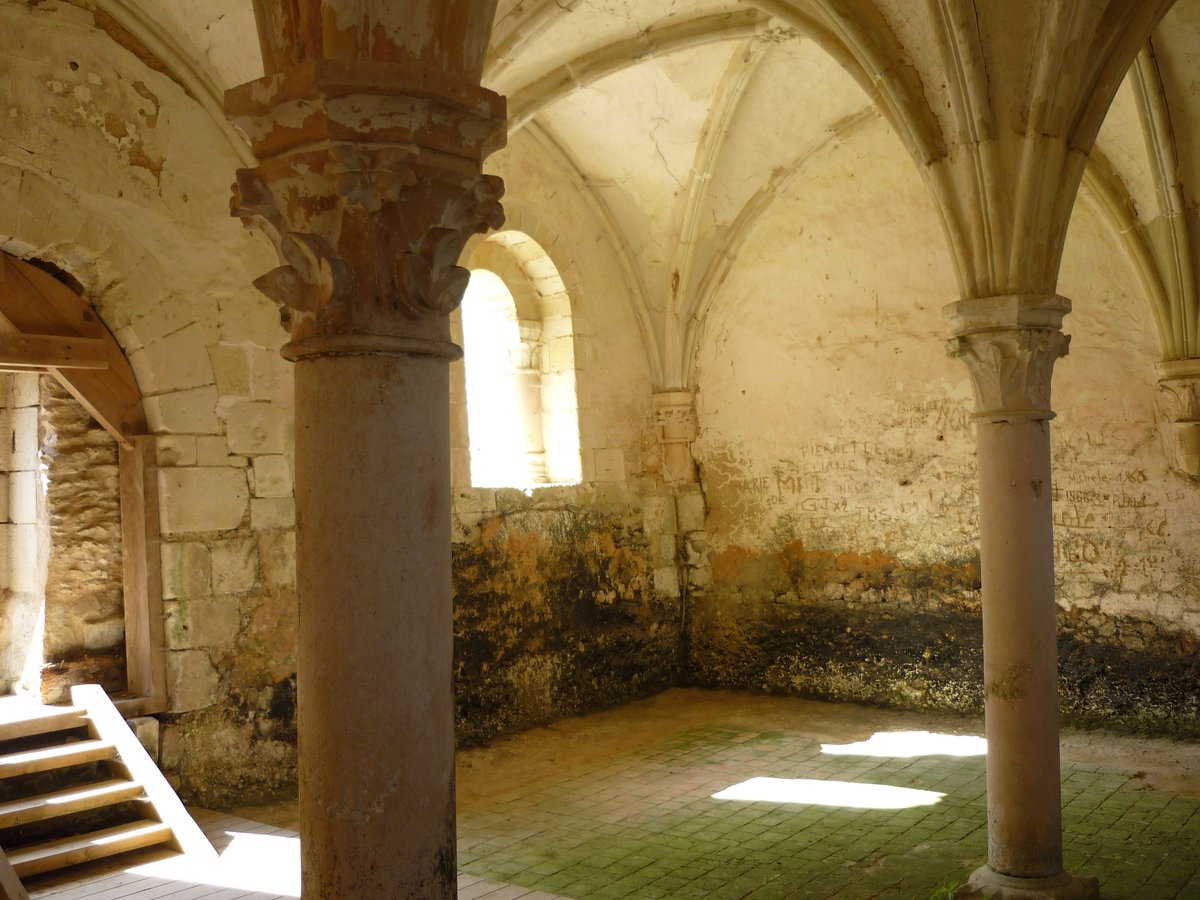
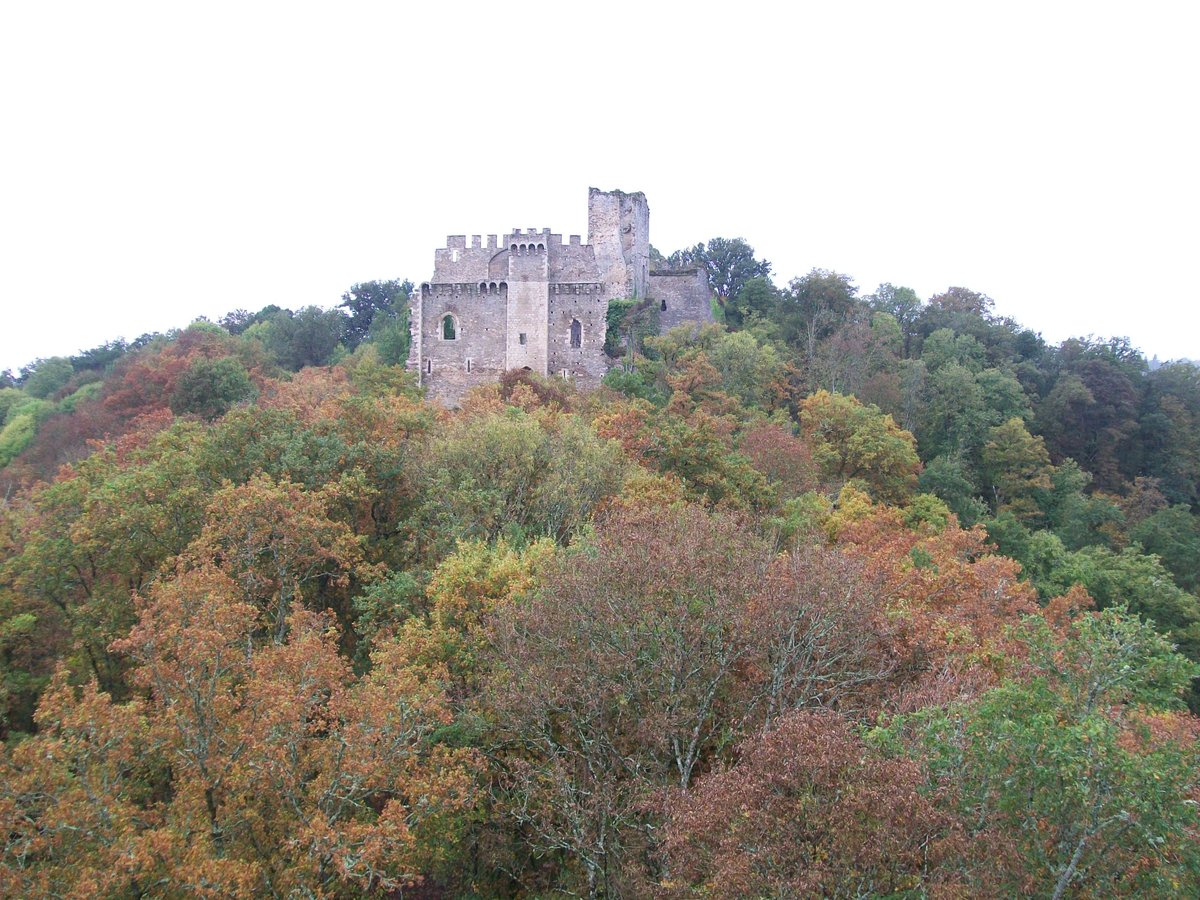
Today, the site undergoes a rehabilitation program involving the Department of Creuse, the Community of Communes of the Pays Dunois, and the commune of Crozant. The ruins cover much of the outcrop, featuring several successive enclosures, a 15th-century square donjon, and two 13th-century towers, along with a chapel and a tour de l'eau which allowed for fetching water from the river while staying under cover.
Sources: Wikipedia, OpenStreetMap, Wikidata, Wikimedia Commons
Written by Nicolo Ciampini
Discuss this with the author and others
No comments yet. Be the first to start the conversation.