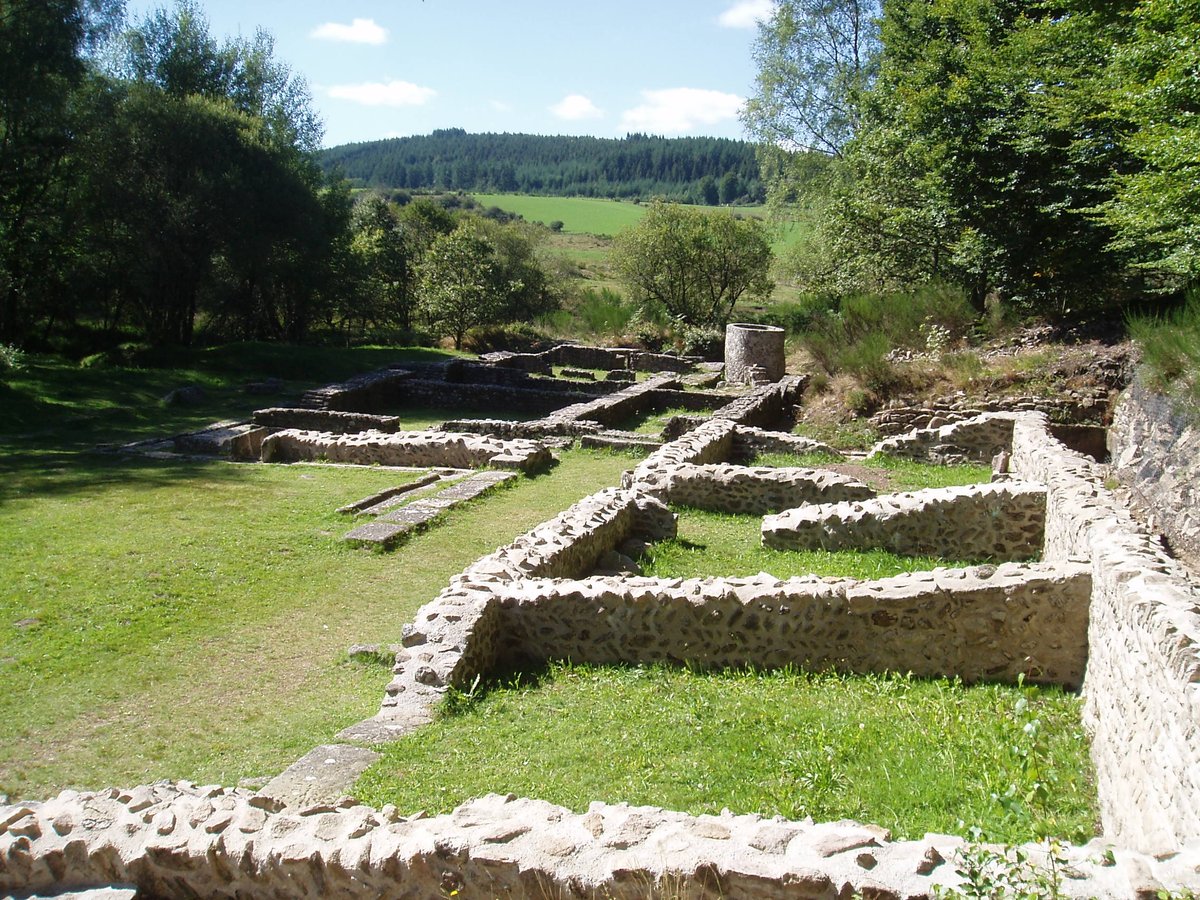

The name Cars stems from the Latin term quadratus, which refers to a large squared stone block. This is evidenced by an enormous eight-ton granite monolith that served as a water tank. This tank was part of a sumptuous villa featuring running water, heating, and decoration including mosaics and painted plaster. Lead pipes transported water from the tank to the living quarters.
By the third century, the site was visited by barbarians who looted the metal clamps holding the masonry together. These metal pieces were sold to be melted down and transformed into weapons, leaving the large granite blocks in their current disconnected state. Among the surviving stones are fragments of cornices, plinths, and molded elements.
Nearby, a sanctuary contains two mausoleums that once housed the elite. One tomb held a blue glass urn; the difficult manufacturing technique of the time marked the owner's wealth and knowledge of imperial artisans. The larger mausoleum was collective, containing the ashes of a familia, including family members and slaves. It once held a granite chest depicting a wild boar hunt, a pastime reserved for the elite.
Sources: Wikipedia, OpenStreetMap, Wikidata, Wikimedia Commons
Written by Nicolo Ciampini
Discuss this with the author and others
No comments yet. Be the first to start the conversation.