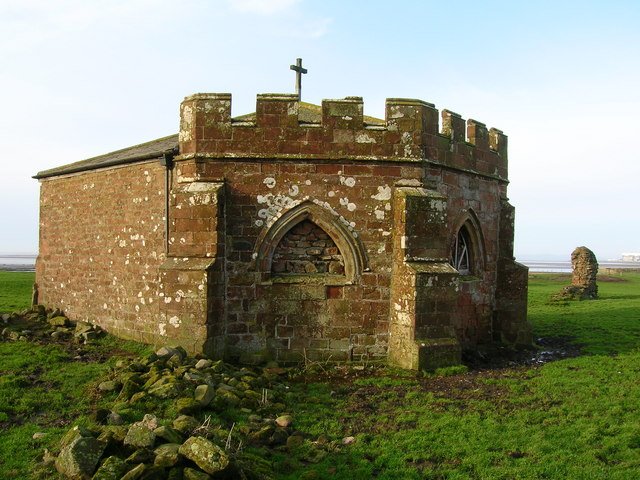

Founded before 1184 as the Hospital of St Mary on the marsh belonging to Leicester Abbey, the site was refounded by the Cambro-Norman magnate Theobald Walter, 1st Baron Butler, as a Premonstratensian priory in 1190. It was subsequently elevated to an abbey in 1192 and was also known as St. Mary's of the Marsh. The abbey was originally located in marsh land which was later drained.
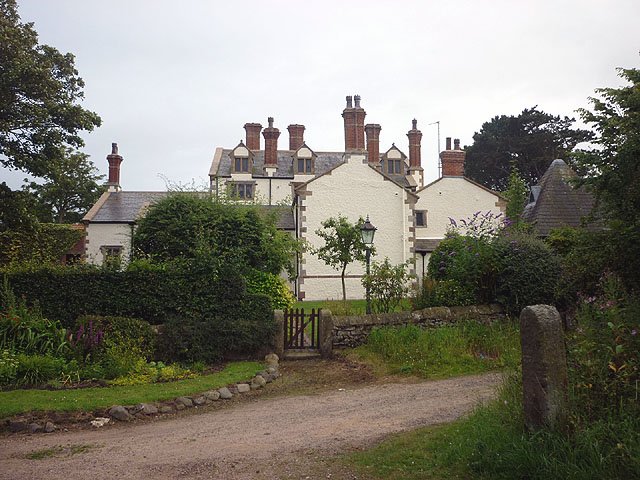
The abbey was the third richest in Lancashire when it was dissolved in 1539 and acquired by a John Kechyn in 1544. The site is now adjacent to a farmhouse and the only significant relic is the still intact, vaulted Cockersand Abbey chapter house, which was built in 1230. This building was used as a family mausoleum by the Daltons of Thurnham Hall during the 18th and 19th centuries.
The chapter house is a Grade I listed building and scheduled ancient monument. It is open to the public on special occasions such as Heritage Open Days. In 1718, two Roman statuettes were discovered on Cockersand Moss near the abbey site, possibly indicating the presence of a Romano-British shrine nearby.
Sources: Wikipedia, OpenStreetMap, Wikidata, Wikimedia Commons
Written by Nicolo Ciampini
Discuss this with the author and others
No comments yet. Be the first to start the conversation.