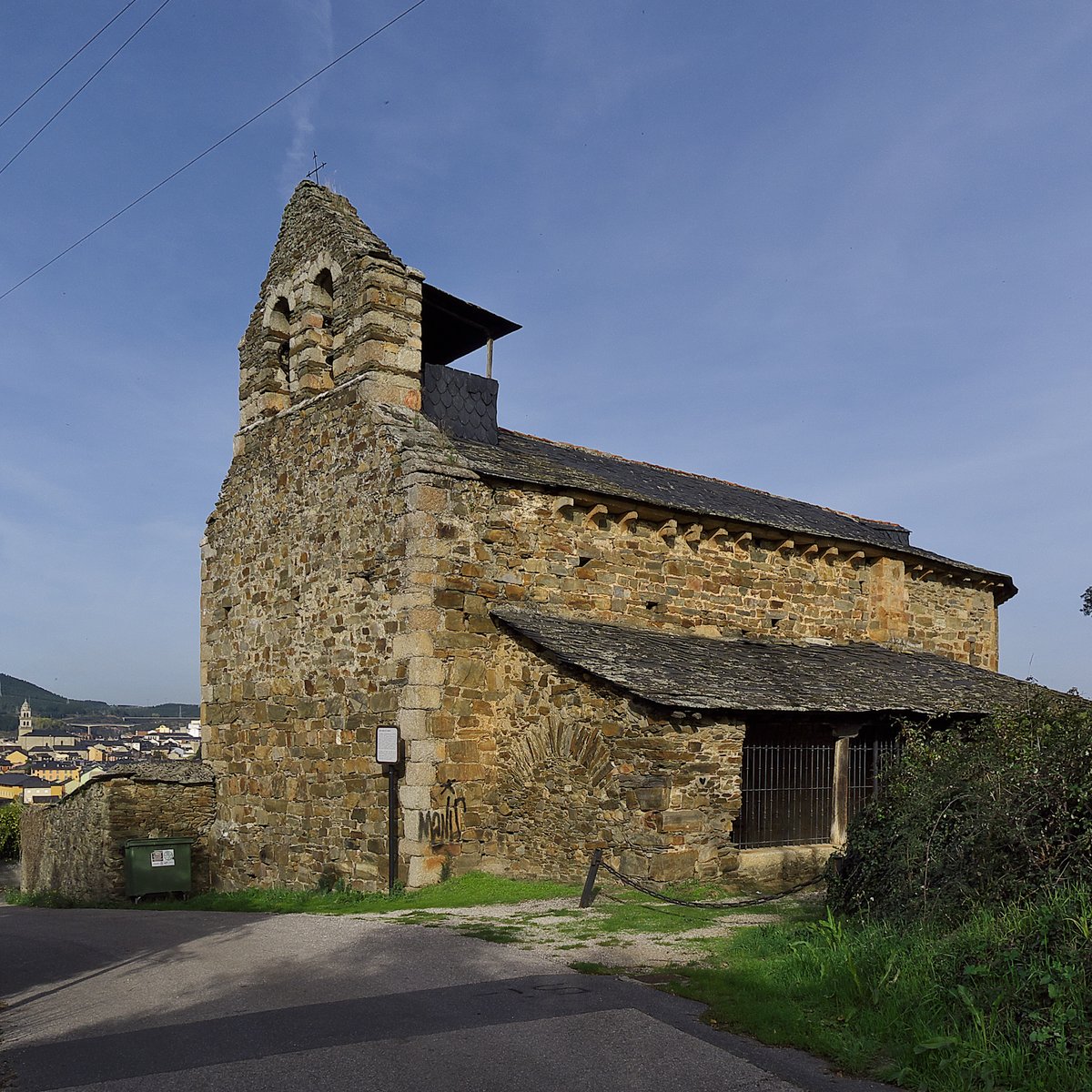

The Church of Santa María de Vizbayo is a Roman Catholic temple located in Otero, a tiny town within the municipality of Ponferrada in Spain's El Bierzo region. Built in the 11th century, the church is a unique blend of Romanesque and Moorish architectural styles. The church is recognized as a National Monument of Artistic and Historical interest by the Spanish government, thanks to its historical significance. The town Otero, meaning 'hill or elevated place', originates from the Latin language, while Vizbayo is believed to come from the Latin composition of 'bis' (two) and 'vadium' (valley or crossing), evolving to 'vayo'.
The church is dedicated to its patron saint, Santa María, and is one of the few remaining examples of the Romanesque architectural style in the region. The structure of the church is a single-nave building with a semi-circular apse joined to the nave by a rectangular transept. The church was completed towards the end of the 17th century, with a bell tower added at that time. In the 18th century, the chapel, porch, chancel, and choir were constructed.
One captivating aspect of the church is the statue of Santa María de Vizbayo, created by local priest D. Dictino Alonso Luengo in 1836. Measuring 70 centimeters tall, the statue had moving hands. However, in 2007, several valuable items and images, including the statues of St. Benito and 'Niño de la Bola', were stolen from the church, resulting in significant cultural and economic loss.
The origin of the church's initial placement on Monte Pajariel, a hill now encircling the church, remains a mystery.
Sources: Wikipedia, OpenStreetMap, Wikidata, Wikimedia Commons
Written by Nicolo Ciampini
Discuss this with the author and others
No comments yet. Be the first to start the conversation.