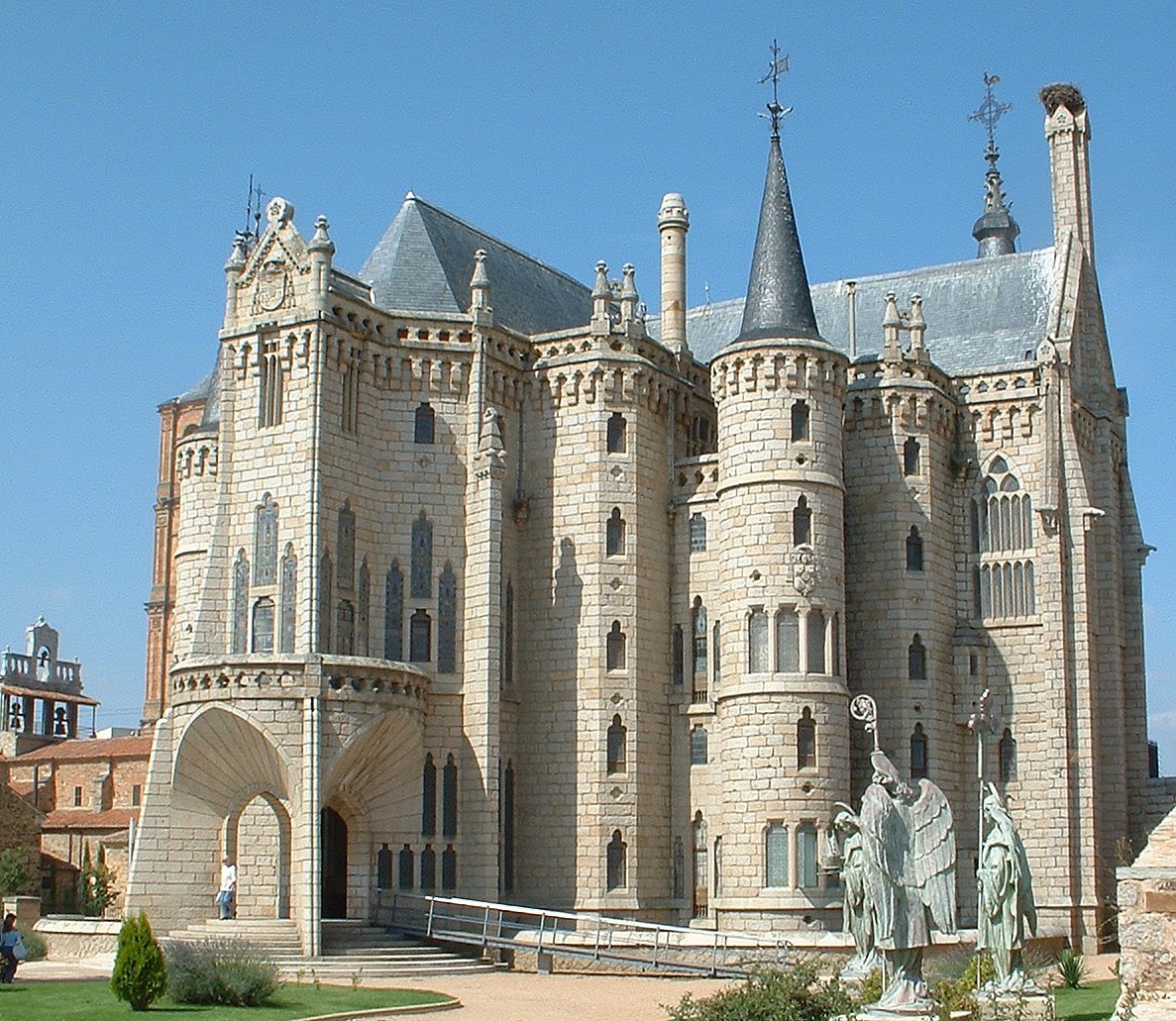

The Episcopal Palace of Astorga is a building by Catalan architect Antoni Gaudí. Built between 1889 and 1913, it is one of only three buildings by Gaudí outside Catalonia. The structure was designed in the Catalan Modernisme style and constructed using gray granite from El Bierzo.
When the original palace was destroyed by fire, Bishop Juan Bautista Grau y Vallespinos commissioned Gaudí to design a new building. Because Gaudí was still working at the Palau Güell in Barcelona, he planned the project using photographs sent by the bishop. The design was approved in February 1889, and the first stone was placed in June of the following year. The building features four cylindrical towers and a ditch, along with architectural elements like buttressed arches and integrated chimneys.
Construction faced a significant shift in 1893 after the death of Bishop Grau. Following disagreements with the council, Gaudí resigned and construction halted for several years. The palace was eventually completed between 1907 and 1915 by Ricardo Garcia Guereta. During the Spanish Civil War, the building served as the local headquarters of the Falange.
Today, the palace serves as a museum of religious art called Museo de los Caminos, which is dedicated to the Way of Santiago. While Gaudí had devised a five-meter tall angel to crown the façade, it was never mounted. The palace remains a notable example of neo-medieval architecture harmonizing with the nearby cathedral.
Sources: Wikipedia, OpenStreetMap, Wikidata, Wikimedia Commons
Written by Nik Frost
Discuss this with the author and others
No comments yet. Be the first to start the conversation.