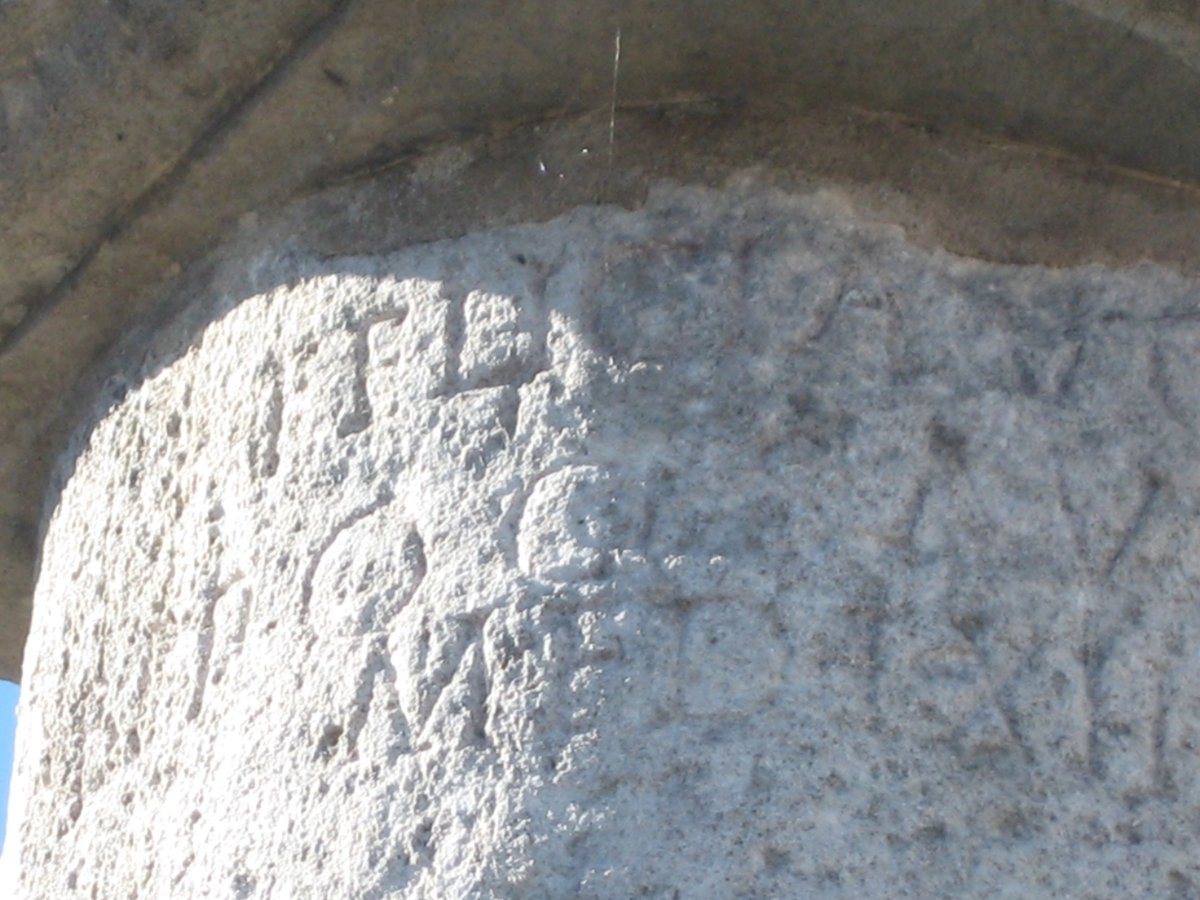

In the heart of the small French village of Bruère-Allichamps, there is a towering stone monument. Its cool, grey surface marks a centuries-long history, but the inscription on it is a puzzle. The stone, a Roman mile marker, is from the 3rd century AD. It is one of the rare examples found with three destinations marked, where it would originally have guided a traveller. But this stone also has a second life, as a sarcophagus from the High Middle Ages, a testament to the value given to ancient Roman artifacts as burial containers.
From a hub of Celtic activity to a Roman outpost to a medieval grave site, the stone has marked its time on a plot of land that was once the center of France. The stone was originally built in the 3rd century AD, during the time of the Roman Empire, at the peak of its control of what is now France. It was one of many such markers placed to help travellers navigate the dense forests.
In the 5th or 9th century, the stone was repurposed from its original use as a mile marker to a sarcophagus. This reuse is not uncommon; many Roman artifacts were considered valuable and used for burials. The practice continued for some time, but by the Middle Ages, it had waned.
François Pajonnet, a priest, discovered the stone during excavations in the 18th century. He moved it to its current location in the town square. The stone was already a valuable artifact, but its reuse as a sarcophagus added to its historical significance. Today, the stone stands as a reminder of the rich history of the area. It is protected as a historical monument, and visitors can marvel at its aging stone and the enigmatic inscription it bears.
Sources: Wikipedia, OpenStreetMap, Wikidata, Wikimedia Commons
Written by Nicolo Ciampini
Discuss this with the author and others
No comments yet. Be the first to start the conversation.