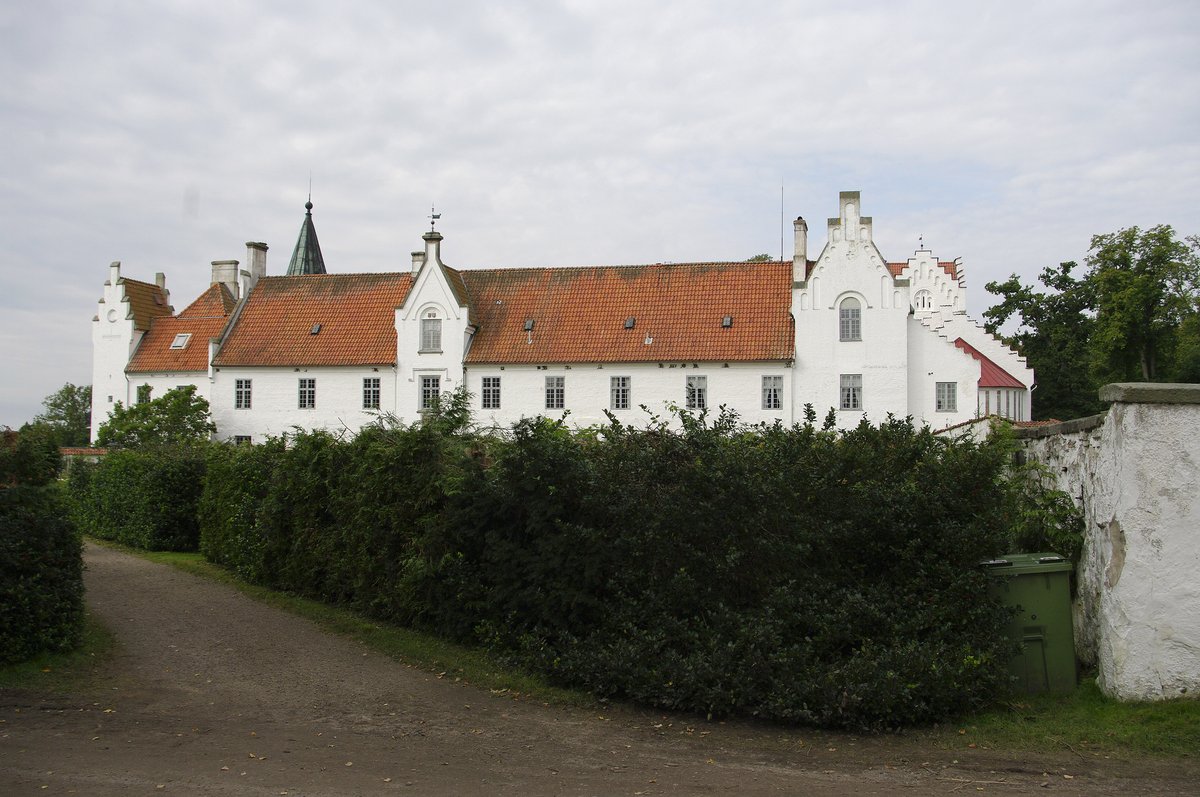

Bosjökloster, located on the shore of Lake Ringsjön in Höör Municipality, Skåne County, Sweden, holds a storied past. The castle, initially a nunnery, was founded by the Benedictine Order in 1080 and confirmed by Pope Lucius III in 1181. Bosjökloster changed hands through the centuries, telling a tale of intrigue, betrayal, and power-shifting.
Thale Ulfstand, a Scanian noble woman, became the temporary owner of the estate in 1560, with her initials and the year 1569 engraved on the large oak doors of the entrance.
The castle was later donated to Torbern Bille, the former archbishop of the Diocese of Lund, under the condition that he took care of the remaining nuns. However, the castle belonged to the Danish crown after the Danish Reformation in the 16th century.
In 1629, the castle was passed to the Beck family via marriage. Unfortunately, Jochum Beck, the owner, lost the family fortune, and the castle was sold to Corfitz Ulfeldt to repay his debts. Ulfeldt, best known for switching allegiances, was later convicted of treason by both a Danish and a Swedish court.
By the end of the 18th century, the castle was sequestered by the Swedish state and fell into disrepair. The castle was returned to the Beck family in 1735 following a lawsuit, and it remained with the family until it was sold to Count Philip Bonde in 1908, who still owns the property.
Composer Hilding Rosenberg was born in the gardener's residence just south of the church tower in the castle.
Sources: Wikipedia, OpenStreetMap, Wikidata, Wikimedia Commons
Written by Nik Frost
Discuss this with the author and others
No comments yet. Be the first to start the conversation.