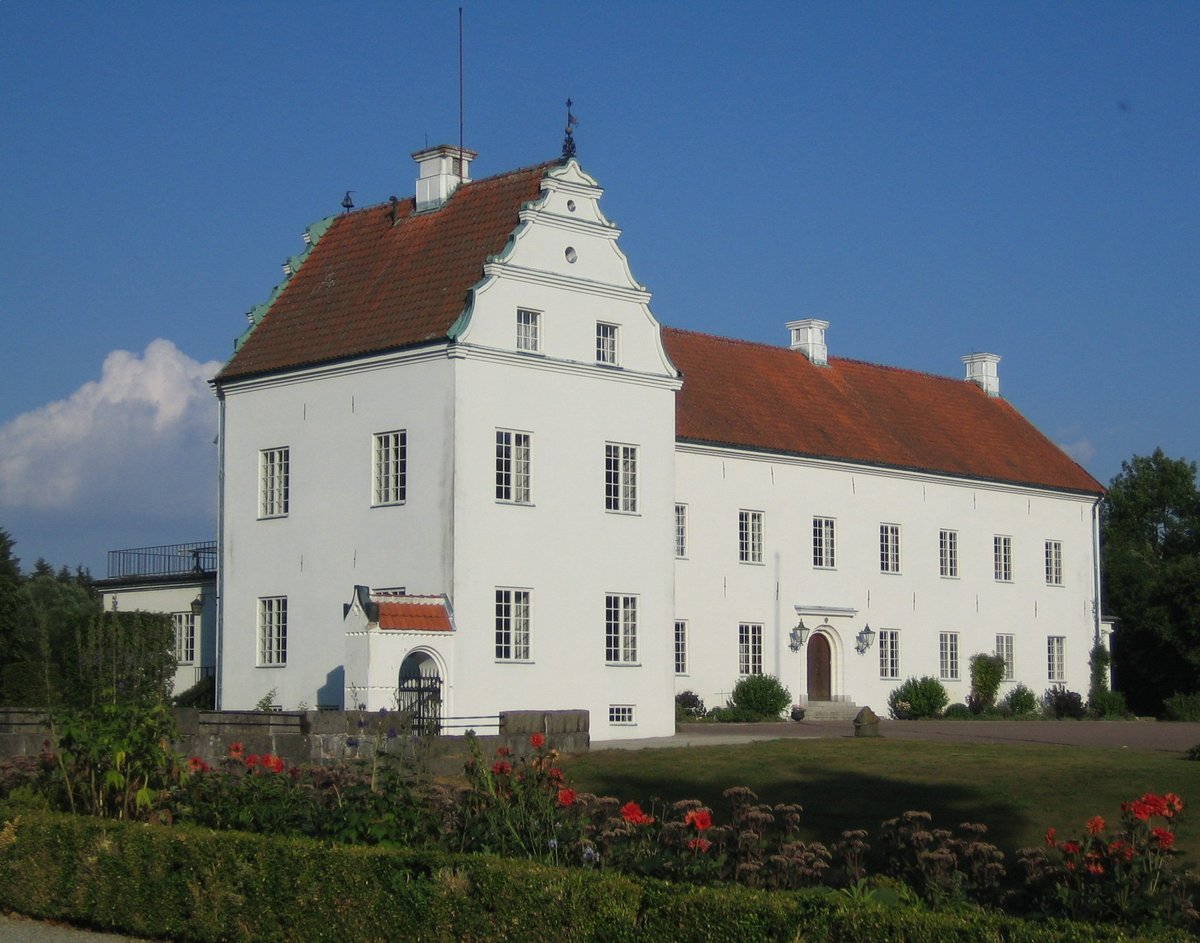

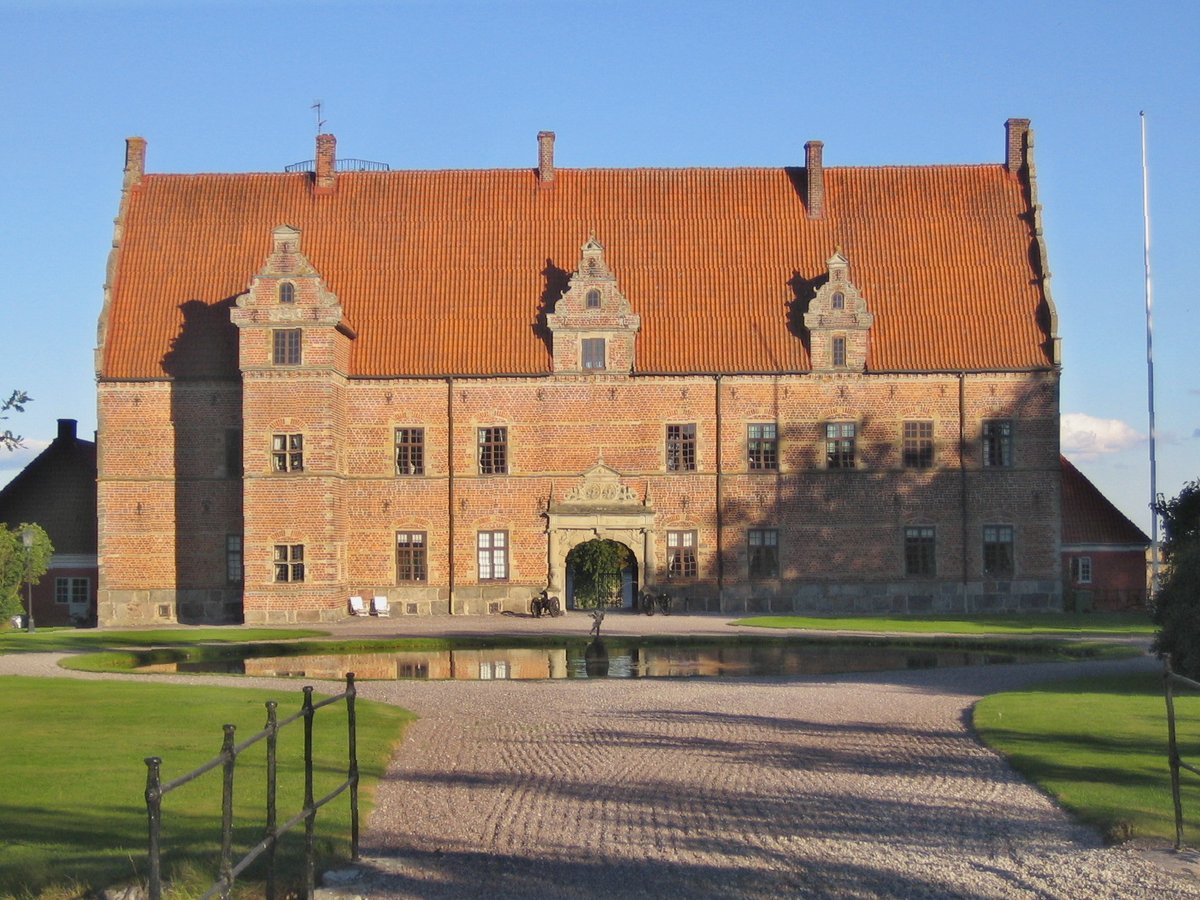
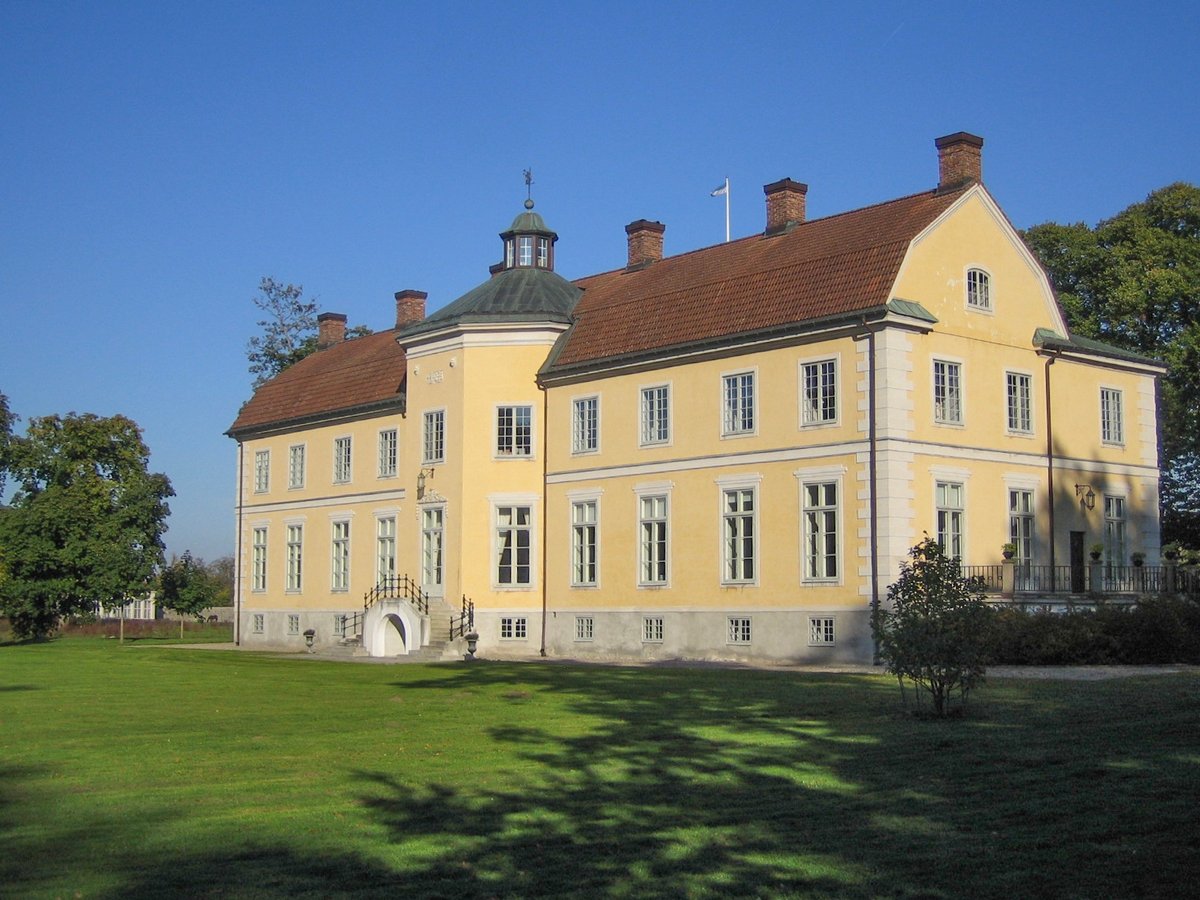
Ellinge Castle, situated in Eslöv Municipality, Scania, southern Sweden, dates from the 12th century. The history of the estate can be traced at least as far as the 11th century, with one of the first families known to have owned it being named Kvite. The estate then passed to the house of Galen in the early 13th century, when it was found to be a defensible manor adapted for agriculture and for housing many people. It next went to the Erlandsen family.
The castle is surrounded by a square moat. In 1735, Wilhelm Bennet began major repairs, tearing down the majority of the buildings in the courtyard except for the main building. The wings were demolished and the structure was reduced by one floor to a two-story house. By 1783, the estate held a malting house where beer was produced, and to the east of the castle yard was a blacksmith shop and three houses for artisans. South of Bråån, near the courtyard's southeast corner, was a mill named Damstorps.
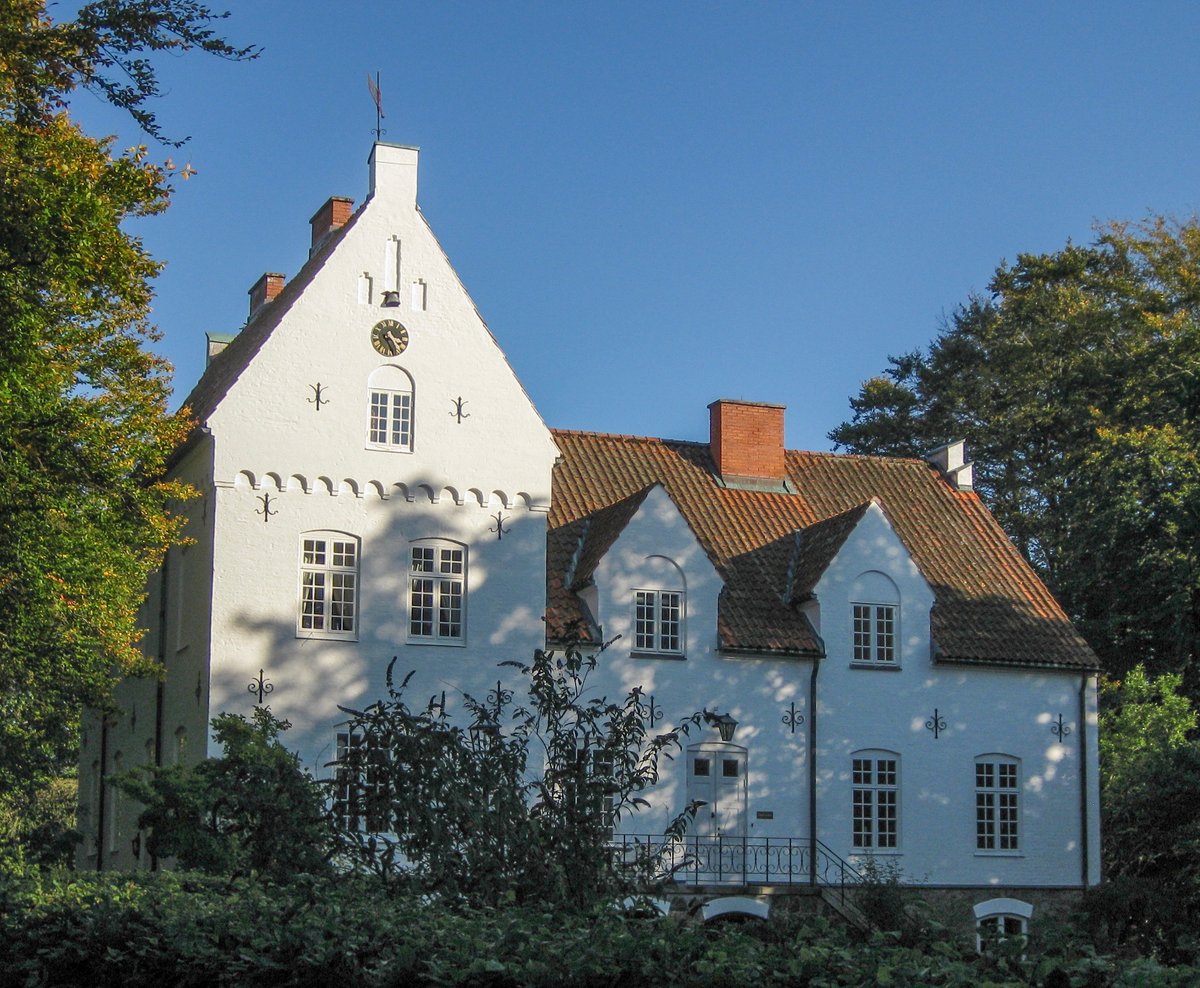
In the 19th century, Carl Fredrik Dücker III made improvements to the main building in 1854. During his ownership, he made Ellinge a focal point for young academics, writers, the parish vicar, and several priests who shared his interest in literature and art. He also hired gardeners to create a romantic park with a meandering path system. The castle today features whitewashed walls and 12 overnight rooms with a capacity for 24 guests.
Sources: Wikipedia, OpenStreetMap, Wikidata, Wikimedia Commons
Written by Nik Frost
Discuss this with the author and others
No comments yet. Be the first to start the conversation.