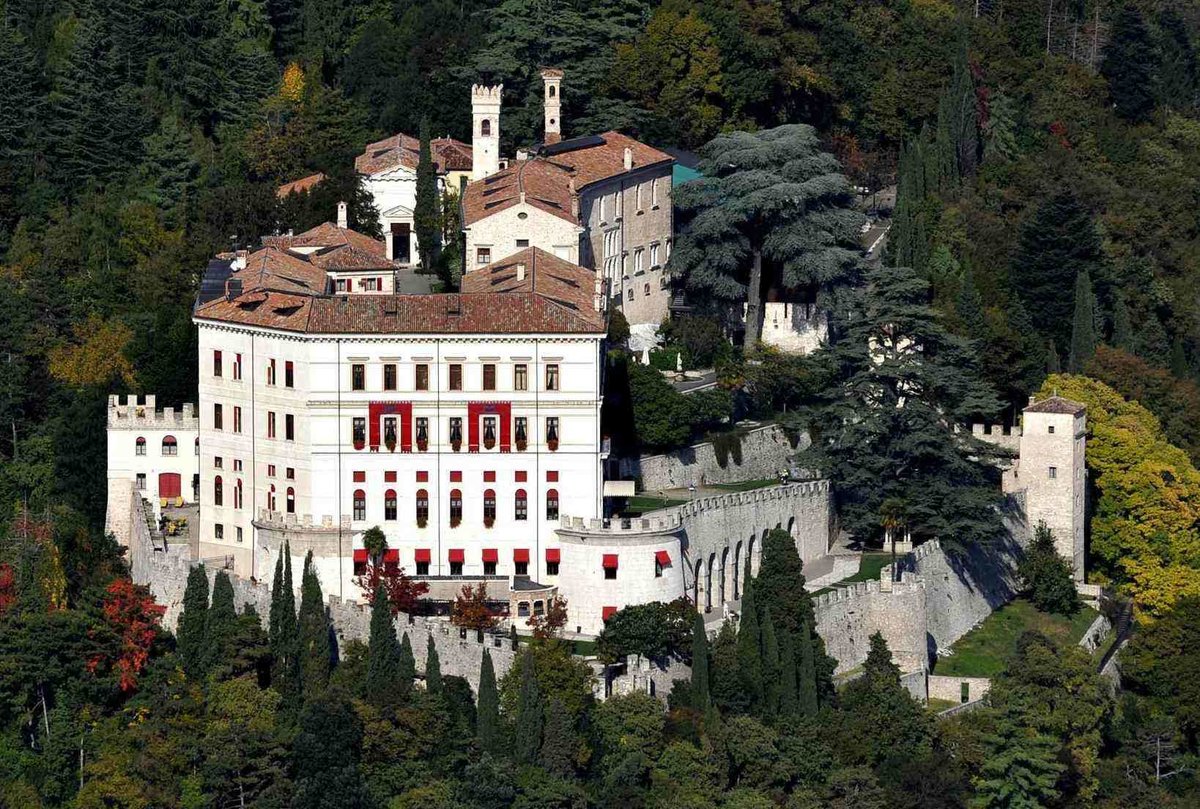

Steeped in history, **CastelBrando** was erected in the Roman age, approximately 46 AD, as a bulwark for guarding critical communication routes that connected Northern Italy with territories over the Alps. It formed part of the pre-alpine section of the Via Claudia Augusta, a significant Roman road that runs from the valley of the Po River up to modern-day Austria. Interestingly, a recent archaeological excavation uncovered a 3-meter (9.8 feet) diameter bread-oven within the castrum, dating back to the same period.
During the European Migration Period, the fortress proved to be a vital barrier against invasions by marauding tribes. With time, it underwent several enlargements and refurbishments. In the 13th century, under the guidance of the Da Camino family, the castle underwent substantial expansion.
This expansion included impressive Guelph-Ghibelline battlements and a central tower, among other architectural wonders. **Gherardo III da Camino**, a celebrated Italian feudal lord and military leader, was born in the castle around 1240.
The castle's ownership was transferred to the Republic of Venice, who granted the fiefdom to Marin Faliero before passing it on to the Giovanni Brandolino family, making them the Lords of the castle. The Brandolini Counts commissioned Antonio Maria Brandolini to expand the central part of the castle in Sansovino style during the first half of the 16th century, which included the installation of Venetian Gothic double and triple mullioned windows.
Today, visitors can indulge in a 4-star hotel experience within the castle walls, complemented by diverse museum exhibits featuring carriages, weapons, costumes, and musical instruments. In 2009, the Italian Minister of Agriculture, Luca Zaia, hosted the G8 Agriculture Ministers' Meeting at CastelBrando.
Sources: Wikipedia, OpenStreetMap, Wikidata, Wikimedia Commons
Written by Nicolo Ciampini
Discuss this with the author and others
No comments yet. Be the first to start the conversation.