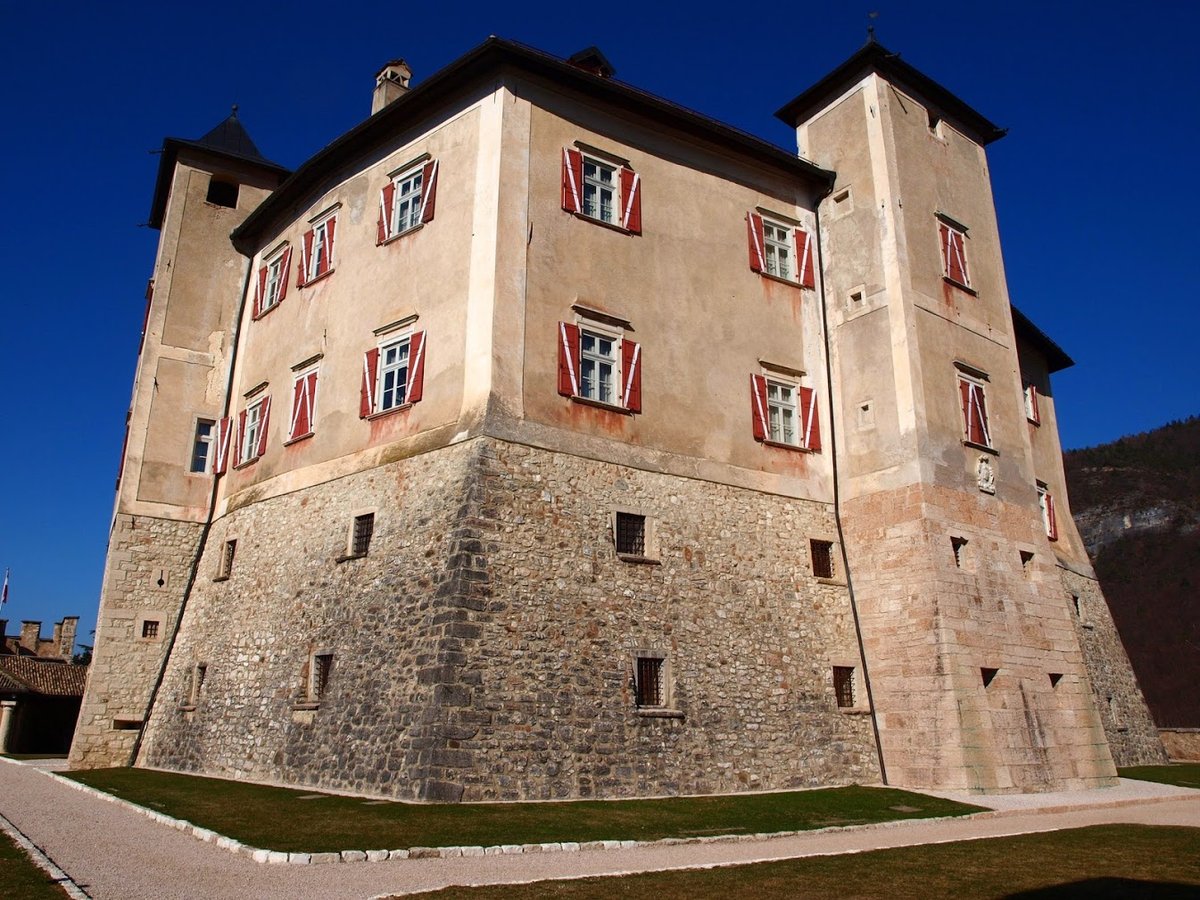

Castel Thun, a monumental building dating back to the Middle Ages, is one of the best-preserved castles in the Trentino region. For centuries, it was the main residence of the powerful Thun family, a family that expanded their domains across many parts of the Val di Noce, cementing their place as one of the most powerful feudal families in the region.
Castel Thun initially bore the name Castel Belvesino, reflecting the hill upon which it was built. The name was later changed to reflect the Thun family, who Germanized their surname to Thun. The castle had been damaged by numerous fires at various times, but one in particular in 1569 led to the death of Sigismondo Thun.
The Thun family resided in the castle around the mid-13th century and continued to reside there until the death of Count Zdenko Franz Thun Hohenstein in 1982.
Castel Thun, which was granted to the Thun family by the Princes Bishops of Trento in 1267, underwent modifications in the 16th and 17th centuries. The Porta Spagnola, built in the Moresque style, was constructed in 1566. The 17th century Bishop's Room, entirely covered in cirmolo wood, is the most famous room.
Castel Thun is located at the entrance of Val di Non, a large plain crossed by the Noce River. After restoration, the castle opened to the public on April 17, 2010, after being purchased by the Provincia autonoma di Trento in 1992.
Sources: Wikipedia, OpenStreetMap, Wikidata, Wikimedia Commons
Written by Nicolo Ciampini
Discuss this with the author and others
No comments yet. Be the first to start the conversation.