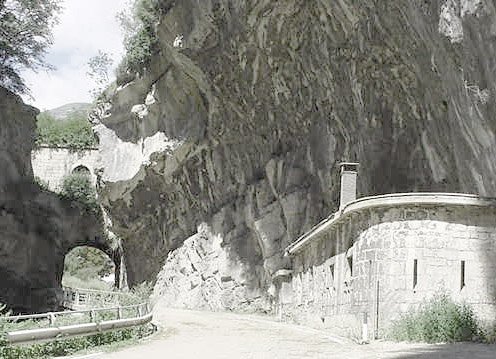

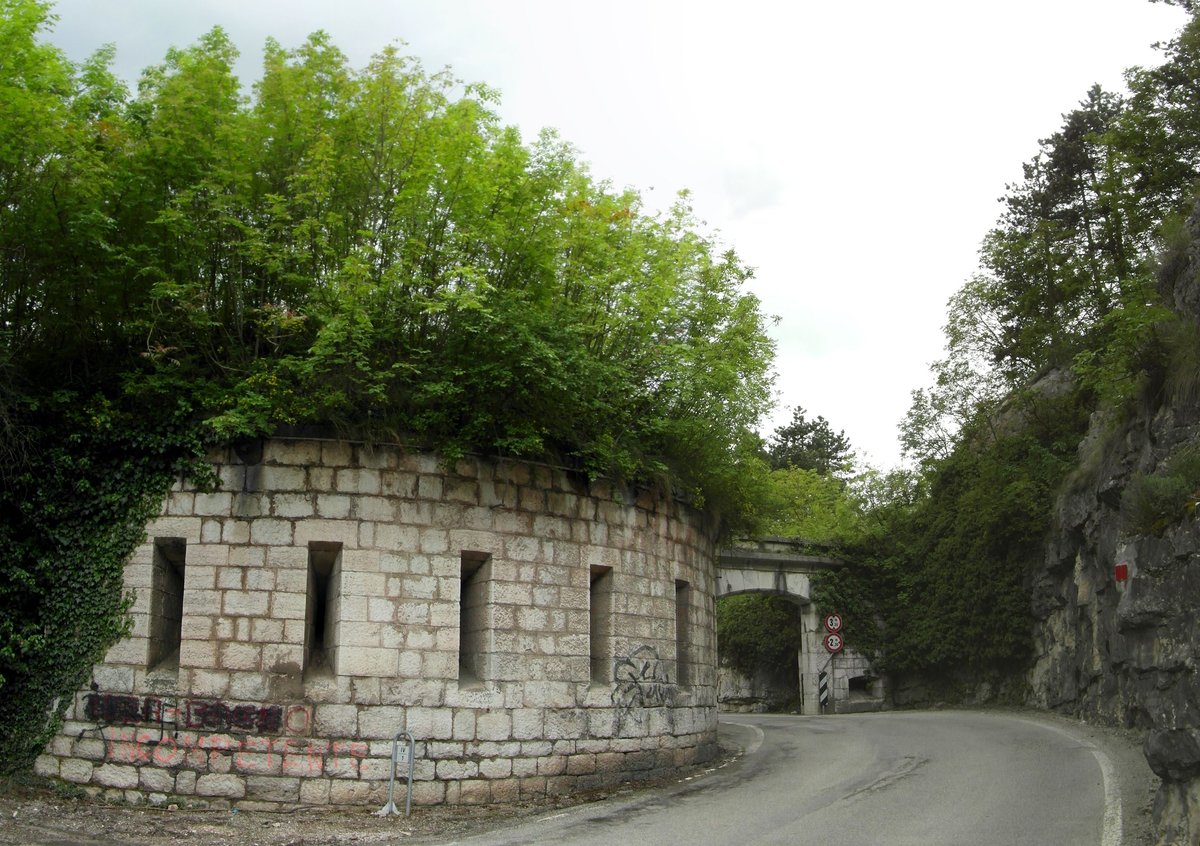
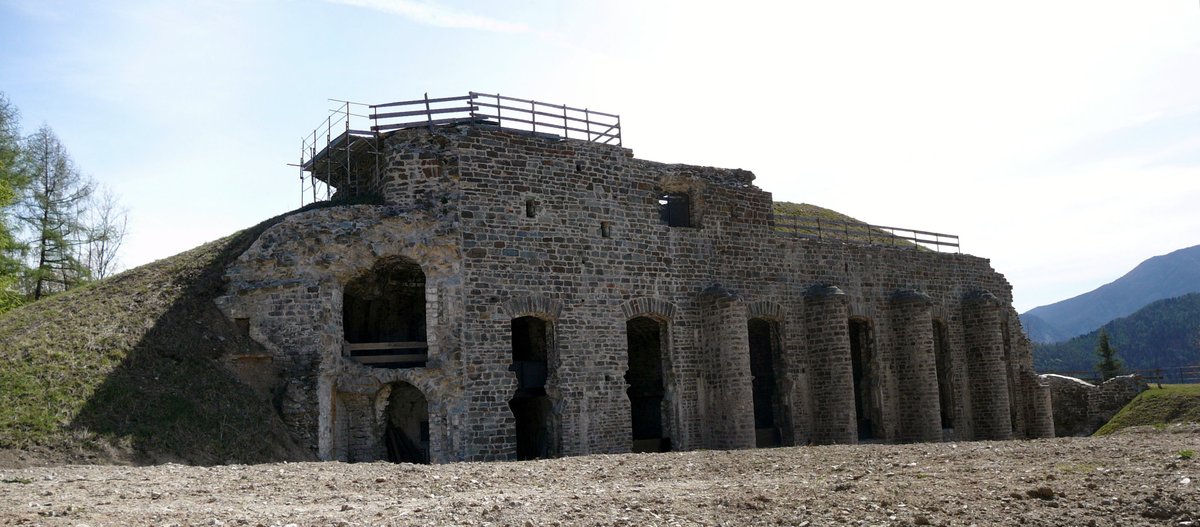
Fort Buco di Vela, also known as Fort Cadine, is a mid-19th century roadblock built to guard the city of Trento in Northern Italy. The fort is situated 4km west of Trento in a gorge called the Bus de Vela, where the fort gets its name. Built between 1860 and 1862, the structure was designed to block the road between Trento and Cadine. It was part of the first fortifications built to protect the city and was also intended to protect a newly-built road from Lake Garda.
The fort was designed to be impossible to bypass, with the only way through being the destruction of the fort itself. It mounted three 9cm M75/4 cannons all facing towards Cadine, along with two 8cm barbette cannons and many rifle embrasures covering almost every direction, especially the road. An armoured door is located on the west side of the fort, facing towards Cadine.
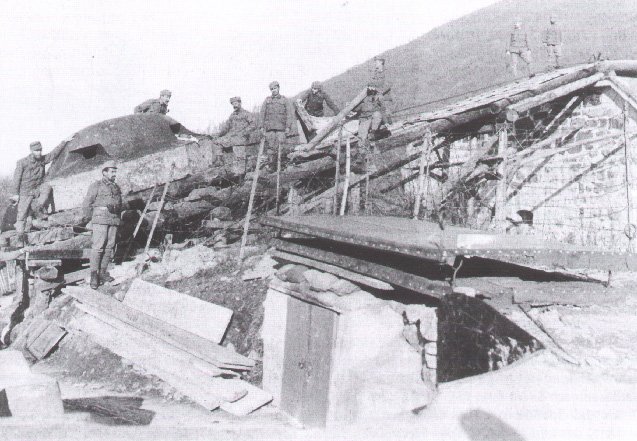
During World War I, the fort became obsolete as 19th-century standards of war were surpassed by modern siege artillery. Fort Cadine itself was too exposed and would have been vulnerable to the modern siege artillery of the day, which led to the fort being disarmed and its cannons moved into caves or relocated to frontline positions. During World War II, Nazi forces occupied the fort as a storage facility and a checkpoint to guard the vital Brenner Pass. In April 1945, the fort was the site of a failed resistance attack.
The fort was discharged from military service in 1949, and fell into disrepair for several years. It was restored in 2008 and now serves as a museum. Visitors can view a model dedicated to the World War I forts in the area and see shadows of soldiers projected onto the walls in the fort's poterna, a concealed part of the structure.
Sources: Wikipedia, OpenStreetMap, Wikidata, Wikimedia Commons
Written by Nicolo Ciampini
Discuss this with the author and others
No comments yet. Be the first to start the conversation.