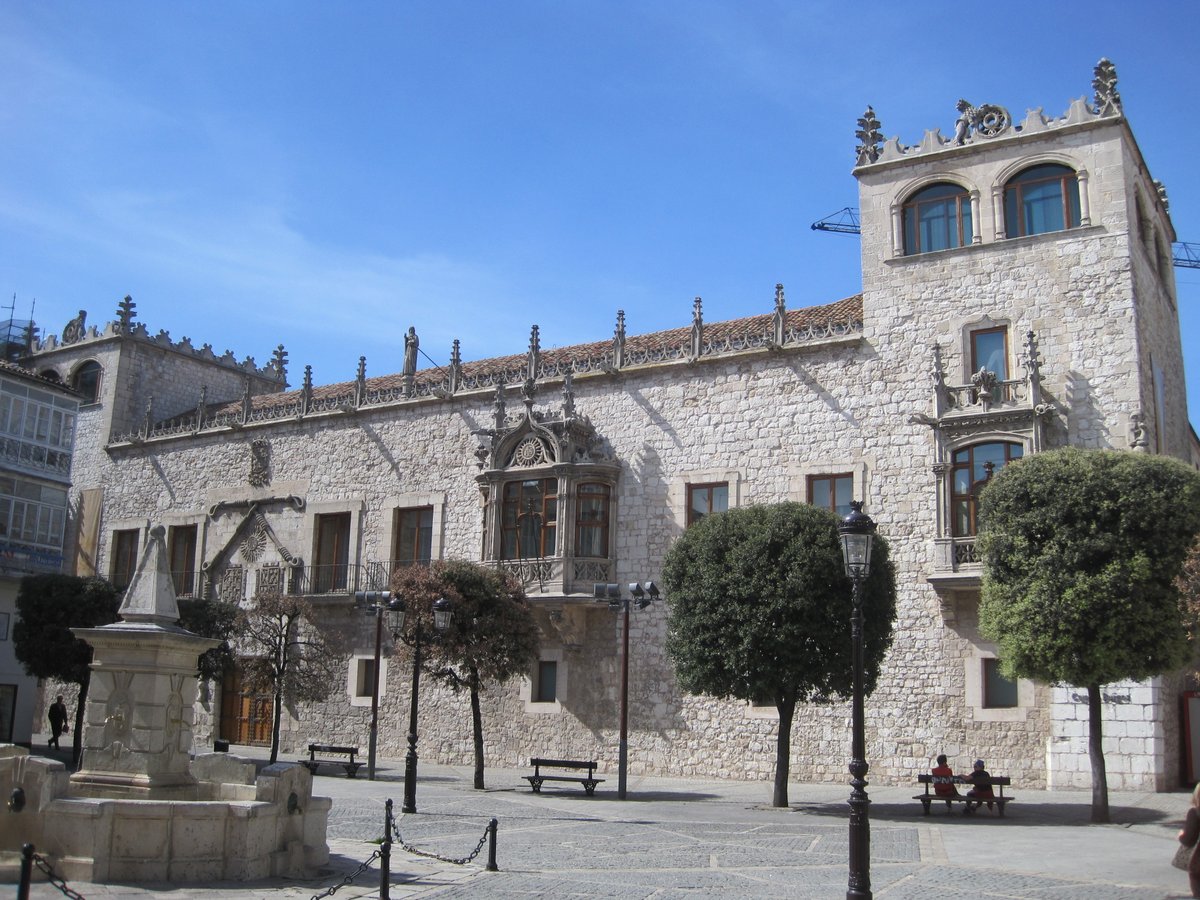

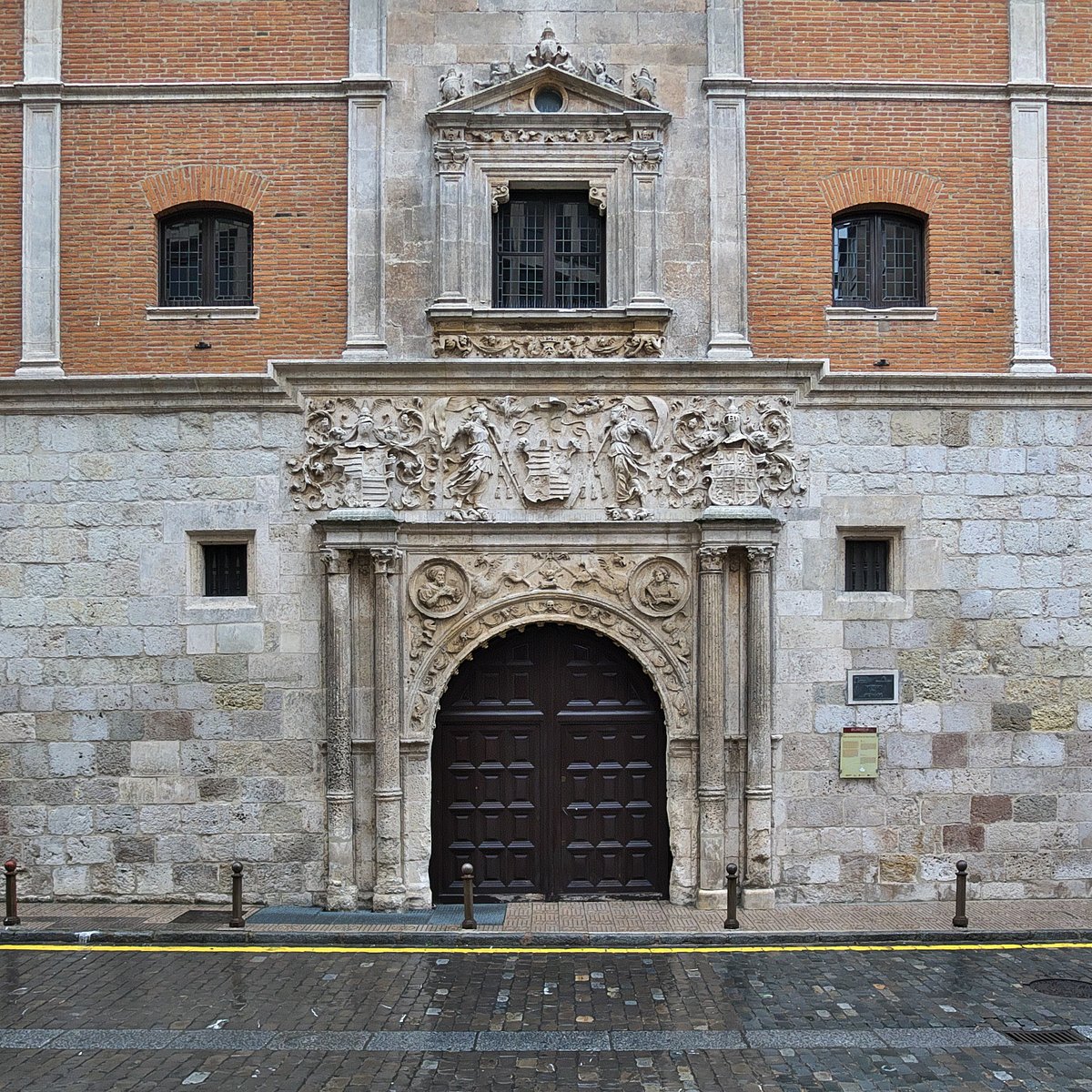
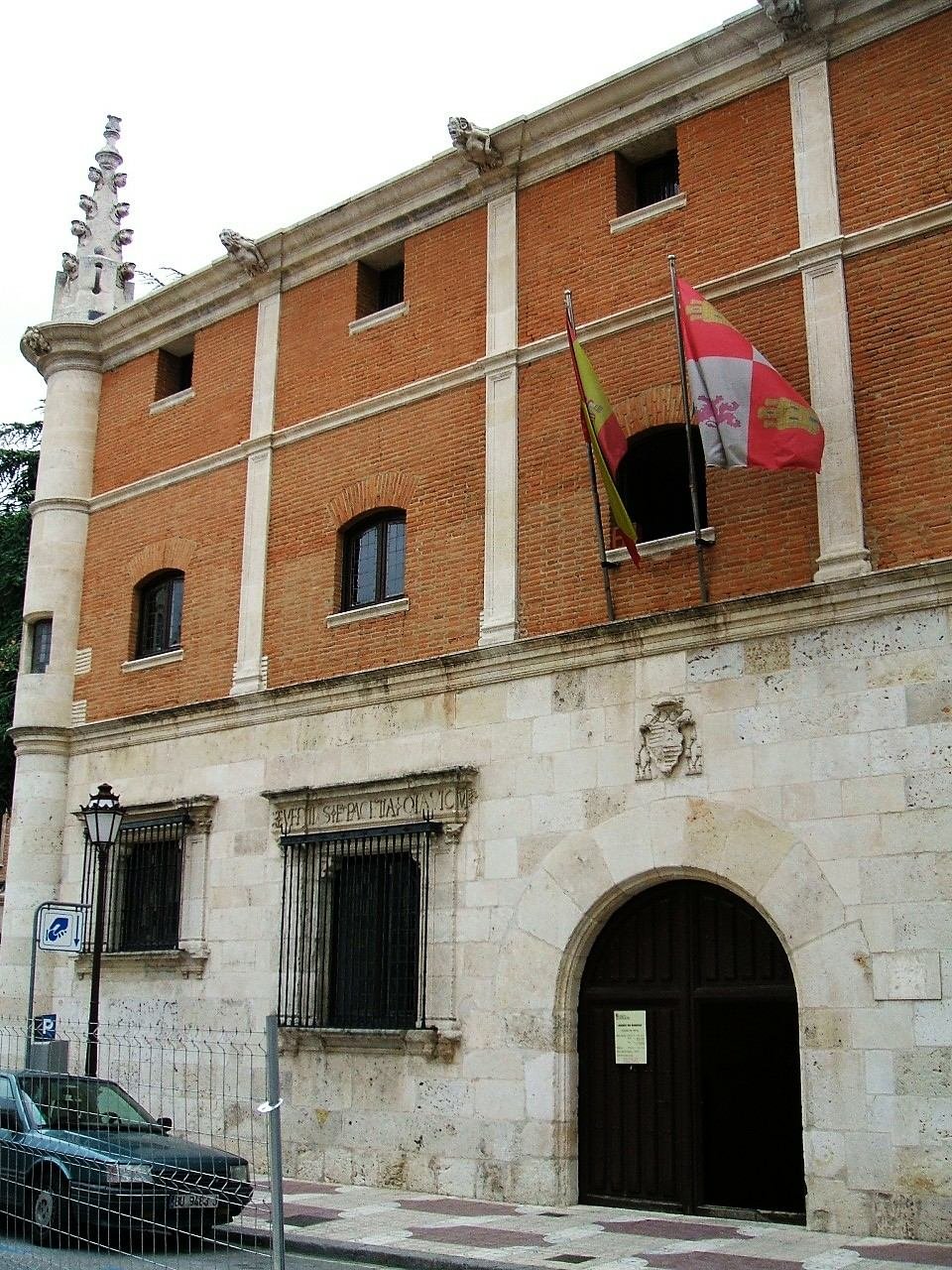
The Casa del Cordón in Burgos carries a name derived from a cord etched into its facade. Doña Mencía de Mendoza y Figueroa chose this design, ordering the cord to be sculpted into the stone to join her heraldic shields. This cord is what gave the building its name in popular tradition.
Construction began in the late 1400s when Pedro Fernández de Velasco, the Constable of Castile, required a residence befitting his high public office. He hired Juan de Colonia and his son Simón to construct a grand palace in the old marketplace. The design included a central courtyard - a two-story portico imitating religious cloisters - where each side of the courtyard has five arches per floor.
The palace served as a backdrop for significant events. In 1497, Cristóbal Colón was received here following his second voyage to America. That same year, the prince Don Juan was married in the palace. Later, the queen Juana I of Castile and her husband arrived in Burgos; eight days later, the consort monarch died in the house of Cordón. From this building, the retinue departed on a journey through Castile to Granada. Eventually, the permanent court moved to Toledo, leaving the building in the background.
Today, the palace is a hybrid of old and new. It houses a cultural center alongside the head offices of a banking entity. Despite these changes, the cord remains at the entrance, a permanent mark of the building's history.
Sources: Wikipedia, OpenStreetMap, Wikidata, Wikimedia Commons
Written by Nicolo Ciampini
Discuss this with the author and others
No comments yet. Be the first to start the conversation.