
The Capilla de Santa Casilda stands as a testament to Romanist sculpture. Constructed around 1565 by Pedro López de Gámiz, the chapel features a retablo with a miguelangelesca plastic quality. Because the masonry remains without gilding or polychromy, the iconographic program includes imagery of the titular, San Íñigo de Oña, San Sixto Papa, and San Juan de Ortega, as well as reliefs with scenes of the life of Santa Casilda.
We must look to the history of Juan de Muñatones y Sánchez de Briviesca, the bishop of Segorbe, to understand this space. After his death in 1571 in Segorbe, his remains were moved to this chapel in his native Briviesca. His coat of arms appears on the wall and the ironwork that closes the room.
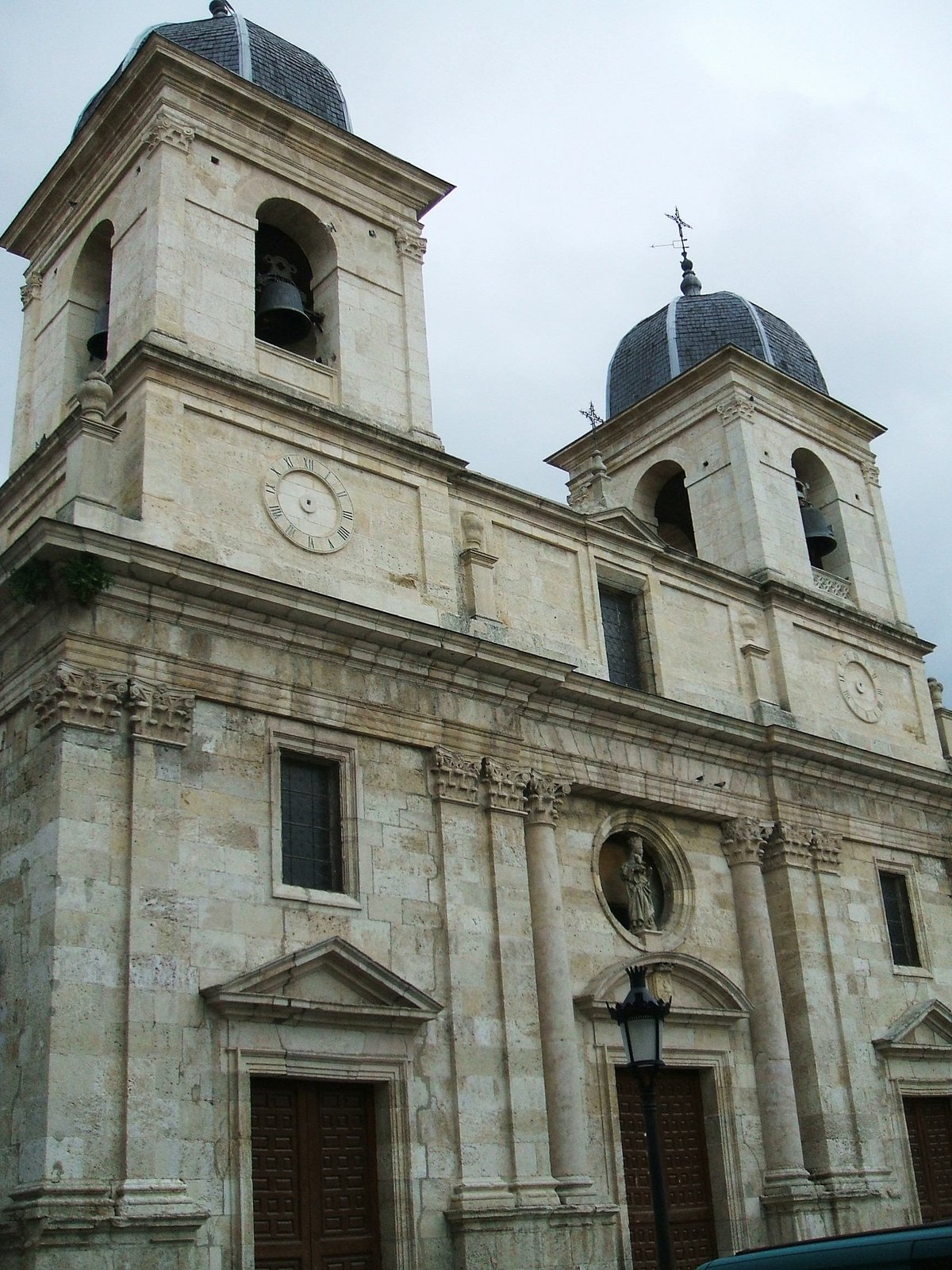
The Iglesia de Santa María presents a contrast between its exterior and interior. While the exterior is dominated by Baroque and Neoclassical styles, the interior transitions through different eras. The three naves are covered with vaults, and the nave of the Epístola holds two late-Gothic tombs from the original fabric.
Today, the building is a historical monument of national interest and the first historical collegiate of the Diocese of Burgos. Though it is currently closed to worship, it remains a significant site. The building features an exterior where Baroque and Neoclassical styles predominate and an interior that preserves centuries of construction.
Sources: Wikipedia, OpenStreetMap, Wikidata, Wikimedia Commons
Written by Nik Frost
Discuss this with the author and others
No comments yet. Be the first to start the conversation.