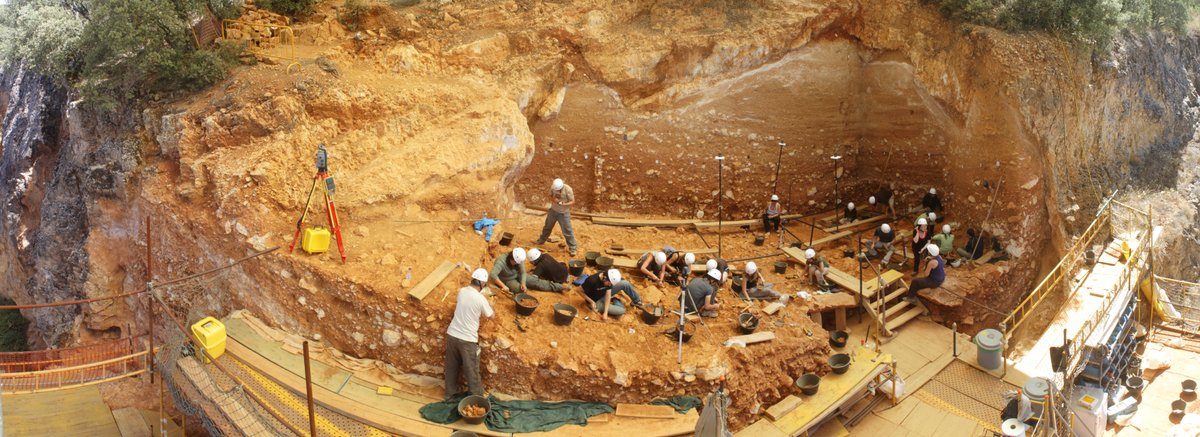

The Atapuerca archaeological site, located in the Sierra de Atapuerca in the Province of Burgos, Spain, is designated as a UNESCO World Heritage Site. Over the years, excavation of the site has provided valuable evidence of human existence, dating back more than a million years. In recent excavations, a team of researchers from various institutions worldwide surfaced new findings, notably Hominid remains and stone tools. Fossils dating from around 800,000 years ago provide the oldest known evidence of hominid settlement in Western Europe. The site is also protected at national and regional levels.
Sources: Wikipedia, OpenStreetMap, Wikidata, Wikimedia Commons
Written by Nik Frost
Discuss this with the author and others
No comments yet. Be the first to start the conversation.