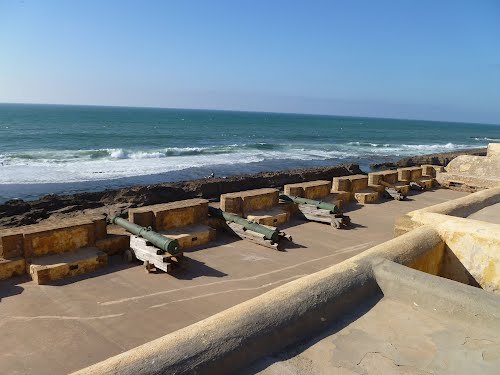

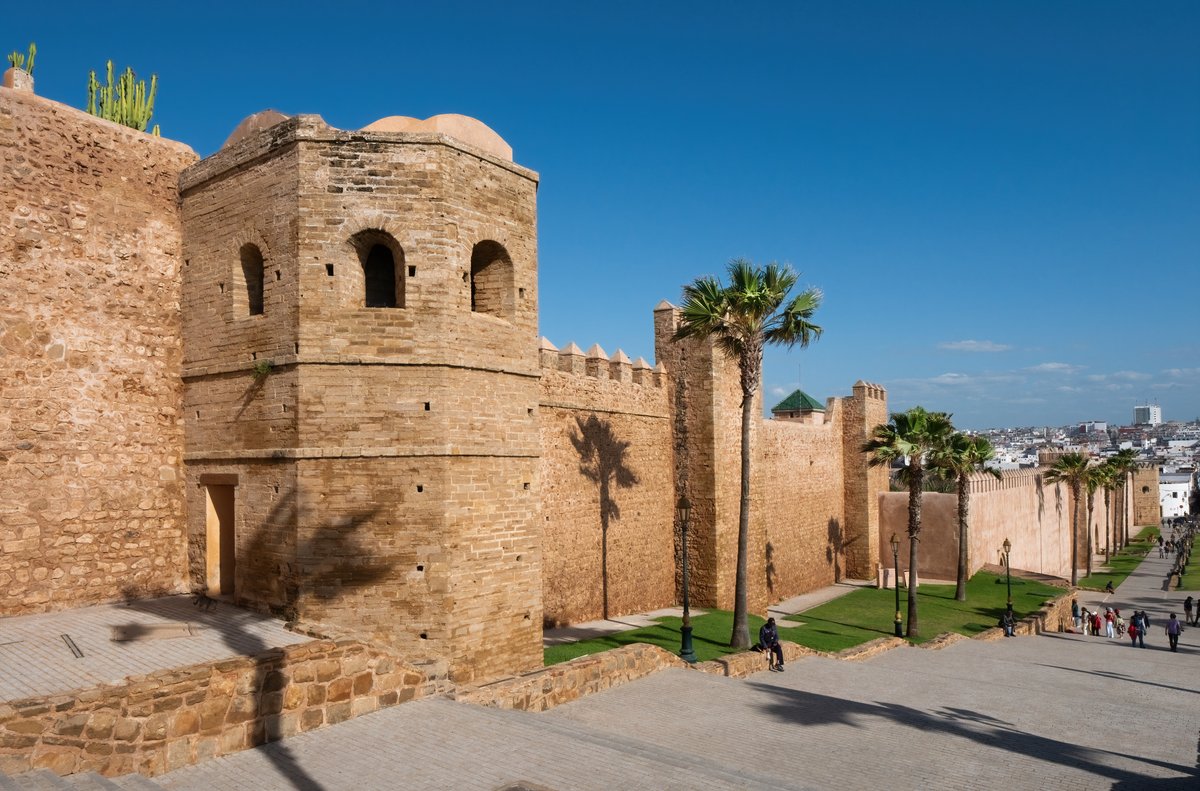
The Bastion des Larmes, perched on Avenue Abdelkader Al Harrati in Salé, bears a complex history. It was originally constructed in 1261 by the Sultan Mérinide Abu Yusuf Yaqub ben Abd al-Haqq in front of the marabout Sidi Benacher. In 1785, Sultan Alaouite Sidi Mohammed Ben Abdallah built a new borj at its location, and in 1884, Sultan Moulay Hassan Ier added a borj at the basement level to serve as an artillery base.
This fortress, also known as Borj Sidi Benacher or Skalla La-kdima, was constructed as a response to a tragic event in 1260. When 37 ships anchored off Salé, warriors landed and attacked the inhabitants who were celebrating the Aid al-fitr. The attackers entered through the current site of the Borj, carrying out a massacre where many Salétins perished. Women, children, and the elderly were surrounded at the Great Mosque, and 3,000 people were captured and taken as slaves to Seville.
Following this dark episode, Sultan Yacoub Ben Abdelhaq ordered the construction of an imposing wall and a fortified bastion on the beach, which he named the Bastion des Larmes, or Bastion des Sanglots. Today, the Borj houses a ceramic museum established in 1994. It was classified as national heritage by Dahir in 1914 and has hosted the Festival Karacena since 2006.
Standing before the Bastion des Larmes, you can feel the echoes of the weeping Salétins from centuries past, a poignant reminder of a heartbreaking incident in their history.
Sources: Wikipedia, OpenStreetMap, Wikidata, Wikimedia Commons


Written by Mutabor
Discuss this with the author and others
No comments yet. Be the first to start the conversation.