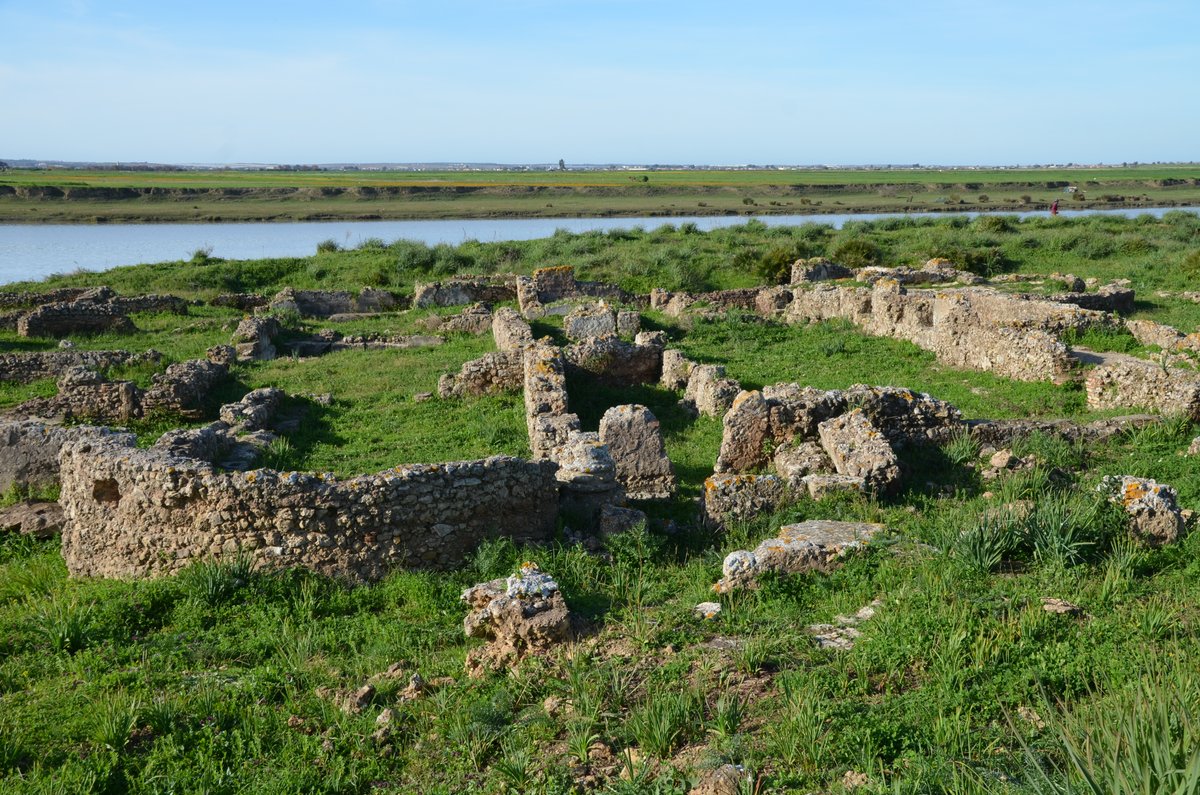

Nestled between the towns of Kénitra and Mehdya in Morocco, Thamusida (Punic: 𐤕𐤌𐤃𐤏𐤕) was originally a Punic river port built in the 7th century BC. Under the Roman Empire, it formed a part of the province of Mauretania Tingitana. Through archaeological waves ranging from 1930 to 2006, the University of Siena and the Institut National de Sciences de l’Archéologie et du Patrimoine de Rabat unearthed treasures from its past, from charcoal remains that reveal how residents acquired supplies to vibrant plaster wall decorations that reflect the town's artistic and economic situations.
Through analysis of plant remains, specifically charcoal, researchers identified 23 different plants, with cork oaks making up the greatest percentage of the assemblage. These trees were likely used for both building and firewood, as well as by residents using their acorns to feed livestock. Because pine does not grow in the area around Thamusida, the presence of a few pine trees in the charcoal analysis suggests at least some importation of wood. Meanwhile, the extremely numerous presence of cork oak, combined with the current degraded state of the nearby Mamora forest, suggests that Romans may have over-exploited these trees.
During the Roman occupation, painted plasters, mostly frescoes, were common in public, private, and religious buildings. These plasters vary in quality and style, featuring colorful geometric designs, marble imitations, or solid colors. By analyzing thin slices of these plasters with optical microscopy and scanning electron microscopy, archaeologists determined the general makeup of the materials used. They found that the Romans used local sands and clays, which were identified by comparing the mineral makeup of the plasters to the minerals in the surrounding area. Analysts also identified a variety of pigments on these surfaces, including bright red made of cinnabar, dark red from red ochre, yellow from yellow ochre, blue from Egyptian blue, green from either celadonite or glauconite, carbon black from carbonized plant matter, and white from calcite.
Sources: Wikipedia, OpenStreetMap, Wikidata, Wikimedia Commons

Written by Mutabor
Discuss this with the author and others
No comments yet. Be the first to start the conversation.