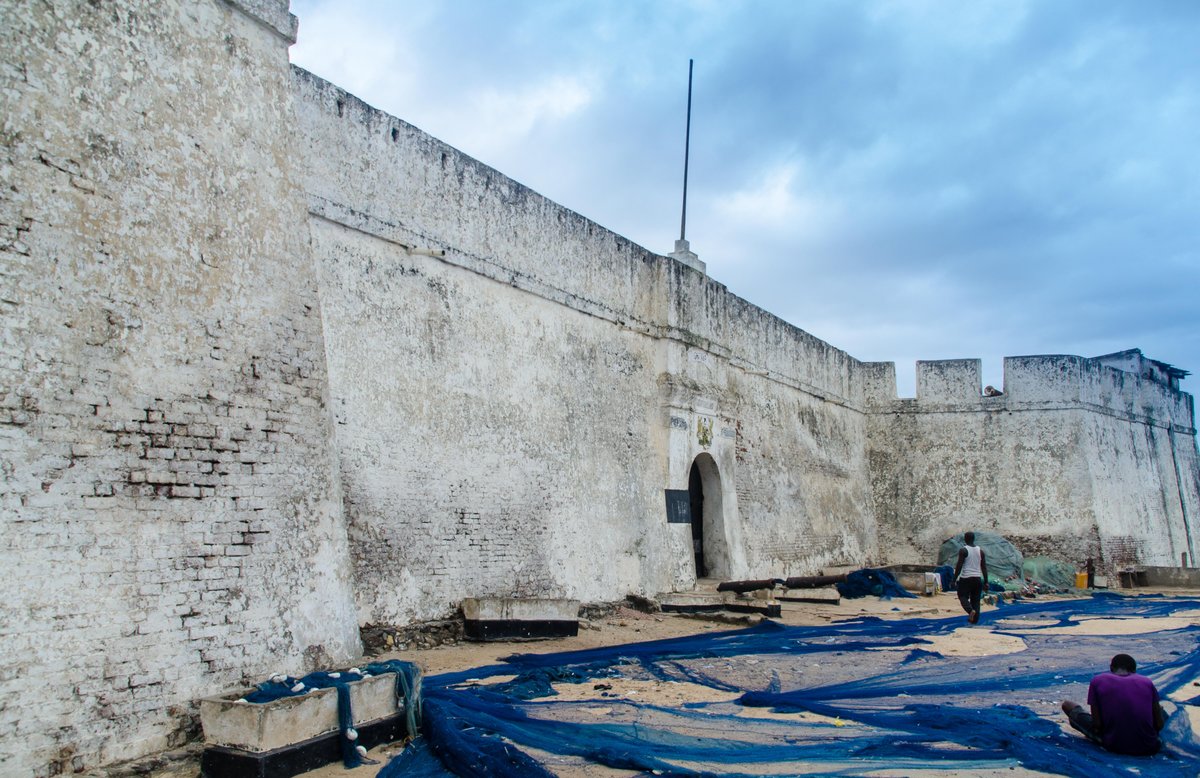

In 1753, after thwarting a French bid to establish a fort at Anomabo, the British African Company of Merchants began construction of Anomabo Castle. Designed by military engineer John Apperly, who became its first governor, the fort was completed in 1760 by Irishman Richard Brew. The site became the center of British slave trading along the Gold Coast until the trade was outlawed in 1807.
This site served as a revolving door for different empires over the years. The Dutch built a lodge in 1640, and the English built Fort Charles in the 1670s before abandoning it to concentrate efforts on Fort Carolusburg. By the late 1700s, Anomabo became a popular haunt for "Ten Percenters" - independent ship captains who paid a 10% affiliation fee to trade in British areas of monopoly. Records show that between 1702 and 1708, ships took not less than 30,141 slaves to Barbados and Jamaica from this area alone.
In the 1830s, the fort's commander, Brodie Cruickshank, added one storey to the main building and renamed the fort after King William IV. The fort was later inscribed on the UNESCO World Heritage List in 1979 because of its importance as testimony to the Atlantic slave trade.
Today, the well-preserved remains of Fort William can still be seen in Anomabo, which remains a popular tourist destination in the Central Region of Ghana.
Sources: Wikipedia, OpenStreetMap, Wikidata, Wikimedia Commons
Written by Friendly Jane
Discuss this with the author and others
No comments yet. Be the first to start the conversation.