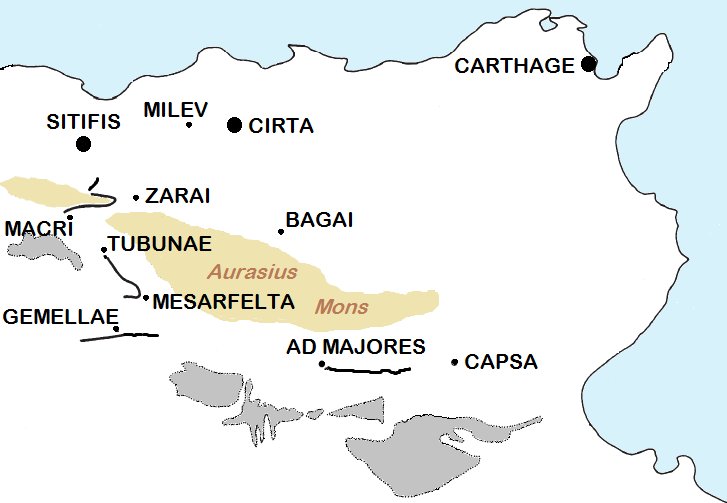

Nestled on the edge of the Algerian Sahara Desert, Gemellae was initially a Berber settlement, already fortified before the Roman conquest. In 19 BC, Roman commander Lucius Cornelius Balbus celebrated a victory over the Garamantes, claiming Gemellae as one of his notable conquests, showcased in the triumphal parade of Rome. The Romans then took over the site, transforming it into one of the Empire's southernmost outposts, serving as the limits of the Empire.
The oldest epigraph retrieved from the site dates back to 126 AD, an inscription in honor of Emperor Hadrian. A cohors equitata from Chalcis, Syria, also made Gemellae their home around the same time, their presence confirmed in Africa by inscriptions dating back to 78 AD and lasting up to 164 AD. The fort and settlement at Gemellae could very well be linked to the construction of the Fossatum Africae, a series of roads and fortifications built by Emperor Augustus to secure the Roman Empire's African borders.
By the 7th century, Gemellae, now called Mila, fell into the hands of Abu al-Muhajir Dinar, marking the end of Roman control over the site.
Sources: Wikipedia, OpenStreetMap, Wikidata, Wikimedia Commons
Written by Friendly Jane
Discuss this with the author and others
No comments yet. Be the first to start the conversation.