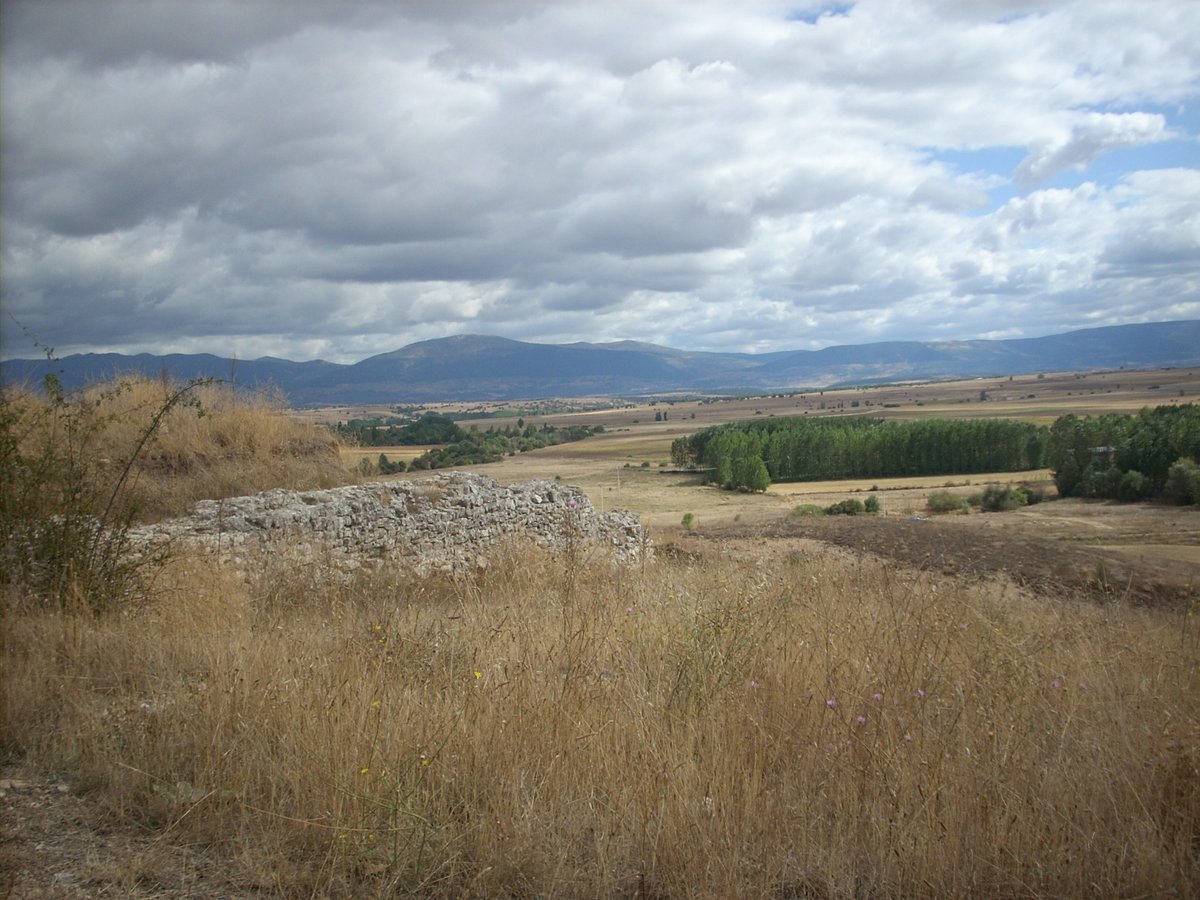

Ancient Confluentia, known only from a text by the Greek author Ptolemy in the 2nd century AD, was rebuilt around the beginning of the 1st century BC, at the confluence of the Duratón and Serrano rivers and a crossroads of ancient communication routes. Its location provided better security and enabled the development of a rational urban structure.
The urban center of this civitas was likely located at the archaeological site of Los Mercados in Duratón, Spain. A canal and sewer system was found underneath the central area, and a forum pecuarium-campus was constructed in the 1st or 2nd century AD, used for livestock markets, fairs, local markets, regional markets, and recreational activities.
Archaeological excavations reveal a rich history, with various Roman houses found in the southwestern part of the city, a square area excavated in the central part, and an 'ordo' (possibly municipal) mentioned in an inscription of the Bonus Eventus sanctuary in Puente Talcano, near Sepúlveda, in the city's territory.
However, Confluentia is being destroyed and degraded due to excavation and farming activities. The place is a cultural heritage site since 1994, and many of the finds from the excavations are conserved in the Museum of Segovia.
Sources: Wikipedia, OpenStreetMap, Wikidata, Wikimedia Commons
Written by Nik Frost
Discuss this with the author and others
No comments yet. Be the first to start the conversation.