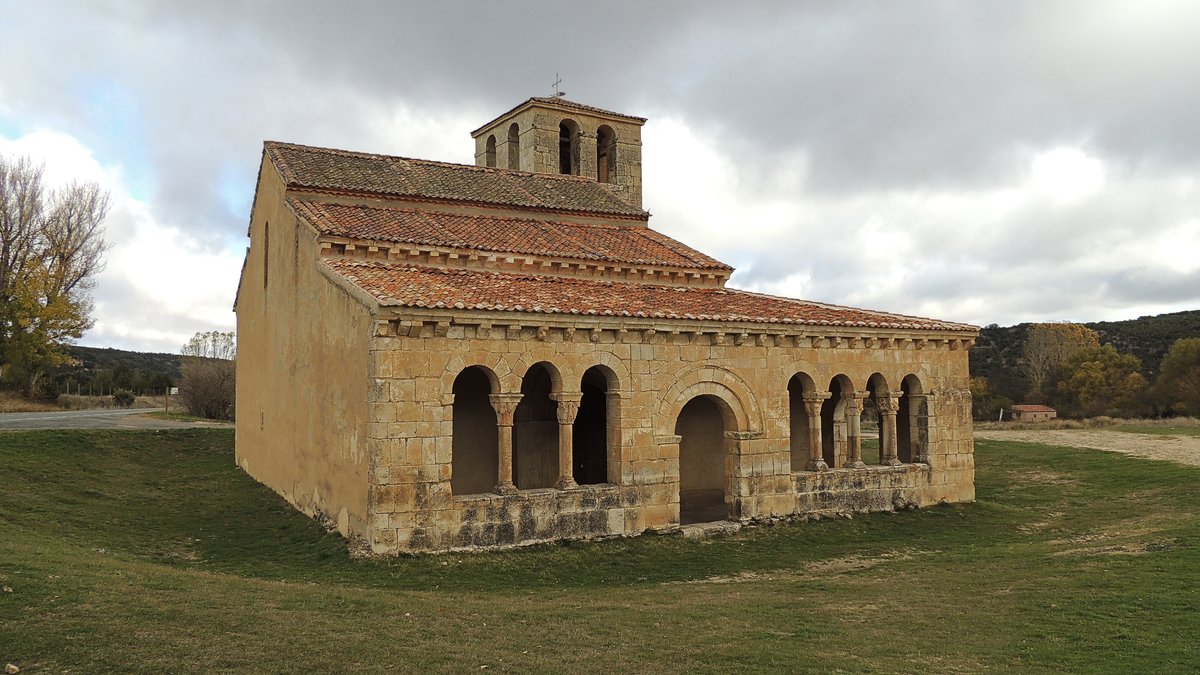

The Church of Our Lady of las Vegas in Santiuste de Pedraza, Spain, echoes a thousand-year past as you tread sacred ground. This church presents three epochs or phases, the oldest dating back to the early 11th century. The northern nave and the atrium with its apse are remnants of the late 11th-century sepulvedano romanesque. The main nave and the eastern nave, as well as the main entrance, are traces of the late romanesque of Segovia, between the 13th and 14th centuries.
The lower part of the tower belongs to a late romanesque style typical of Segovia between the 13th and 14th centuries. The church features three separated naves sustained by square pillars with semi-columns, adorned with pseudocorinthian capitals, simple impostas, and a wooden roof with polychrome carreras and pairs of tiedopes supported by carved canes. The interior of the temple was adorned with murals in various periods, notably in the middle of the 16th century, featuring compositions in red, white, and black that depict trophies, grutescos, busts of warriors, garlands, and other similar themes.
Sources: Wikipedia, OpenStreetMap, Wikidata, Wikimedia Commons
Written by Nik Frost
Discuss this with the author and others
No comments yet. Be the first to start the conversation.