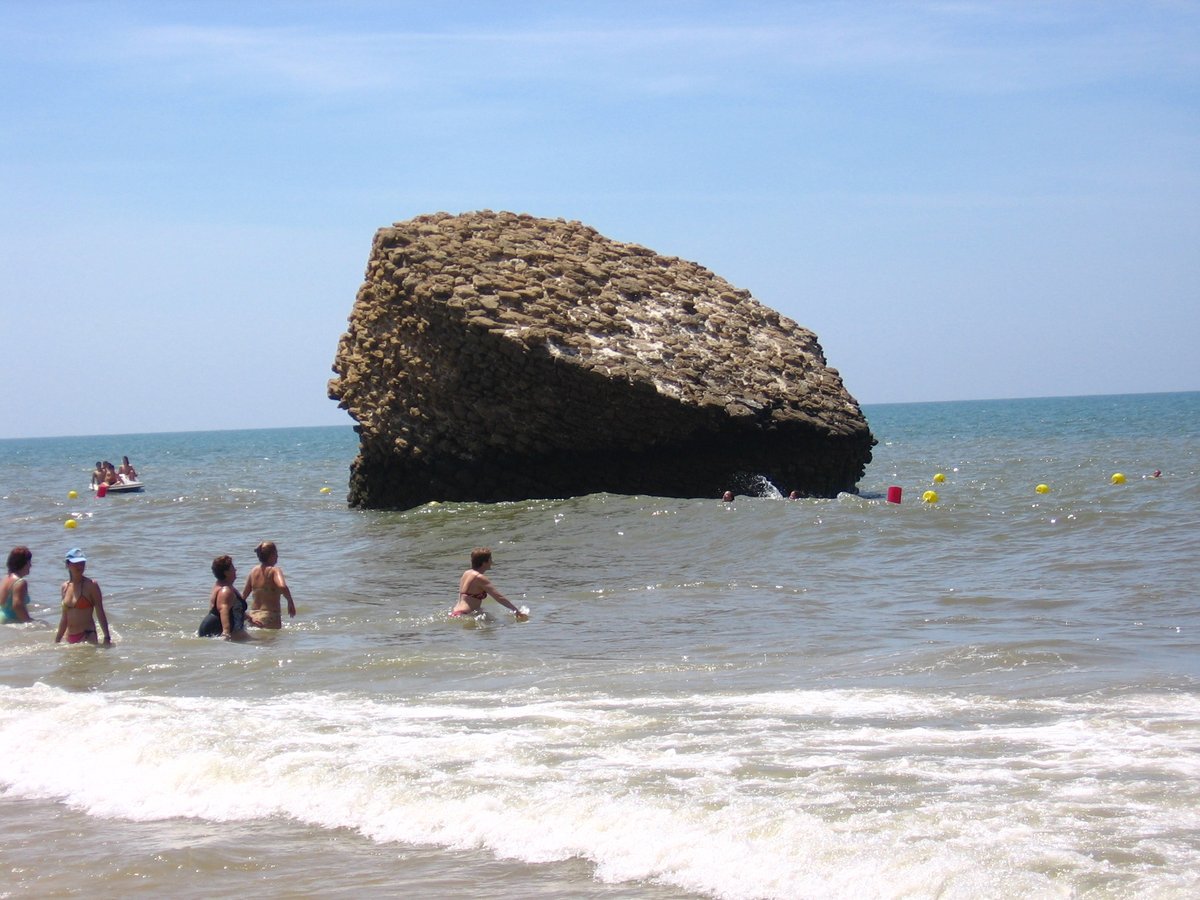

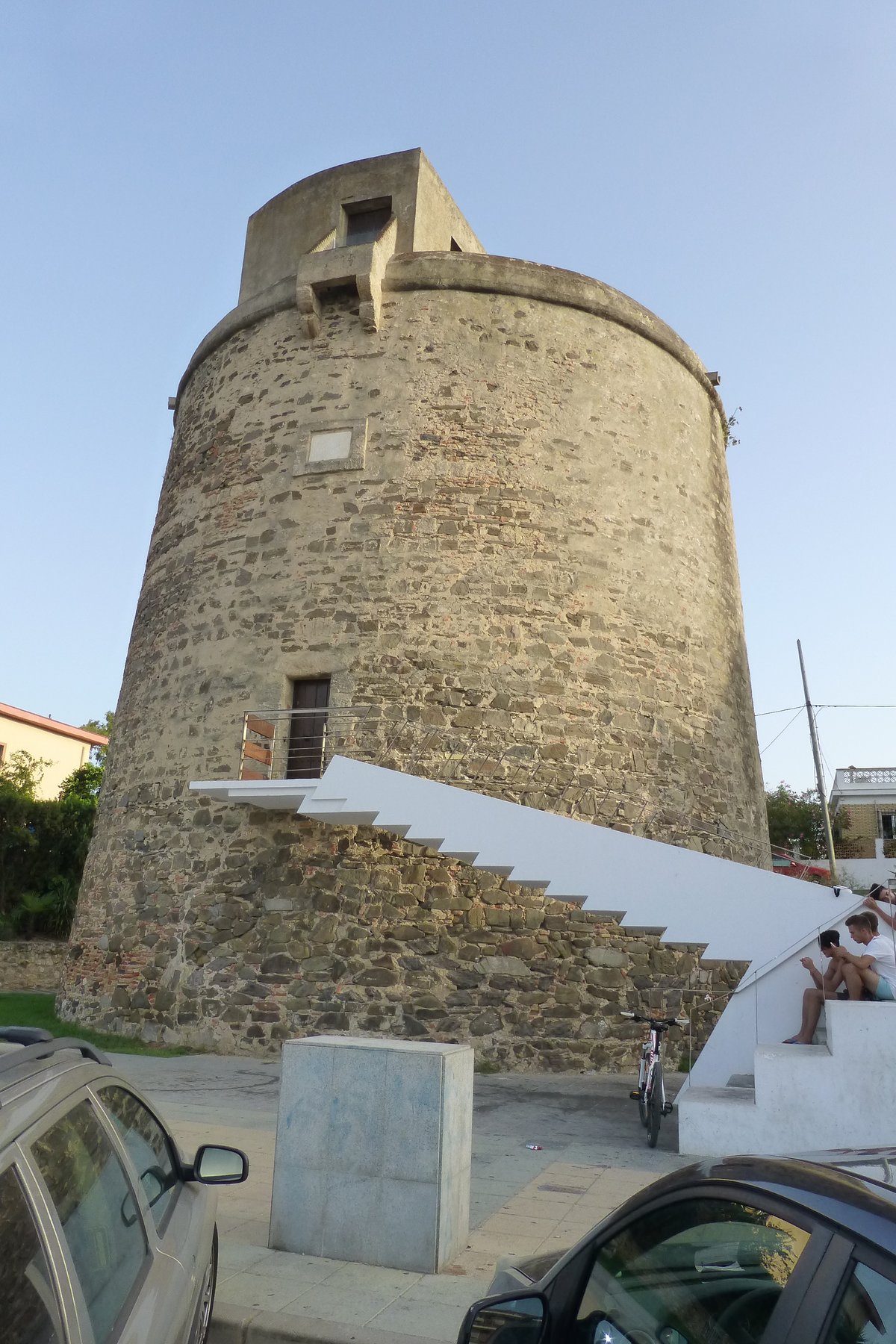
Imagine a massive stone spire lying flat on the sand. This is the Torre de la Higuera, or La Peña, as the locals call it. It used to stand tall as a lookout against North African pirates, but now it sits in a completely inverted position, its foundations pointing toward the sky like a stone crown.
King Philip II ordered these coastal defenses in the late 1500s to protect the Spanish coast from corsairs. This specific tower was meant to be a multi-purpose hub - a watering point for ships from Sanlúcar de Barrameda, a shelter for fishermen, and a sturdy shield against invaders. It was built with such high-quality mortar that it still resists the relentless grinding of the Atlantic waves.
How did it end up on its head? Some say the 1755 Lisbon earthquake shook the sandy loam cliff until the tower tipped over. Others think a massive storm did the job. It remains in this unusual position today, with its walls broken by the breaking tide and its foundations showing the exceptional quality of the construction.
Today, it is a protected asset of cultural interest. You can see the raw, weathered state of its foundations where the sea has chewed at them for centuries. Just don't try to use it as a diving board - the authorities have banned jumping from it because, frankly, falling off an upside-down tower sounds like a very bad way to end a beach day.
Sources: Wikipedia, OpenStreetMap, Wikidata, Wikimedia Commons
Written by Nicolo Ciampini
Discuss this with the author and others
No comments yet. Be the first to start the conversation.