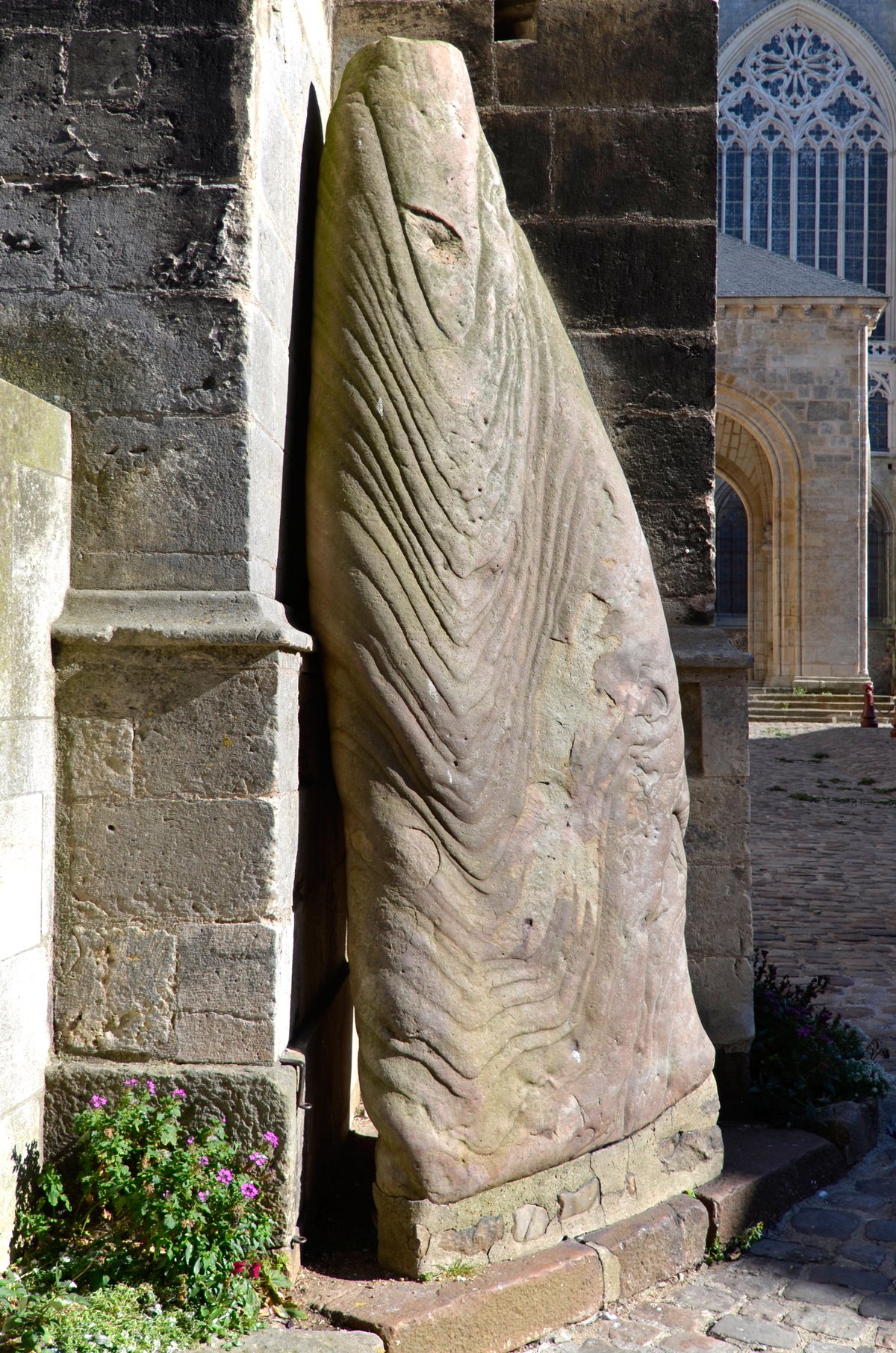

In the south corner of the Roman cathedral, in Le Mans, France, looms a peculiar granite pillar, known as La Pierre Saint-Julien. Originally, this menhir, made from pink grès streaked with Sabals and dating back to the Eocene era, was nestled elsewhere - 'Place Saint Michel' was not its first home; it was transported there in 1778, after the destruction of the dolmen of la Pierre au lait. Inside this stone monument, a polished cupule is found, symbolizing centuries of young women's fertility rituals. As a historic monument, classified since 1889, La Pierre Saint-Julien towers at 4.55 meters. Over time, it has earned an assortment of names - la pierre au lait, goutte de lait, pierre de sang, caillou de Gargantua, pierre des païens - igniting even more curiosity about its puzzling origins and the tales that swirl around it.
Sources: Wikipedia, OpenStreetMap, Wikidata, Wikimedia Commons
Written by Nicolo Ciampini
Discuss this with the author and others
No comments yet. Be the first to start the conversation.