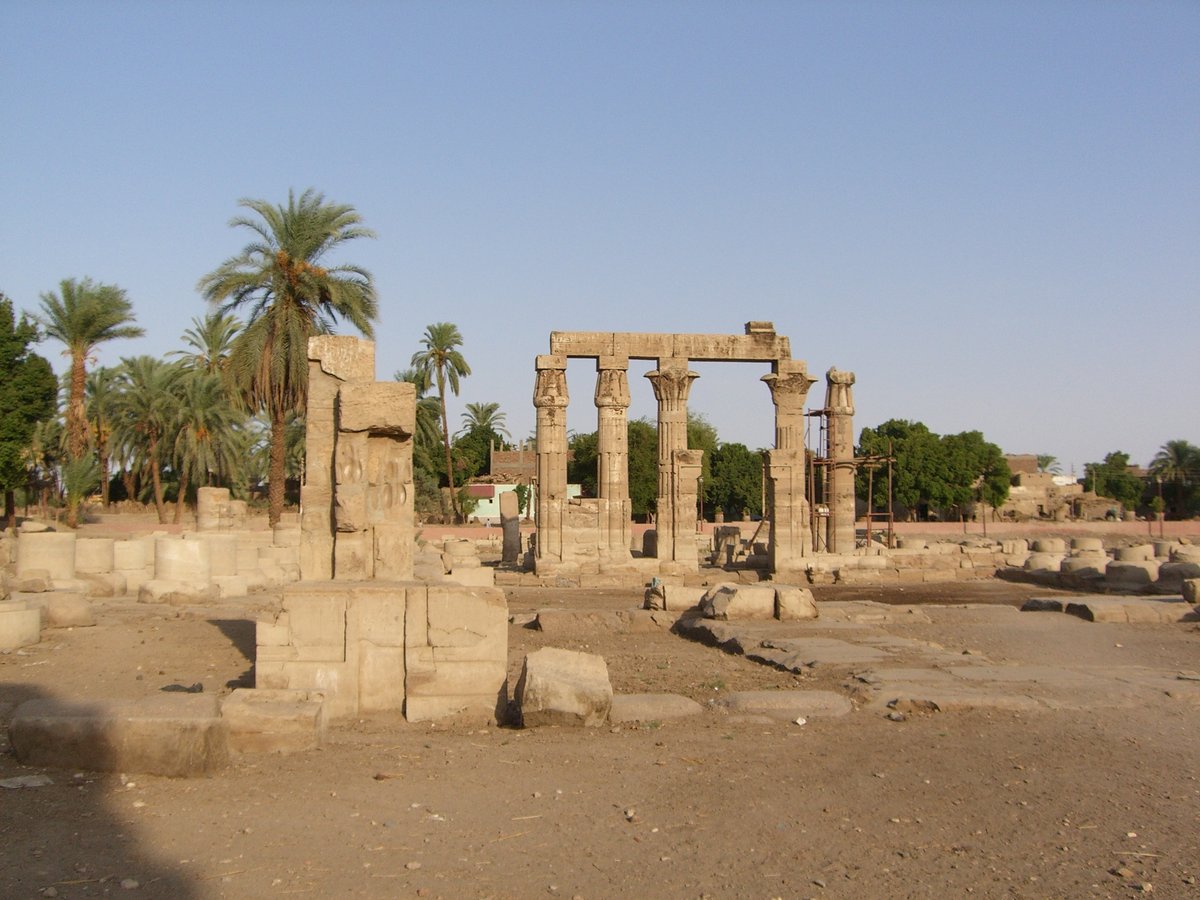

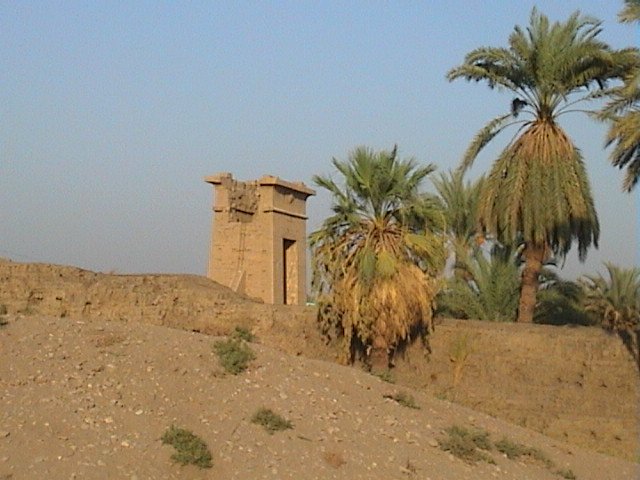
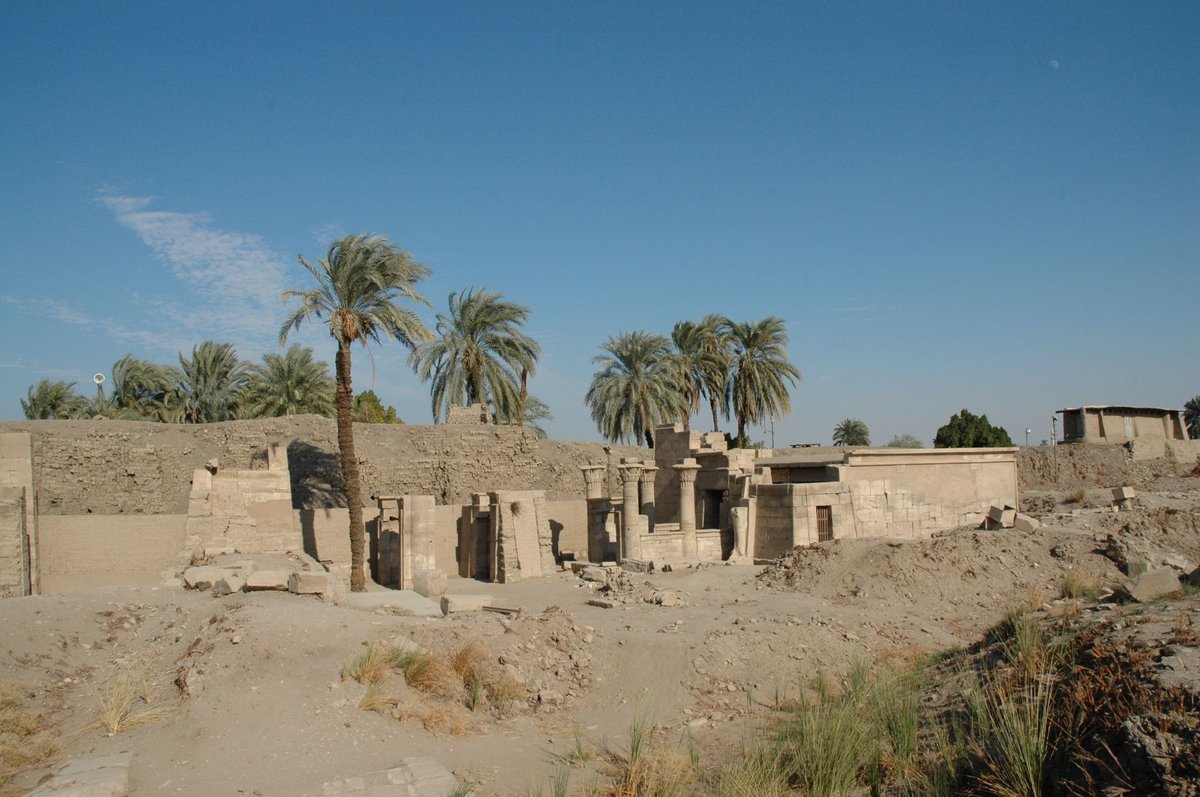
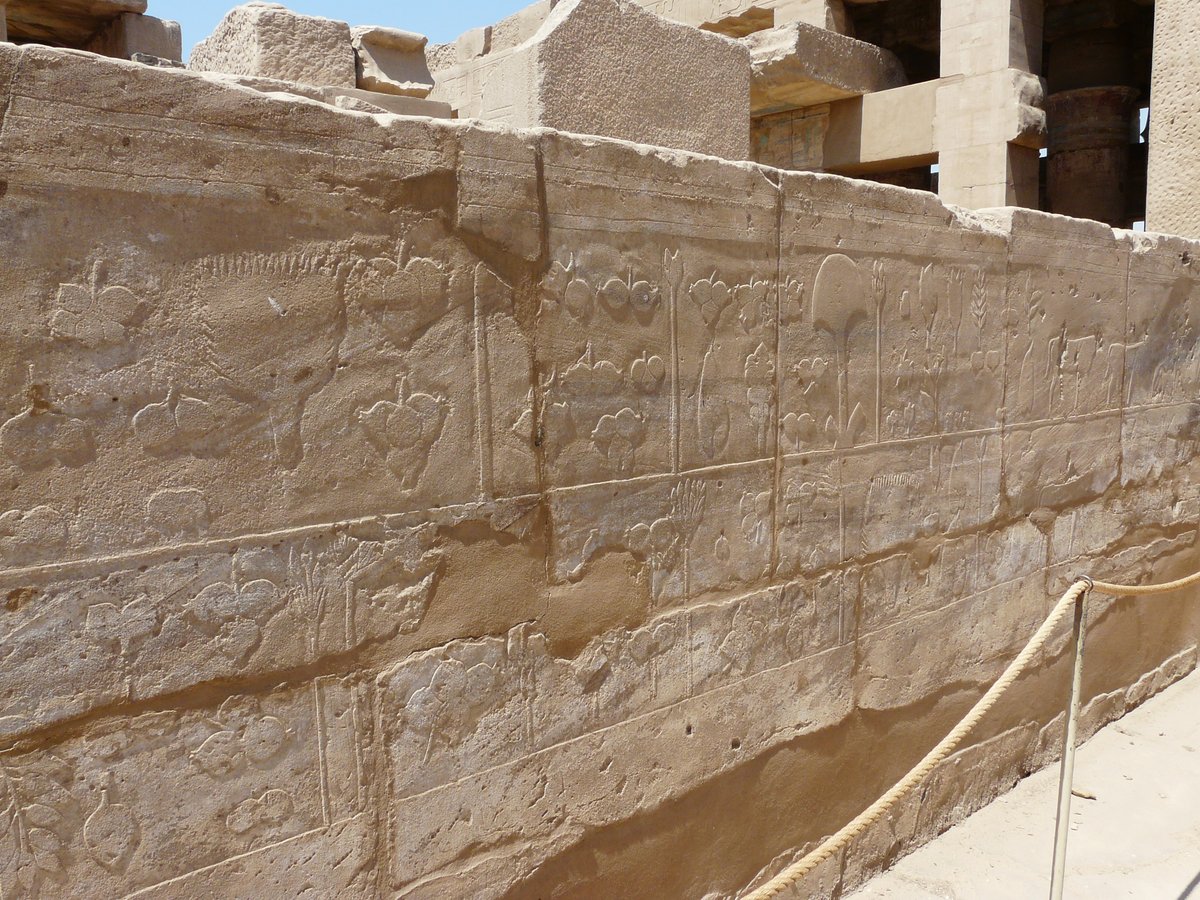
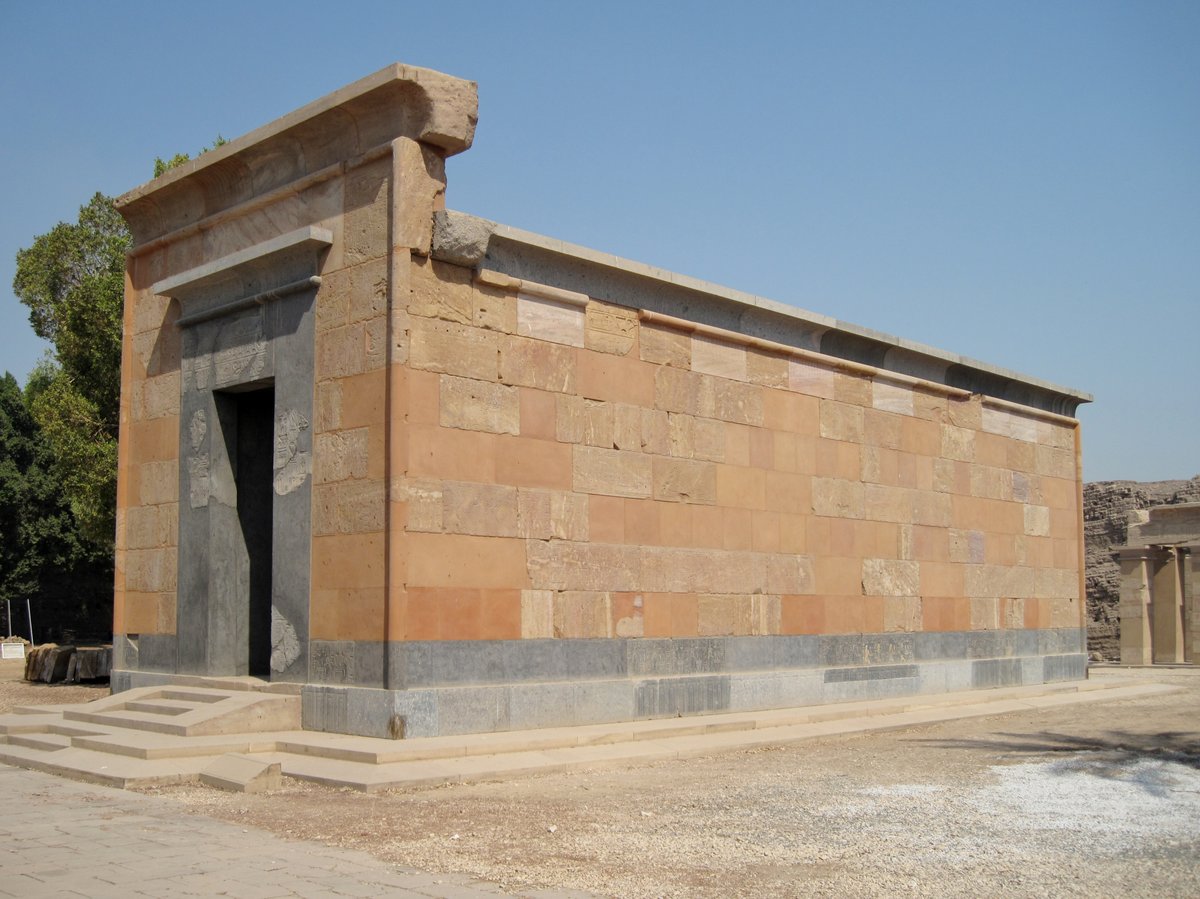
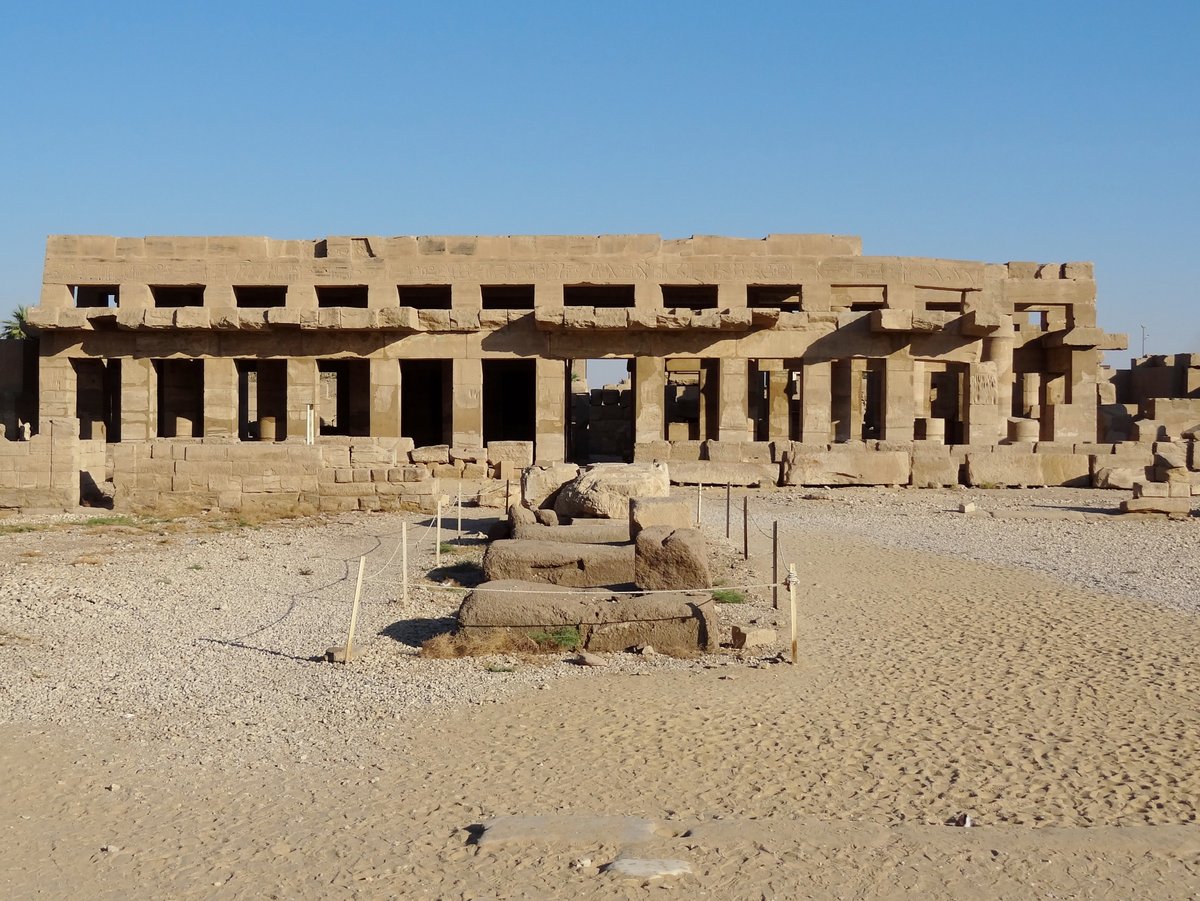
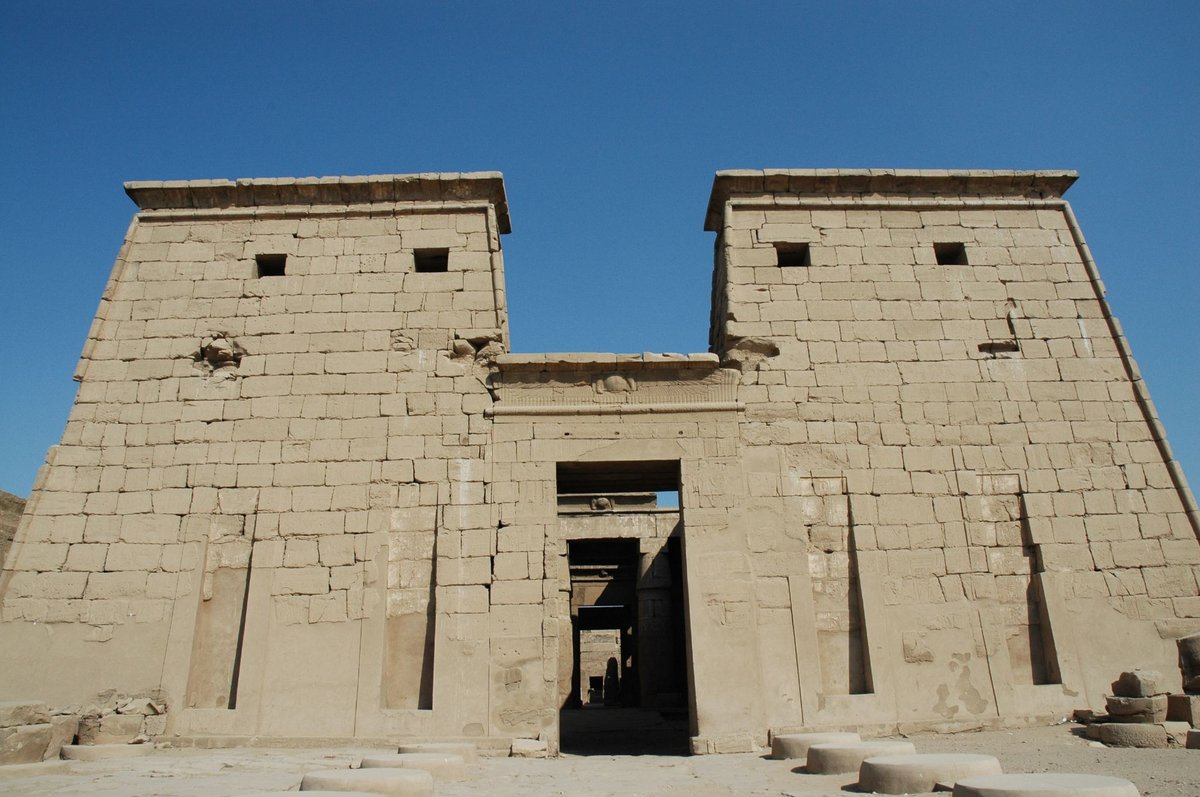
The Temple of Montu (also Temple of Monthu, Montju, or Menthu) is an Egyptian temple dedicated to the worship of Montu. The site is located 5 kilometres northeast of Karnak, within Luxor. Medamud was excavated by French archaeologist Fernand Bisson de la Roque from 1925 to the post-war period, revealing many buildings including a temple dedicated to Montu. This temple replaced an ancient sanctuary and consists of an open forum with a tower and enclosing two mounds that housed the chapels of worship. It is thought that the original sanctuary dates to the Old Kingdom. The ruins of the last structure date to the Ptolemy VIII period of the 2nd century BC, although decorations and additions continued to be added centuries later by the Romans.
Because of Montu's strong association with raging bulls, the temple was a major center of worship for bulls, containing many statues of bulls for worship and reliefs. Most of these statues are now located in various museums around the world. The temple consists of an open forum with a tower and enclosing two mounds. Medamud (or Madu) was an outpost of Thebes, located 3 miles away. Little is known about the town of Medamud or its other structures.
Prior to construction of the Middle Kingdom temple, the site had been burned and earlier mounds were razed. The Middle Kingdom temple is situated on a circular mound, its orientation bearing east-west. Nearby are the Egyptian temple complexes at Luxor and Karnak. The Karnak Temple Complex contains three precincts, including the Precinct of Montu, which contains another Temple of Montu.
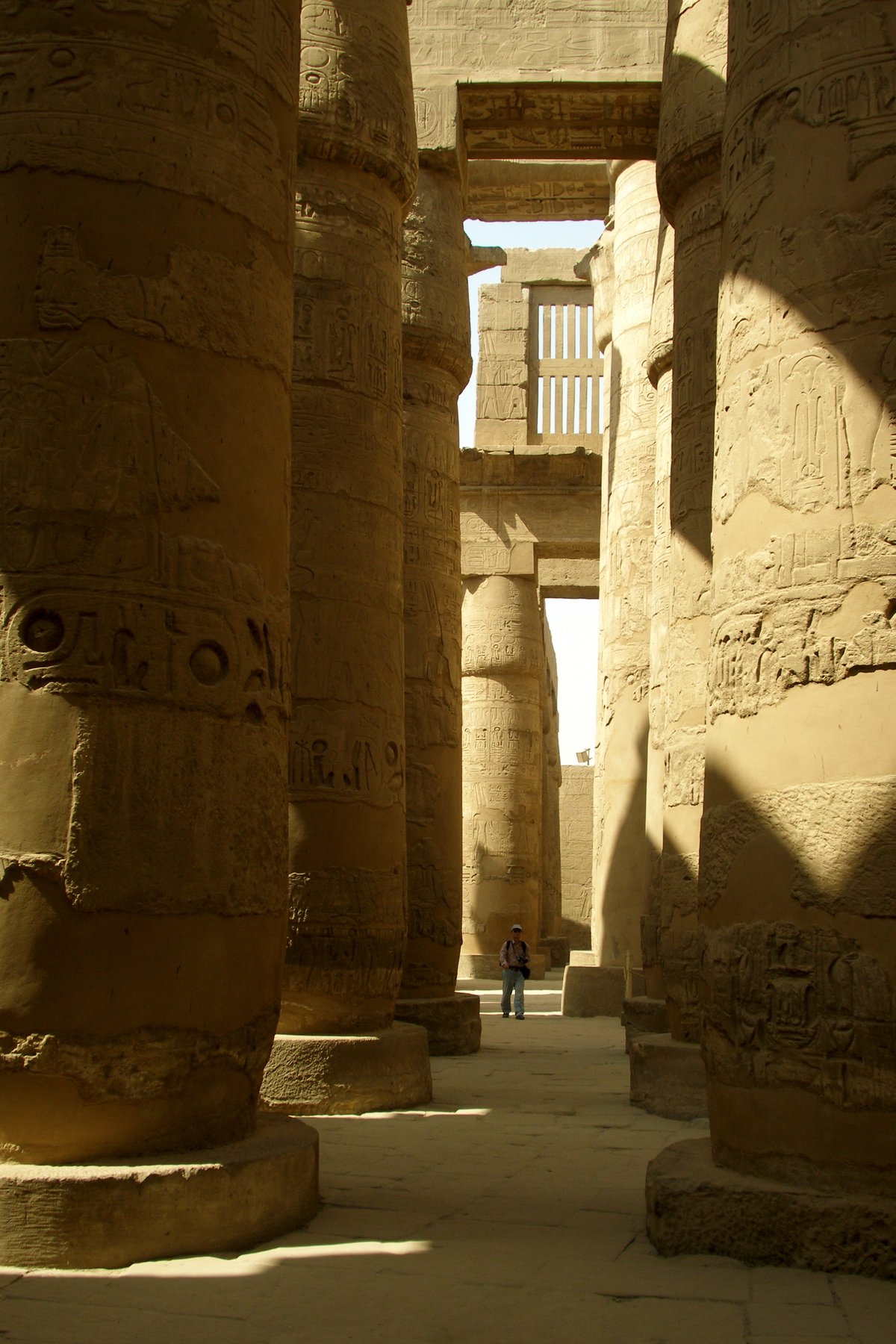
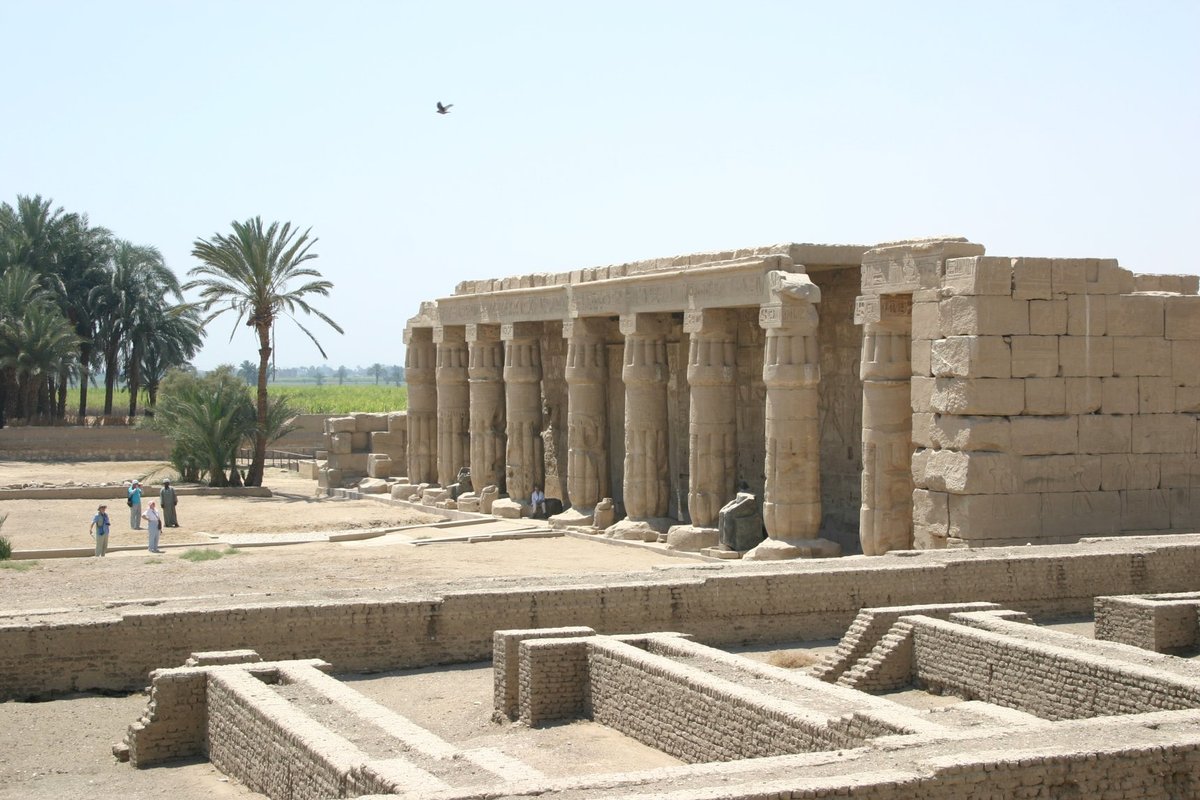
Composed of twelve columns, the structure was built under Ptolemy VIII. Four of the six columns of the façade are still connected by walls. The elements of the inner temple are dated from the beginning of the Ptolemaic period. The temple's large door underwent decoration during the reign of Tiberius, following the construction of a towered portico by Ptolemy VIII, whose decoration was not completed until the reign of Ptolemy XII. Another door dates to Ptolemy II. Evidence of ancient pilgrims exists in the form of graffiti or engraved footprints.
Sources: Wikipedia, OpenStreetMap, Wikidata, Wikimedia Commons
Written by Mutabor
Discuss this with the author and others
No comments yet. Be the first to start the conversation.