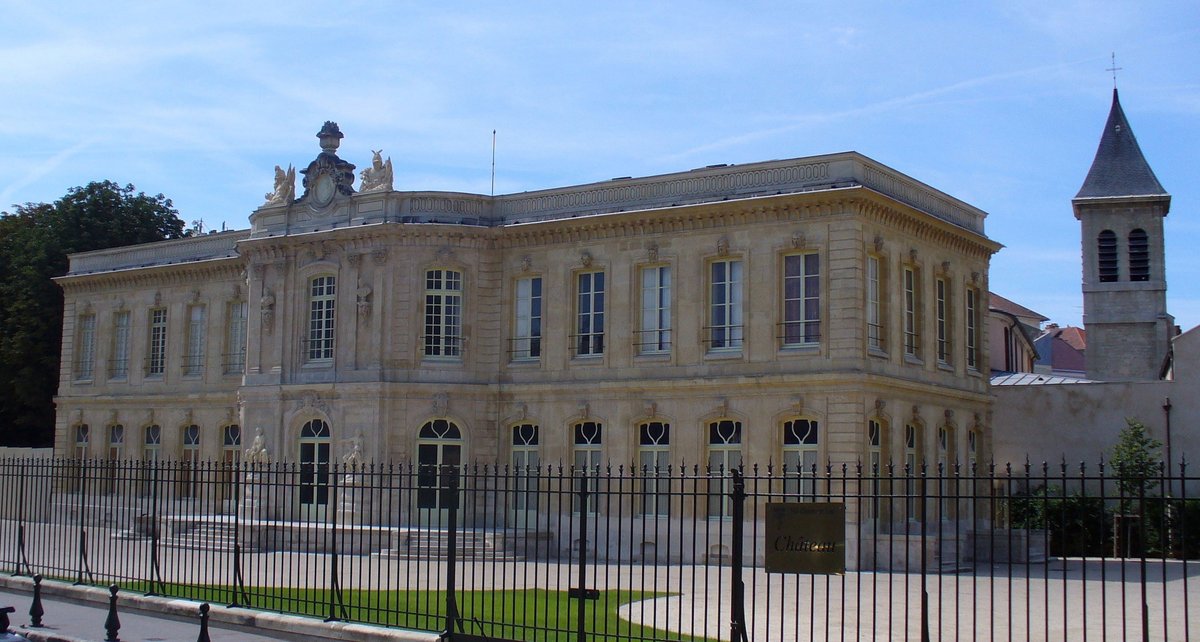

Château d’Asnières was built in France's Asnières-sur-Seine in 1750. Commissioned by the Marquis de Voyer, it replaced a late 17th-century house, which during the Regency had belonged to the famous comtesse de Parabère. The chateau was designed to outshine the residences built by his rivals, including Madame de Pompadour. Among the aged residents whose homes were demolished to make space for the sprawling estate was Antoine Lemoyne, priest-doctor at the Sorbonne, who had built the original house.
The Marquis d'Argenson added marble to the rococo dining room designed by Pineau, the first work by Charles de Wailly. The château was heavily influenced by the work of Marquis de Voyer’s great-great-great-uncle François Mansart, including a Z-shaped floor plan, the design of the forecourt and the central garden. However, archaeological excavations revealed the presence of some late antique burials behind the wing. Today, Château d’Asnières stands as a museum, and was made a historic monument on 18 July 1996.
Sources: Wikipedia, OpenStreetMap, Wikidata, Wikimedia Commons
Written by Nicolo Ciampini
Discuss this with the author and others
No comments yet. Be the first to start the conversation.