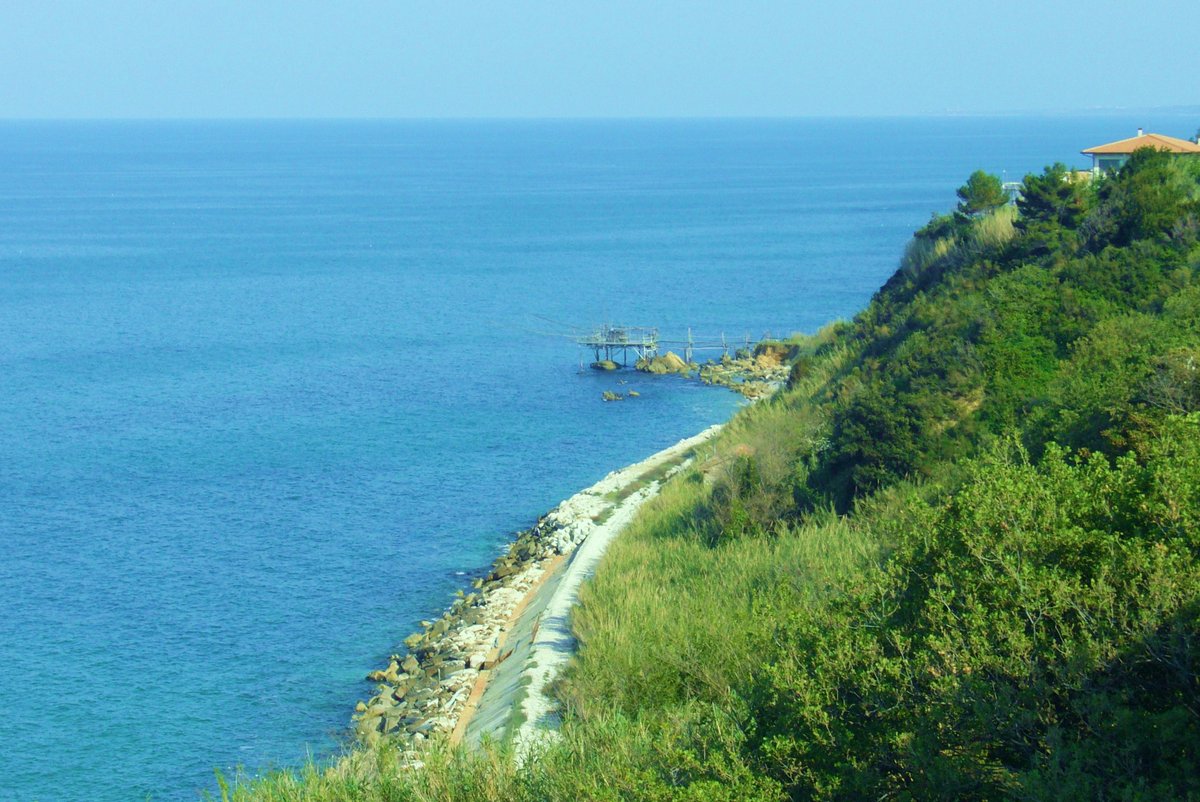

In 1889, Gabriele d’Annunzio sought a sanctuary for his affair with Barbara Leoni. His friend Francesco Paolo Michetti provided a farmhouse perched on a cliff in San Vito Chietino. Upon arriving, d’Annunzio had the garden covered in broom plants, specifically the dirt road connecting the farmhouse to the railway station on the coast.
The lovers stayed at this residence, which d’Annunzio rented from the massaro Nicola di Sciampagna, known as "Cola." It was within these walls that the poet found the inspiration and setting for his novel Trionfo della morte. In the text, the protagonists perish at the base of this very promontory. To enrich the narrative, d’Annunzio drew on local superstitions and the nearby miracles of the Madonna dei Miracoli, incorporating the raw realism and descriptive style he had used in his previous prose.
The farmhouse itself remains a simple 19th-century rural building. It is a quadrangular building with a portico on the ground floor and a balcony with a pierced balustrade on the upper floor. The front is covered with squared blocks of sandstone and regular geometric recesses. The garden, which overlooks the terrace facing state road 16, preserves the grave of Barbara Leoni.
Barbara Leoni died in 1949 and was buried in the Verano cemetery. In 2009, her remains were moved to a small mound in the garden of the house. It sits there under an inscription in verse about love burning like fire, ensuring her presence remains at the site where they spent their time together.
Sources: Wikipedia, OpenStreetMap, Wikidata, Wikimedia Commons
Written by Nicolo Ciampini
Discuss this with the author and others
No comments yet. Be the first to start the conversation.