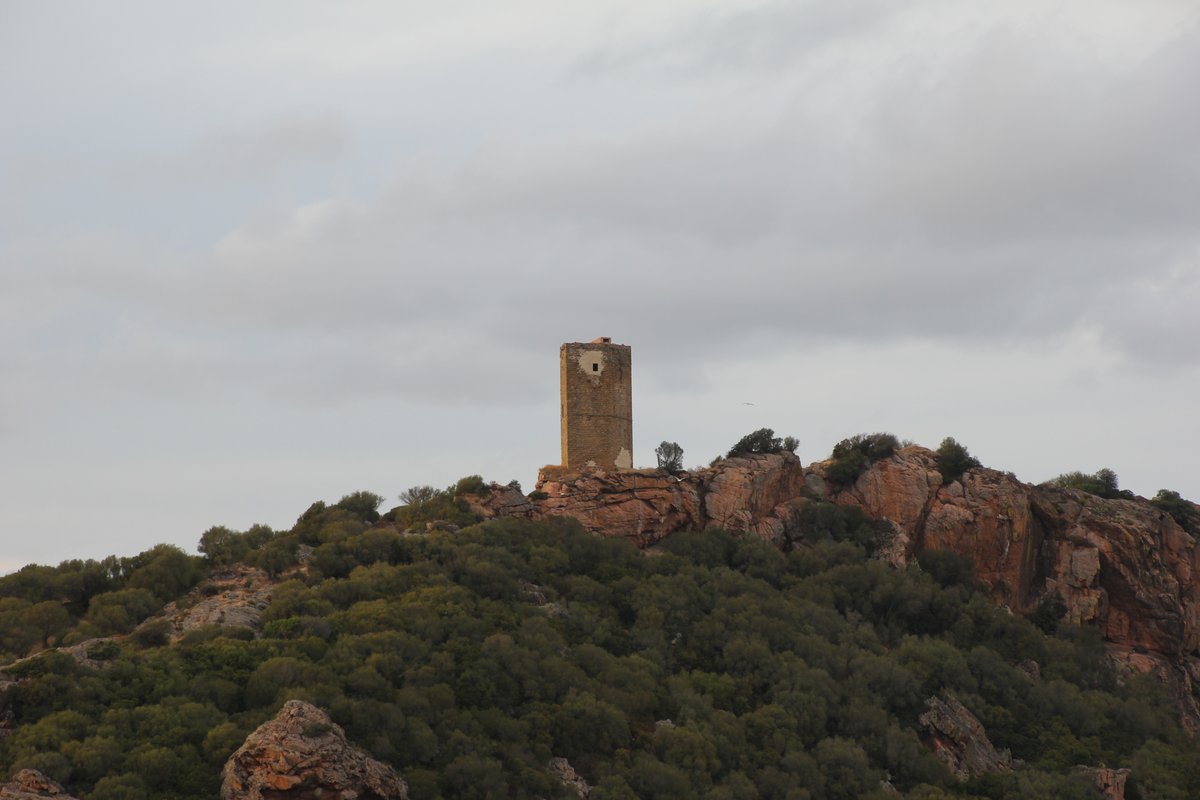

The castle of Casteldoria, also known as the Castello dei Doria di Santa Maria Coghinas, was a medieval fortified structure situated on a granite hill in the Anglona region of Sardinia. Built around the 12th century by the Doria family, it served to fortify the defensive possessions of the Republic of Genoa in northern Sardinia. In 1321, records show that Francesco da Silva, a notary for Brancaleone Doria, documented the confirmation of land donations and the shifting of local jurisdiction to the castle's authority, reflecting the family's desire to expand its influence and military presence.
The fortress changed hands frequently during the 14th century. In 1354, it was occupied by Rambaldo de Corbera for King Peter IV of Aragon and subsequently fell into Arborean hands in 1361. By 1366, Brancaleone Doria sought to reclaim the territory by allying with the King of Aragon. Archival documents from 1367 reveal that the Doria and Arborea families agreed to a political marriage between the famous Giudichessa Eleonora d'Arborea and Brancaleone Doria, with Casteldoria becoming part of the Arborean dowry. The castle remained in Eleonora's possession until the early 1400s, before passing to Cassano Doria and later to the Arborean judge Guglielmo III di Narbona in 1417.
Following a rebellion in 1420, the castle passed through many hands and owners over several centuries, eventually facing a slow decline. By the beginning of the 1700s, the structure was looted, demolished, and damaged in multiple parts. Today, the site is a viewpoint overlooking the Coghinas river and the lake of Casteldoria. While much of the medieval complex is in ruin, the pentagonal Doria tower remains the most prominent structure, standing over 20 metres high with a wooden interior and a surviving terrace.
Sources: Wikipedia, OpenStreetMap, Wikidata, Wikimedia Commons
Written by Nicolo Ciampini
Discuss this with the author and others
No comments yet. Be the first to start the conversation.