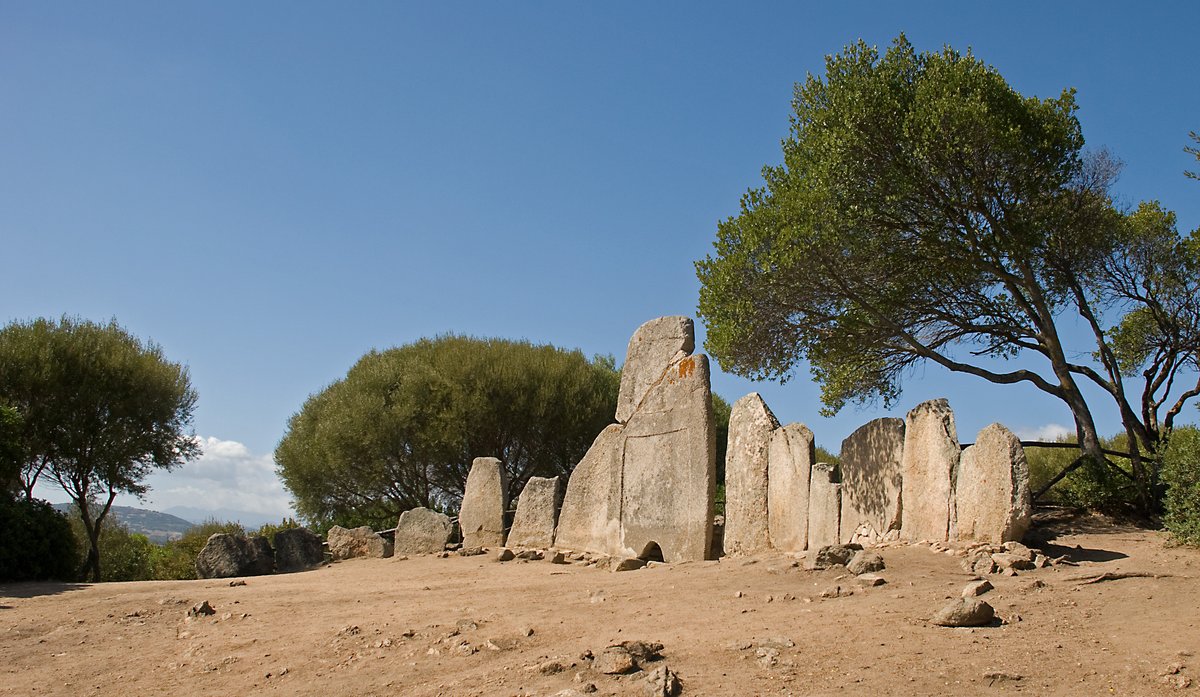

The tomb at Li Lolghi rose above the Sardinian land in many phases: first it was a humble dolmen cist covered in earth, then - during the Bronze Age - it grew to a towering structure over six meters in height, with an entrance formed by a central stele. The tomb, also known as the Nuraghe Tomba di Li Lolghi or the Tomba dei Giganti di Li Lolghi, is located in the Nord-Est Sardegna region, in the town of Arzachena. More than just a simple grave, it is a relic of the people who once lived here, a testament to their ingenuity and creativity.
The tomb is dated to the early Bronze Age, during the Bonnanaro culture period (around 1800 BC). Its construction is unique: the tomb appeared at first as a dolmen cist, covered with a tumulus, before being adapted to become a tomb of giants with the expansion of the funeral chamber and the creation of the exedra, composed of 14 vertical stones, with a height of almost 4 meters. Unfortunately, the mysterious people who built this tomb remain lost to history, and their stories have been buried with them.
But the tomb itself remains a fascinating puzzle for archaeologists, a window into the distant past of the Sardinian civilization.
Sources: Wikipedia, OpenStreetMap, Wikidata, Wikimedia Commons
Written by Nicolo Ciampini
Discuss this with the author and others
No comments yet. Be the first to start the conversation.