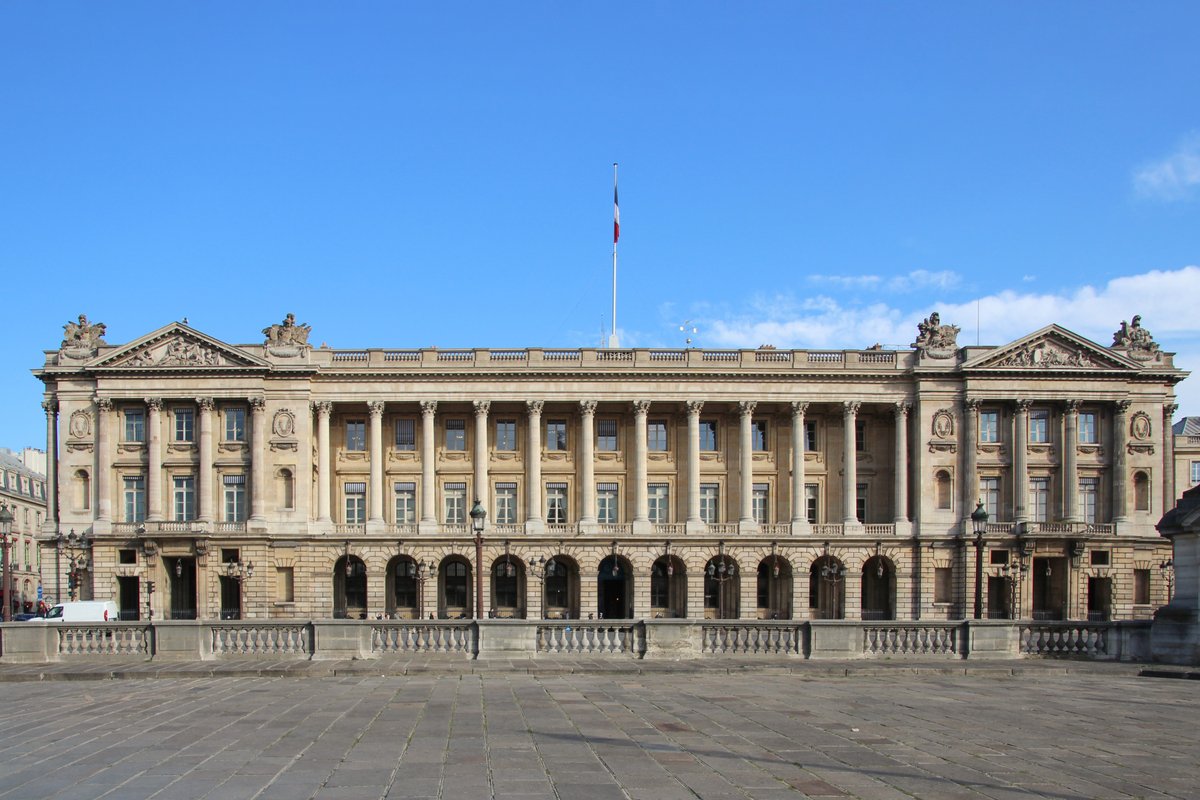

It is a bit of a bizarre historical pivot, isn't it? This massive neoclassical facade on Place de la Concorde wasn't originally a palace or a museum. It was the royal furniture warehouse. Think of it as the King's high-end storage unit, where every tapestry and gold-leaf chair was kept under lock and key.
Construction began in 1758 and finished around 1774. The architects were Ange-Jacques Gabriel and Jacques-Germain Soufflot. They wanted to impress the King with a massive colonnade, and they succeeded. The building was the home of the Garde-Meuble, the office in charge of the crown's interior design. By 1772, it actually became Paris's first decorative arts museum, open to the public once a month. It even had a chapel, a library, and a stable.
Then things got messy. In 1789, a mob of angry people wanted weapons. They marched here because they knew the Garde-Meuble held the ceremonial gear. The acting intendant, terrified of the crowd, let them into the building to take the swords and lances. He tried to save the fancy furniture, but he couldn't save the peace. The next morning, the two cannons from this very building fired the first shots at the Bastille. A furniture warehouse as a revolutionary trigger - how deliciously ironic.
After the revolution, it became the Ministry of the Navy until 2015. Today, it is open to the public and managed by the Centre des monuments nationaux. You can see the restored 18th-century apartments of the King's Intendant and the famous Al Thani Collection. It also houses the Foundation for the Remembrance of Slavery.
Sources: Wikipedia, OpenStreetMap, Wikidata, Wikimedia Commons





Written by Nicolo Ciampini
Discuss this with the author and others
No comments yet. Be the first to start the conversation.