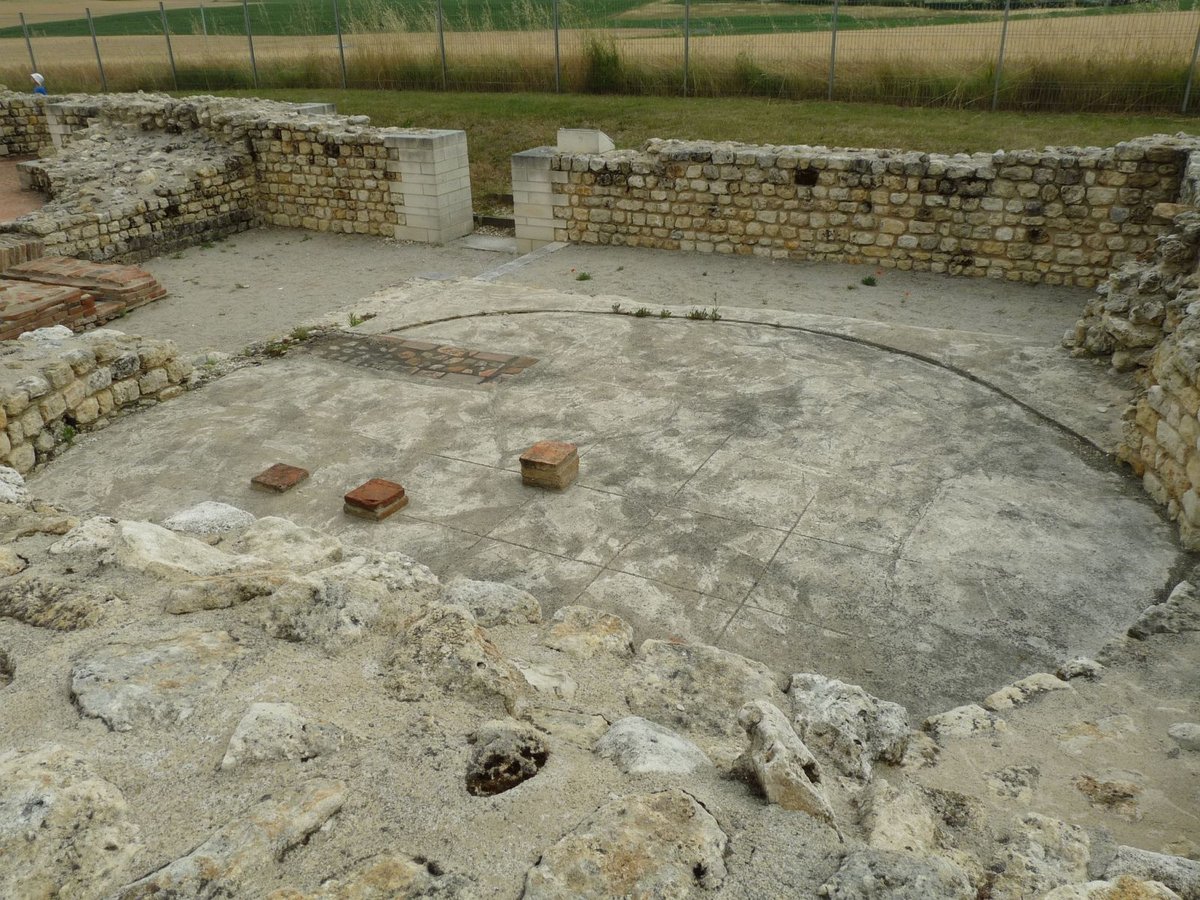

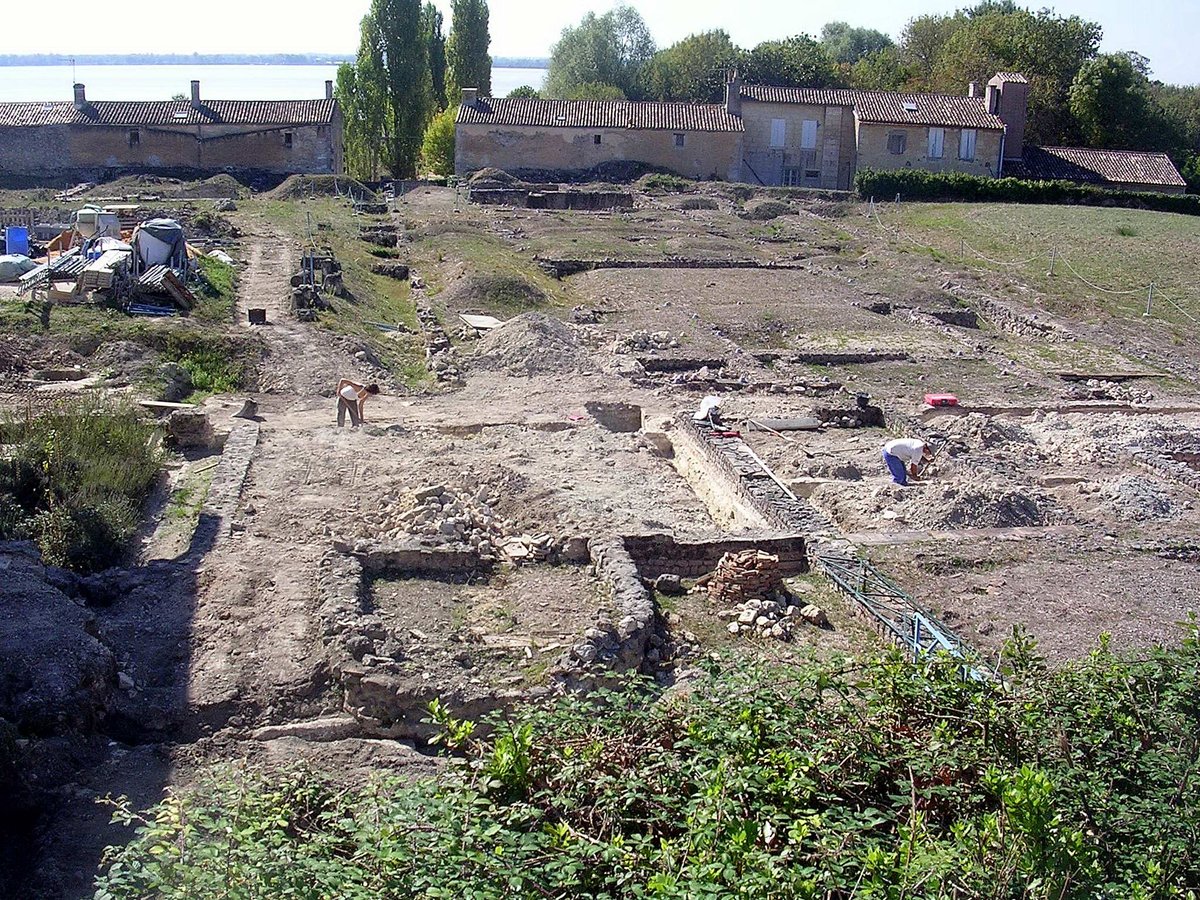
The settlement at Le Fâ in Barzan was a major commercial hub, likely the Novioregum referenced in the Itinerary of Antoninus. Systematic excavations starting in 1994 have revealed the remains of this significant port city, which was located near the mouth of the Gironde. The site featured a monumental temple, public baths, a theater, and warehouses, and is believed to be the Portus Santonum described by Ptolemy.
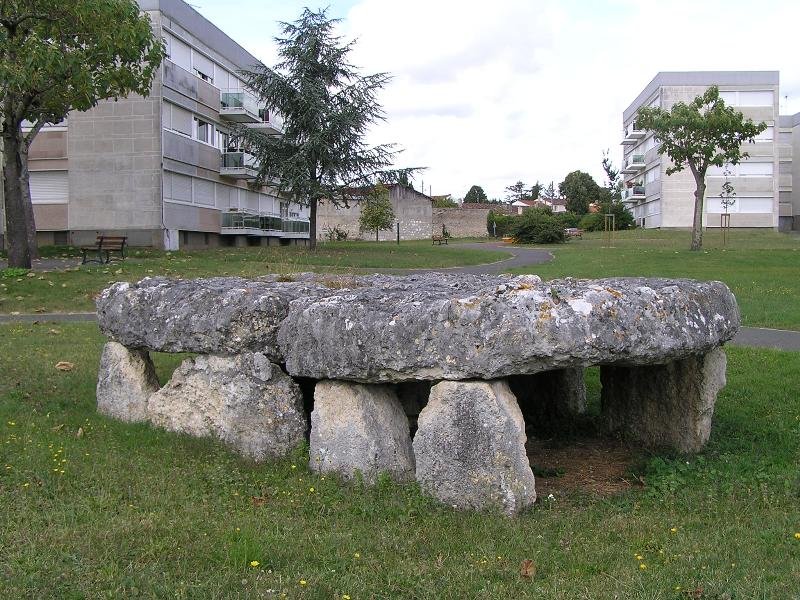
The site shows a progression of human activity starting with Neolithic habitats from 3,500 years ago. Archaeological evidence includes various remains such as polished axe heads and arrowheads discovered near the hill of La Garde. In 1975, aerial prospecting confirmed fortifications around a camp, consisting of ditches and zigzag entrances designed to expose potential attackers. Later, around the 7th century BC, the Santon people established a monumental sanctuary on a height overlooking the estuary.
By the 2nd century AD, the area was transformed into a prosperous hub. During the reign of the Antonines, the city was decorated with important monuments, including avenues and large baths. The city remained significant until the end of the 3rd century, after which it declined for reasons that remain unknown. While some suggest the port may have silted up, no definitive proof has been established, though this phenomenon did affect other regional ports like Brouage.
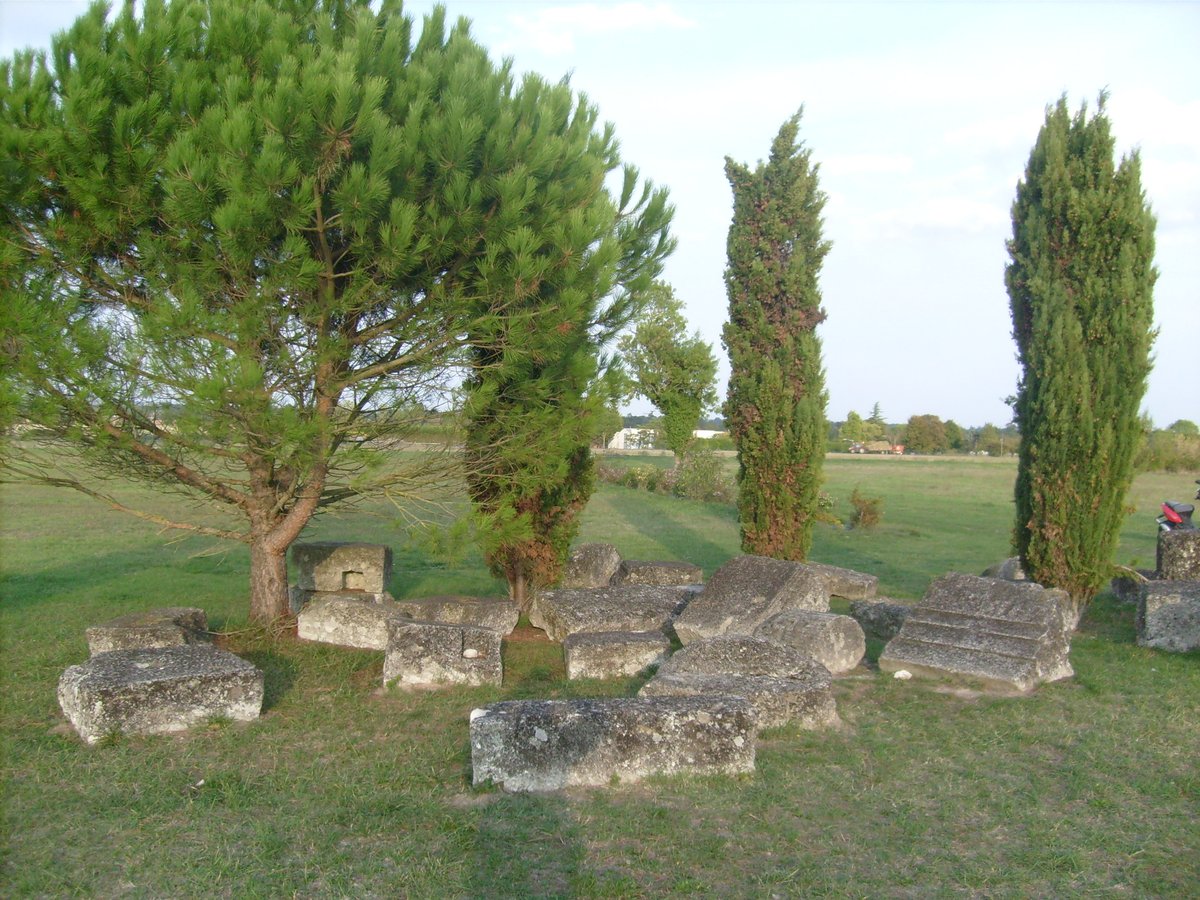
Visitors can explore the archaeological site at Route du Fâ 25 to see the evidence of this ancient urban development. A dedicated museum on-site houses the various finds discovered during the ongoing research. Under certain conditions, visitors may even have the opportunity to participate in the excavation work that continues to uncover the history of the region.
Sources: Wikipedia, OpenStreetMap, Wikidata, Wikimedia Commons
Written by Nicolo Ciampini
Discuss this with the author and others
No comments yet. Be the first to start the conversation.