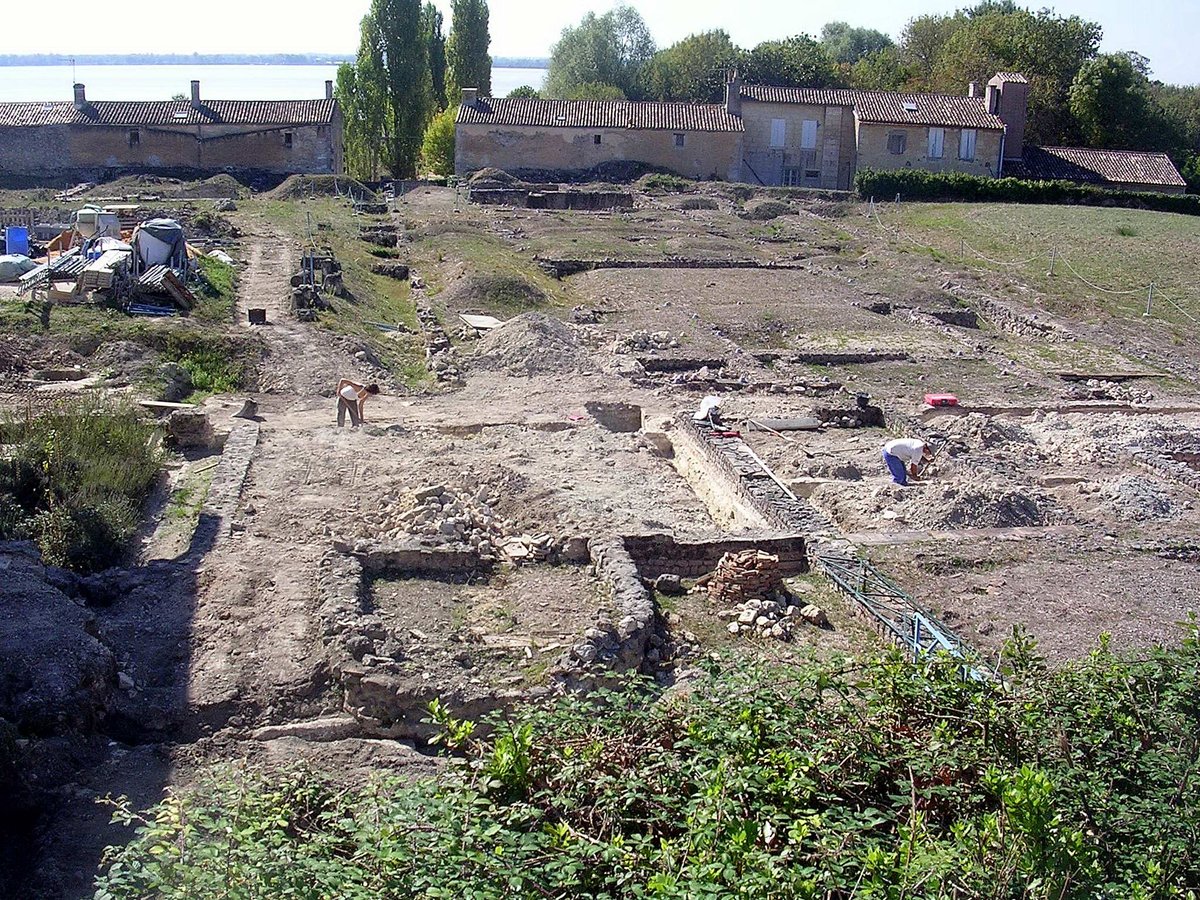

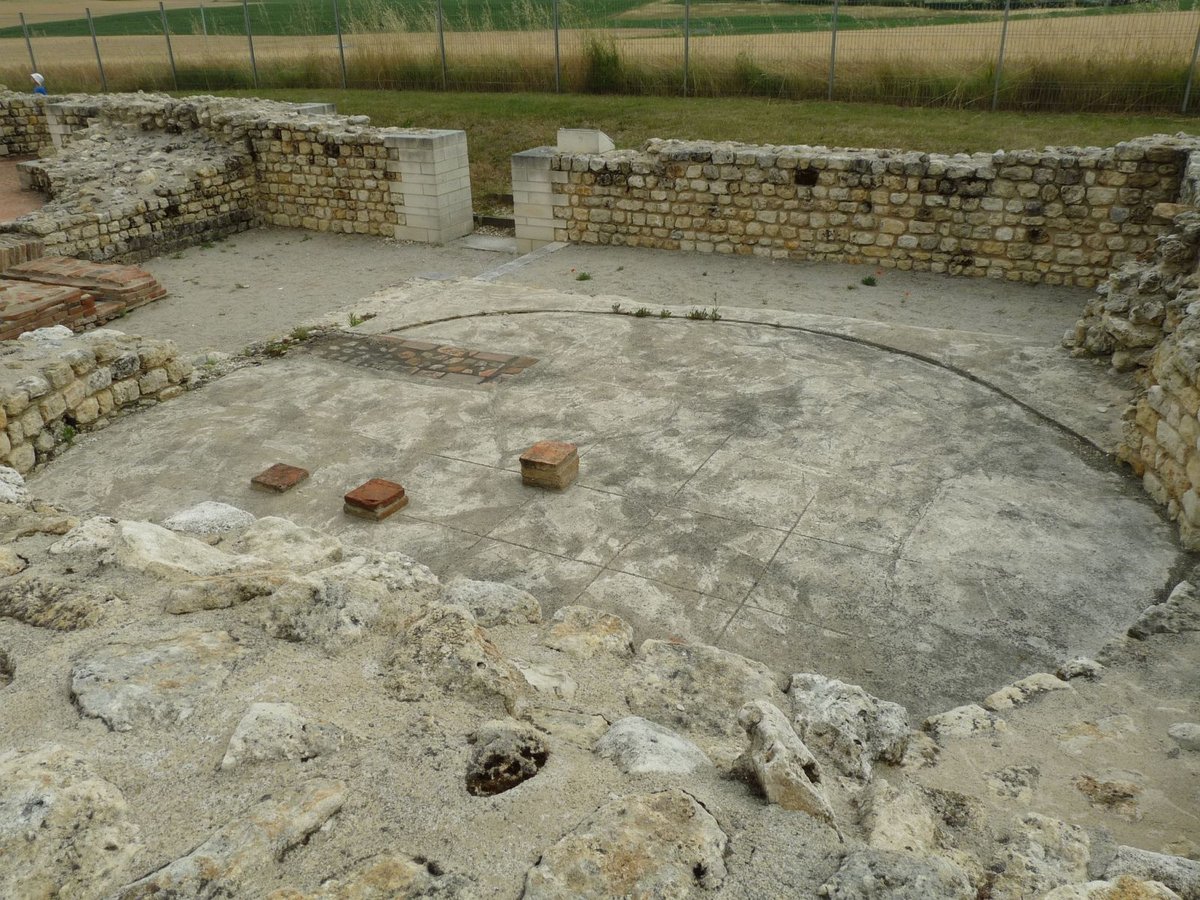
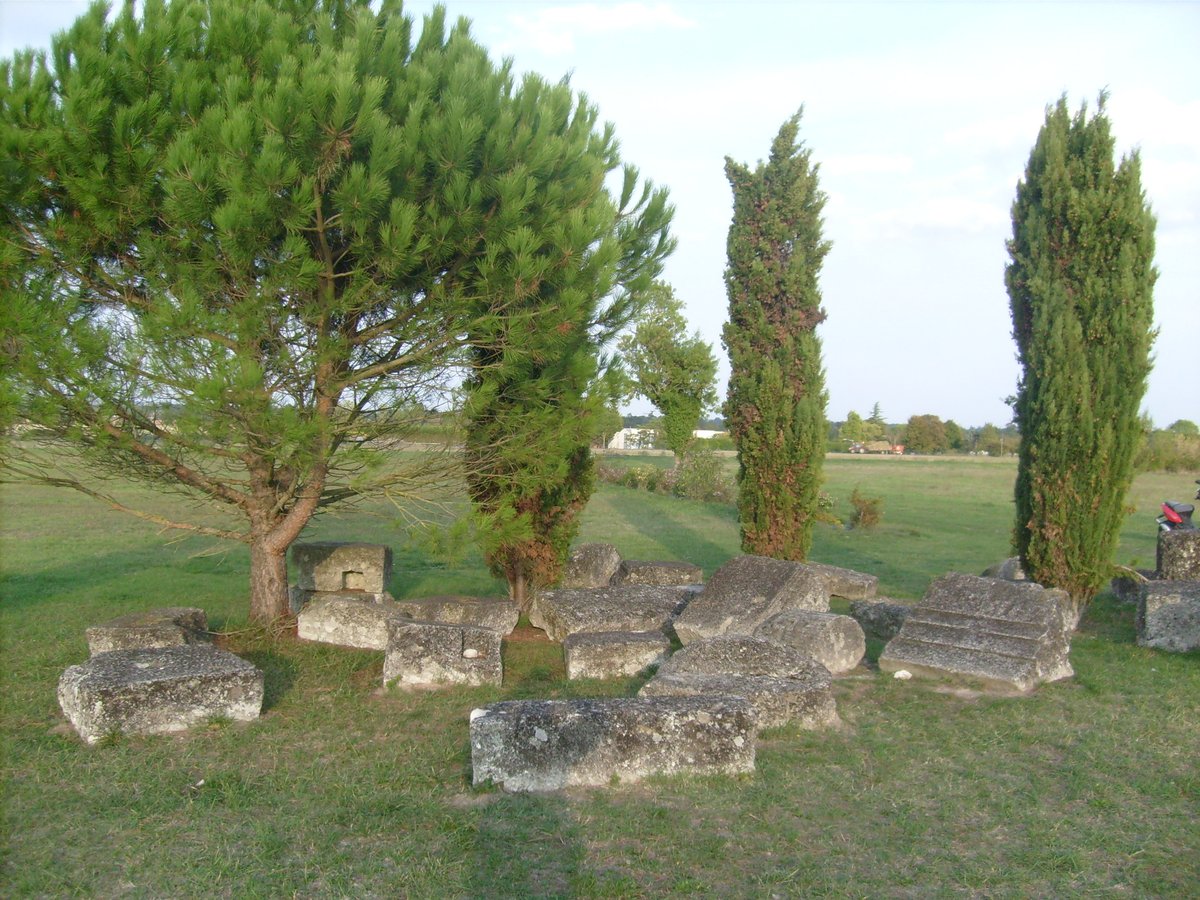
In the department of Gironde, the Villa gallo-romaine de Plassac serves as an archaeological site featuring three villas built during the 1st, 2nd, and 3rd centuries. During the 1st century, Plassac was part of the imperial province of Aquitaine Secunda, with its capital in Mediolanum Santonum (Saintes) before moving to Burdigala (Bordeaux) in the early 3rd century. Located near the Gironde and the Bordeaux-Saintes land route, the site held significant economic interest.
The first villa was constructed between 100-120 AD on the ruins of a maritime palace, serving as a replica of the imperial palace of Rome. It featured a large central hemicycle and a main dining room of approximately 70 m2, the foundations of which remain. By the 2nd century, a more compact construction was added, featuring a triclinium decorated with opus sectile and a courtyard divided into two parts. This structure was a hybrid design, functioning as a closed peristyle villa and an open gallery villa with a monumental northern portico.
The site was discovered by chance in the 19th century and officially recognized as a Roman villa in 1883. In 1890, Camille Jullian identified the site as the property mentioned in the 616 AD testament of the Bishop of Le Mans, Bertrand du Mans. The site also preserves mosaics from the late 4th century, decorated in the style of the Aquitaine School with geometric and vegetal polychrome compositions.
Sources: Wikipedia, OpenStreetMap, Wikidata, Wikimedia Commons
Written by Nicolo Ciampini
Discuss this with the author and others
No comments yet. Be the first to start the conversation.