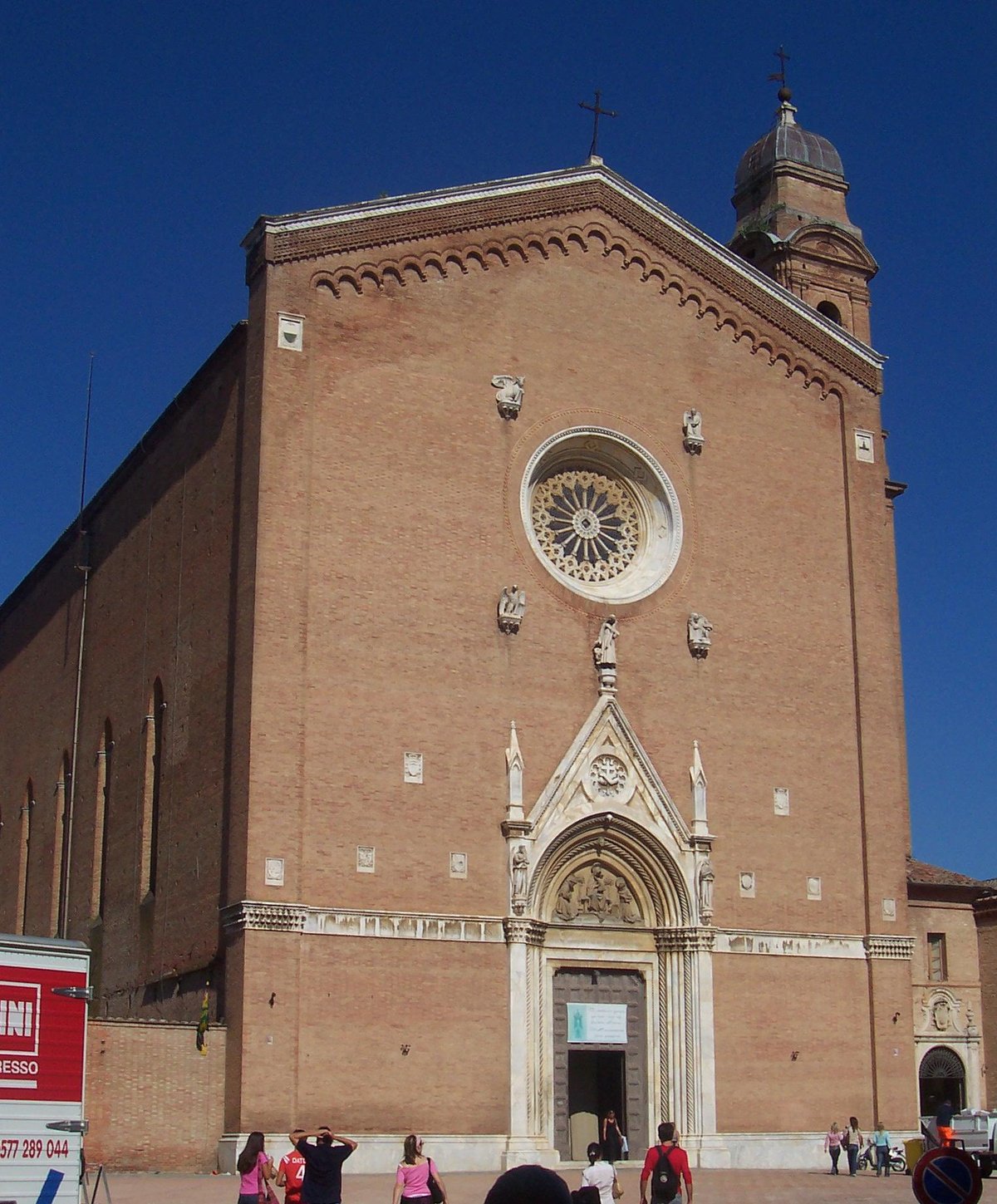

Nestled in Piazza San Francesco, the Basilica of Saint Francis, a structure dating back to 1228-1255, underwent expansion in the 14th-15th centuries, evolving into a colossal Gothic edifice. However, the architecture takes a backseat to the peculiar occurrence that unfolded in 1730. The uncanny mystery revolves around a eucharistic miracle where communion hosts were found untouched, having gone missing from the Basilica. To this day, the identity of the culprit and their motives remain elusive.
But, let's delve into the architectural nuances of the church. The basilica, following the Egyptian Cross plan, answers the Mendicant Orders' need for expansive communal spaces. Unfortunately, a fire in 1655 and the restoration of 1885–1892 resulted in the demolition of many Baroque altars. However, some paintings have made a comeback recently. The neo-Gothic façade, erected in the early 20th century, replaces the medieval marble decoration and the 15th-century portal.
The art that decorates the church is particularly intriguing. Madonna with Child by Jacopo Zucchi, an expressive Crucifixion by Pietro Lorenzetti, and a Prayer of St James by Giuseppe Nicola Nasini are just a few examples amongst the array of masterpieces on display. The counterfacade of the church houses two 14th-century sepulchres and two large fragmentary frescoes from the city gates of Porta Romana and Porta Pispini. For architecture enthusiasts, the basilica’s Egyptian Cross plan and grand neo-Gothic façade offer a curious study.
Sources: Wikipedia, OpenStreetMap, Wikidata, Wikimedia Commons
Written by Nicolo Ciampini
Discuss this with the author and others
No comments yet. Be the first to start the conversation.