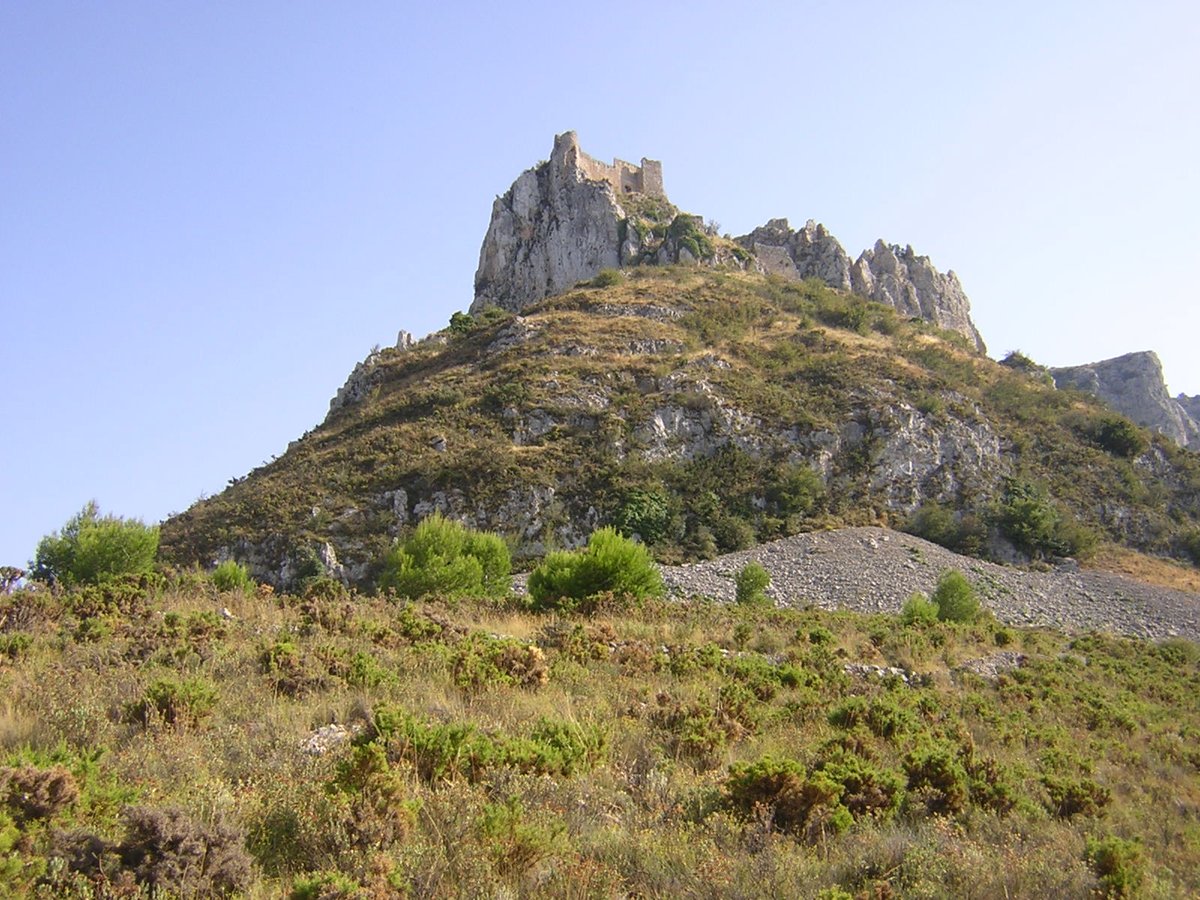

The castle of Castell d'Alfofra is a 13th-century relic that crowns the Guadalest Valley, the strategic high ground between sea and mountains. It stands there still, silent in the sun, defending no borders that matter today but dominating all like it did then. The valley's name comes from the castle, from its foundations, from the man who built it and brought a kingdom for it under his hand. He was King Jaume the Conqueror, King Jaume I of Aragon and of Catalonia, King of Majorca, King of Valencia, and King of the Balearic Isles.
He waged war for twenty years, took three cities, created an empire that lasted 700 years, and died in Castell d'Alfofra, on the feast of the Day of the Assumption of the Virgin Mary in 1276, throwing aside his crown and setting down as a private citizen among his own. The church still bears the final resting place of his heart, and the castle still bears the name he brought here. The castle's name comes from its foundations, from the chip of Muslim land on which it was built.
The town below is Benifato, built from the Arabic Al-Azraq, meaning 'the green one', the color of their tent in the valley of Guadalest. The castle could have been called anything, but it was given Alfofra, the Arabic name of King Al-Azraq, the founding king of Benifato himself. How he won the land is lost to time, but once he had it, he made it his own. He built his castle and handed it to his brother-in-law, Ramon Tric, to hold for him. Ramon died, and the castle passed to Vidal Sarrià, a knight who became a baron, a guitarist in the court of the King of Aragon, and a poet.
His son became a troubadour, singing of kings, love, and war. His great-grandson became a king, writing itself into his entire family line from then. The castle passed through many hands after Vidal: through the infante Pedro, the Cardona and Arizza families, and more. In the 16th century it sheltered moriscos in the mountains, offering strong armed resistance to the 1609 expulsion decree. Today it stands, the ruins weathered but the stones still harried by wind and rain, silent now, until the sun sets and time disappears.
Sources: Wikipedia, OpenStreetMap, Wikidata, Wikimedia Commons
Written by Nik Frost
Discuss this with the author and others
No comments yet. Be the first to start the conversation.