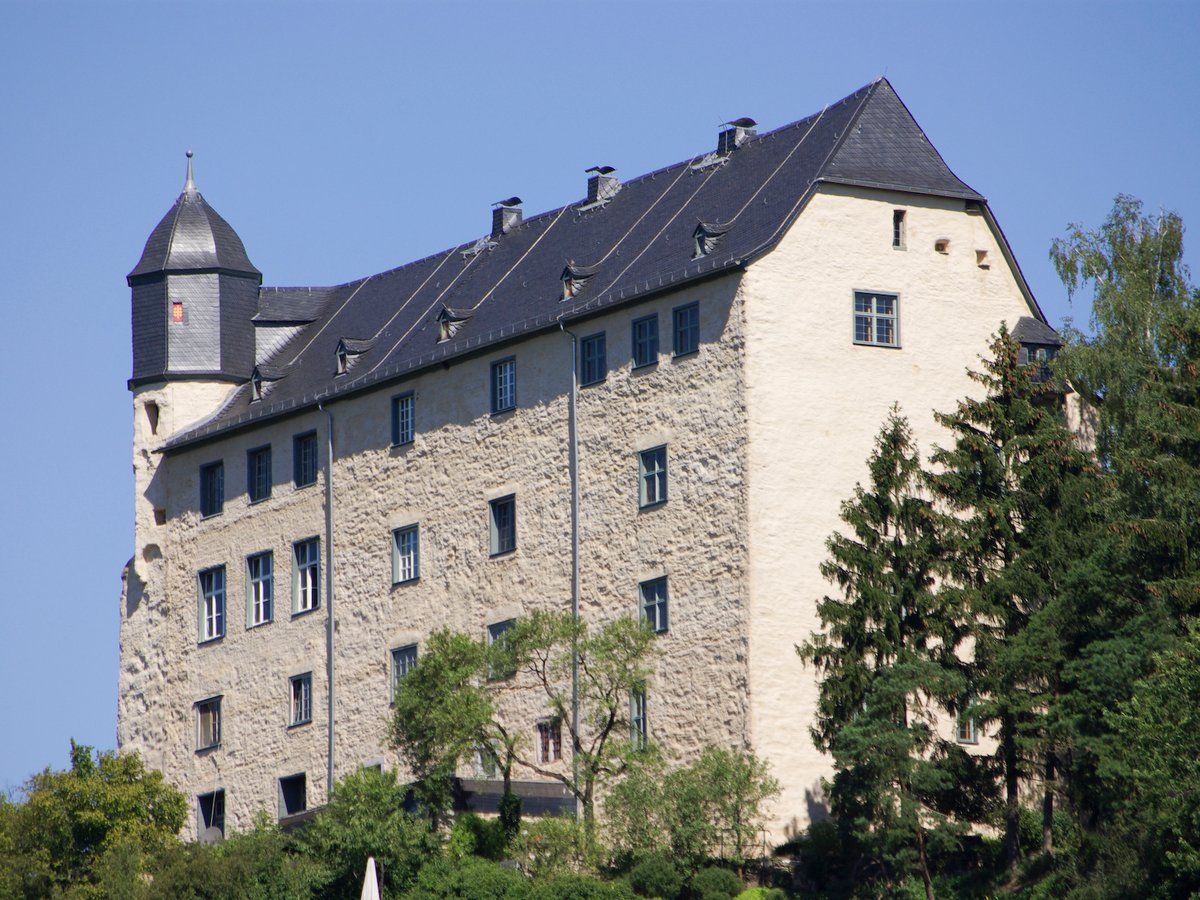
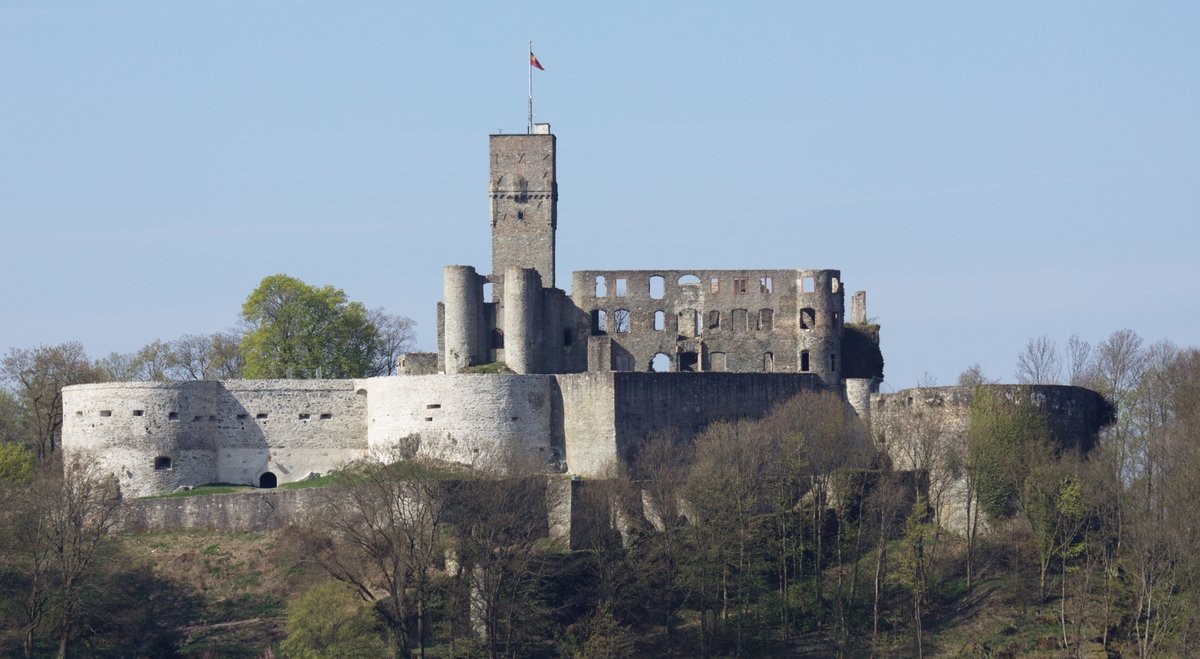
The name Schadeck carries a literal threat in its origin. It translates to a spot intended for the damage of Runkel Castle. In the late thirteenth century, Henry of Westerburg looked across the valley at the stronghold of his cousin and decided that a counter-fortress was the necessary answer to a family inheritance dispute.
He began construction in 1276, building a site of stone and strategy about 50 metres above the River Lahn. Despite its purpose as a weapon of architecture, Schadeck never succeeded in its mission. It never conquered Runkel.
By 1321, the cycle of spite had shifted toward broader political ambitions. Lord Reynard of Westerburg found himself pressured by the Archbishop of Trier, Baldwin of Luxembourg, to hand over Runkel as a fief. A series of broken agreements and violent conflicts followed. When Reynard failed to honor the terms, Baldwin seized the castle by force in 1344. In 1346, after another attempt at a peaceful division, Reynard sold his entire share to the Archbishop. The Westerburg family stayed on as vassals, their influence persisting even as the ownership of the stones shifted.
Time and war eventually softened the edges of the fortress. During the Thirty Years' War, the north wing suffered significant damage. It was later slighted again in 1803, leaving parts of the structure as ruins. Yet, the castle continued to serve the community in practical ways. By 1821, the west wing became the seat of the local mayor's office. Around 1850, the village school was located on the second floor of the castle.
By the twentieth century, the weight of the centuries began to press too heavily on the masonry. Parts of the building faced collapse, prompting a major restoration that began in 1998. The project was a massive undertaking to preserve the shell of the medieval past, including a total replacement of the roof and the internal framework of the baroque staircase. Work finished in 2006.
Today, the castle stands as a well-preserved, rectangular building with a staircase tower on its western face. It is a site of quiet residence now, housing private homes that remain closed to the public. It remains a protected landmark, so significant to the cultural landscape that it is even protected under the Hague Convention in the event of war.
Sources: Wikipedia, OpenStreetMap, Wikidata, Wikimedia Commons
Written by Aurora
Discuss this with the author and others
No comments yet. Be the first to start the conversation.