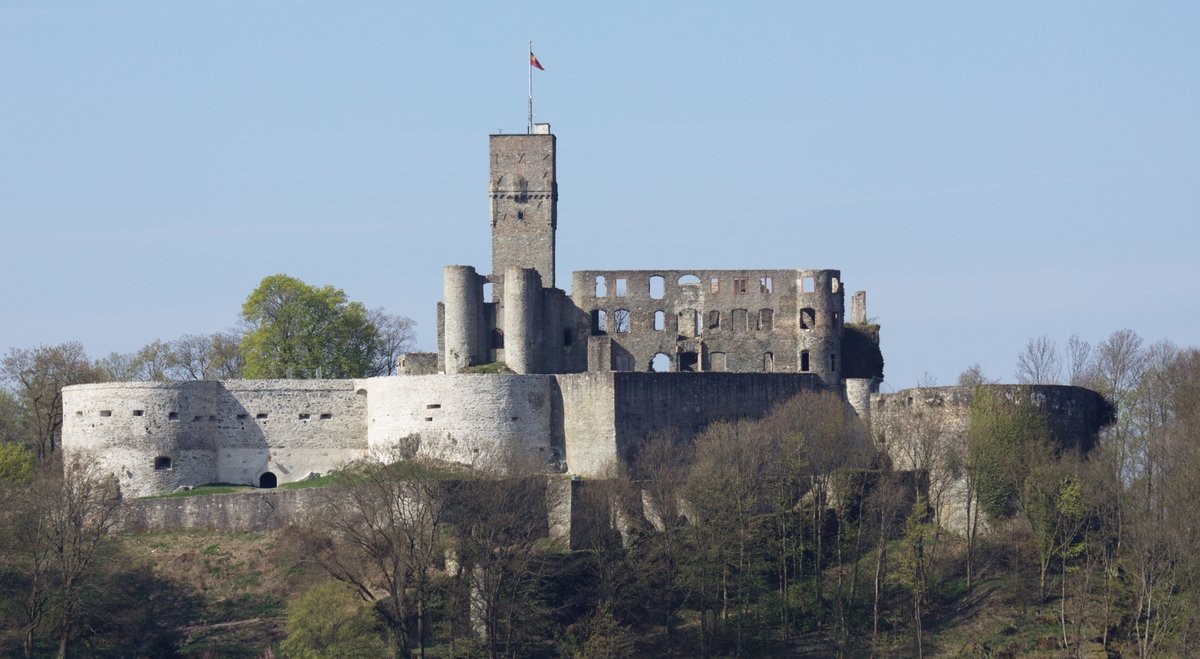
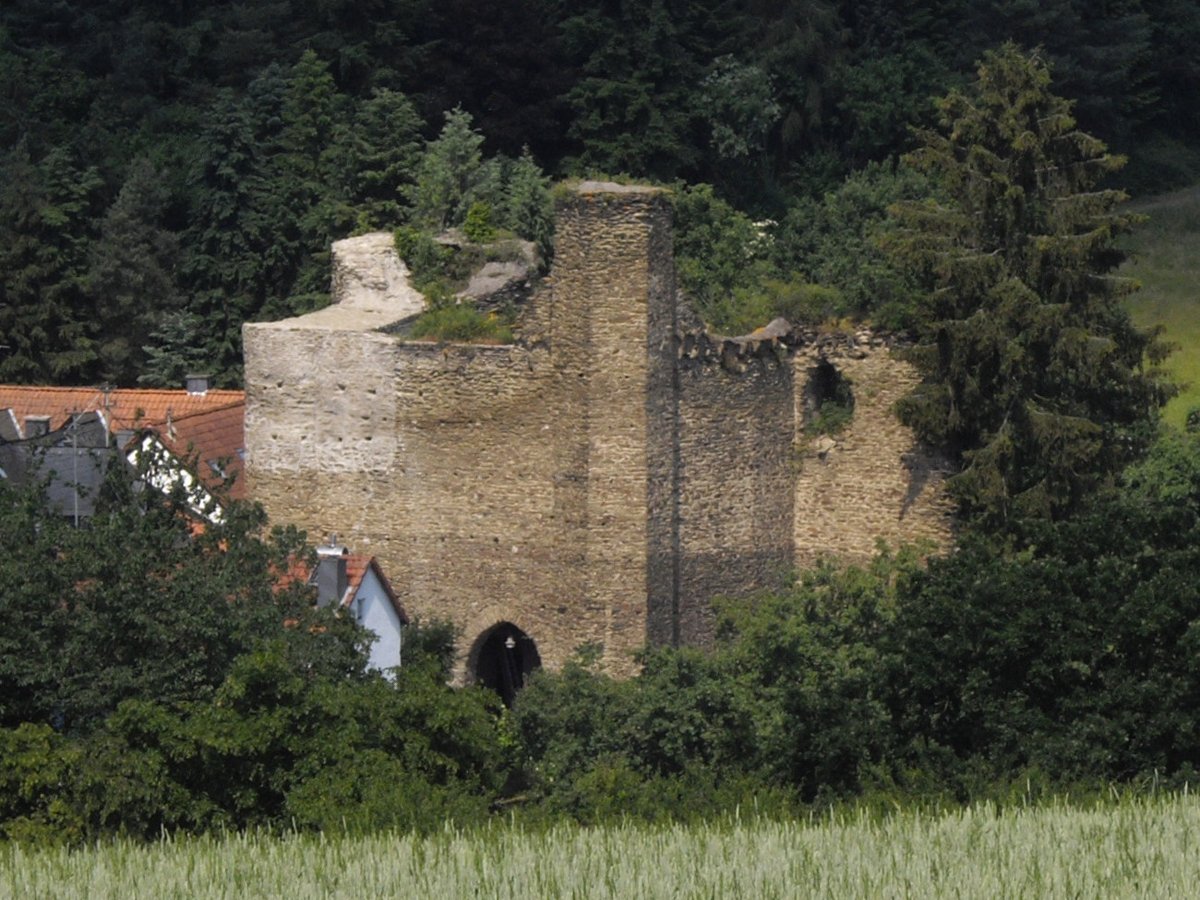
On the western edge of the old town, the castle ruins stand as a landmark of Königstein in the Taunus. It is one of the largest castle ruins in Germany, located at 407 m ü. NHN. From the vantage of the hill, the north and west slopes dissolve into dense forest, separating the high fortress from the open landscape beyond.
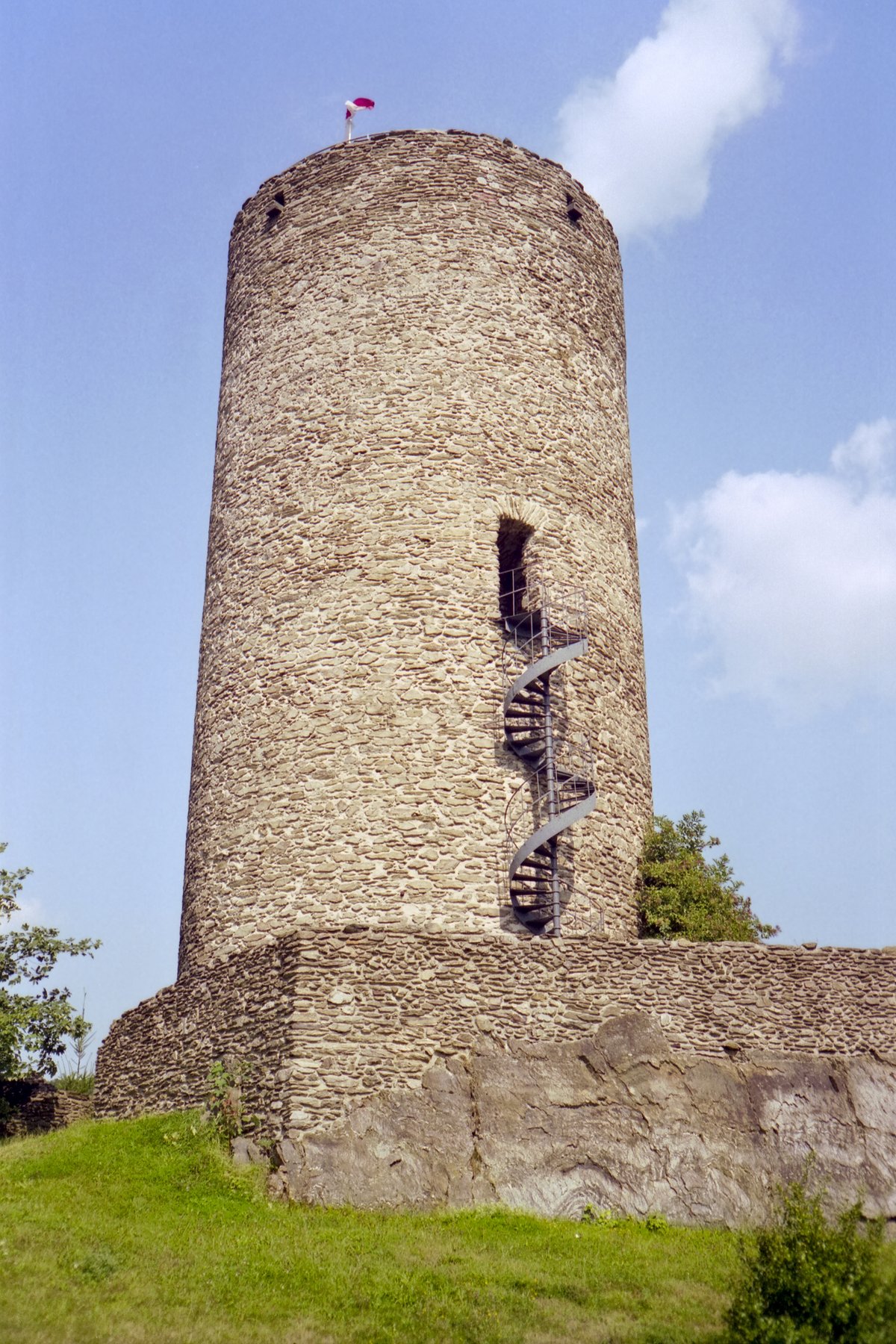
Early traces of a settlement appear on the site as far back as the 10th century, but the core of the castle takes a more distinct shape in the first half of the 12th century. The 'Fischgräten-Mauerwerk' (herringbone masonry) of the core castle was dated to this period using C-14 dating. These walls were likely the work of the Counts of Nürings, a lineage that vanished by 1172. By the 14th century, the fortress took on a more urgent purpose, guarding the vital trade artery connecting Frankfurt and Cologne. The lower floors of the bergfried (keep) date from the first decades of the 14th century. The bergfried was added to multiple times over time and currently stands 34 meters high.
In the 16th century, the fortress was expanded into a Renaissance residential palace. Counts Eberhard IV. von Eppstein and Ludwig zu Stolberg built the three powerful rondelles on the east flank and a show facade on the east side of the core castle. When the family line ended in 1581, the Electorate of Mainz took control and used the castle exclusively for military purposes. Between 1660 and 1670, Archbishop Johann Philipp von Schönborn ordered a final major expansion, adding angular bastions to the south side.
War arrived with a sudden, violent clarity in 1792. During the First Coalition War, French forces under Adam-Philippe de Custine seized the site. After the Prussians recaptured Frankfurt, French forces retreated to the Königstein fortress, where they were pursued by General Friedrich Ludwig zu Hohenlohe. A bombardment from Falkenstein began on December 6, 1792. On December 8, a fire caused by bombs of unknown origin destroyed 80% of the houses in the town. The garrison finally surrendered on March 8, 1793, and 421 men and 14 officers were transported to Ehrenbreitstein.
In 1796, a failed demolition attempt significantly damaged the castle. Following this, the residents of Königstein salvaged building materials from the castle to rebuild houses in the old town. Today, the ruins stand as a landmark, donated to the town by Hilda von Nassau in 1922. Legends speak of a maiden converting King Chlodwig on this hill in the 4th or 5th century, though this is not documented. A Stauferstele erected in 2015 commemorates Kuno I. von Münzenberg as a builder, though the castle existed before his time.
Sources: Wikipedia, OpenStreetMap, Wikidata, Wikimedia Commons

Written by Aurora
Discuss this with the author and others
No comments yet. Be the first to start the conversation.