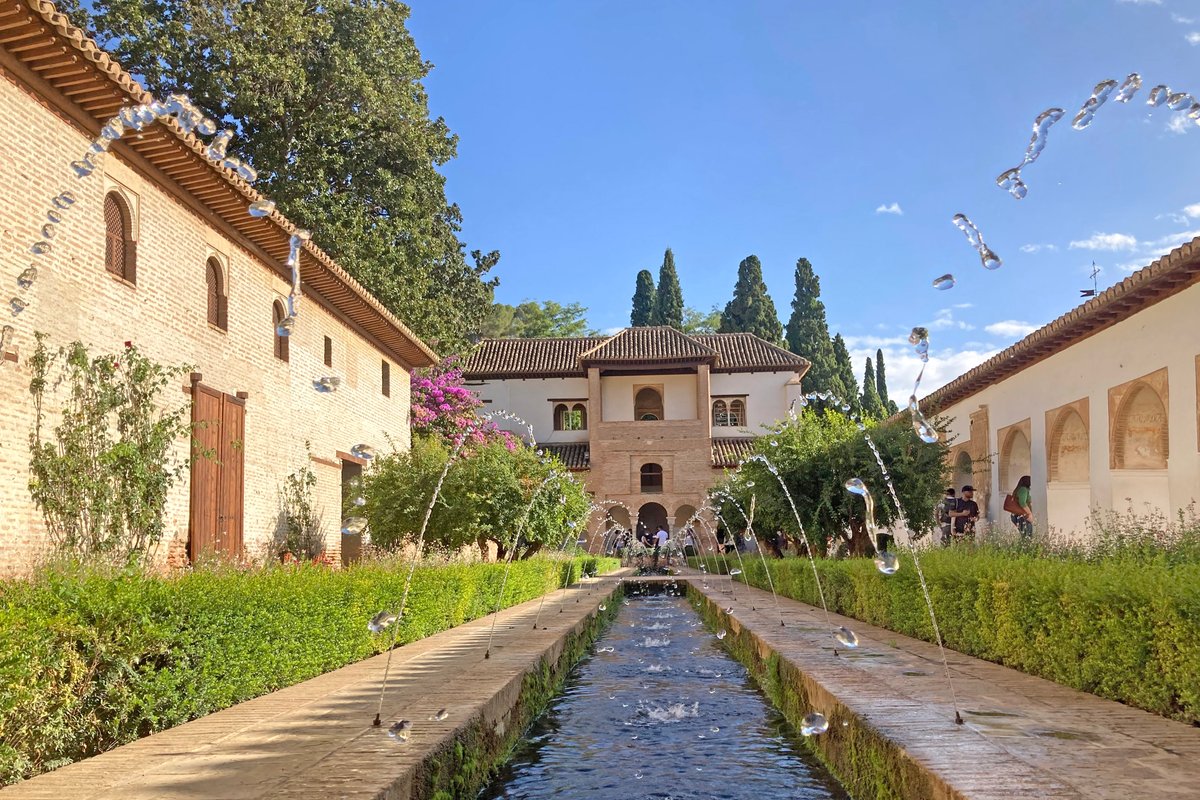

Why is the name Generalife such a headache for historians? You might hear it called the Garden of the Artist, but Robert Irwin suggests those labels are unlikely. It might have been as simple as the Principal Orchard, or perhaps the House of the Felicitous Kingdom. Whatever the truth, it functioned as an almunia. It was a country villa for the elite and a working farm with agricultural functions.
Who actually started the construction around the turn of the 14th century? It was likely Muhammad II or Muhammad III. For centuries, different rulers kept tweaking the design, adding pavilions and redecorating the courtyards. It was a living space, constantly evolving until the Spanish took over after the Reconquista.
Was there a tragedy in the 19th century? Théophile Gautier complained that delicate carvings were being smothered by layers of whitewash for cleanliness. They tried to keep it clean but ended up burying the very details that made it special. A fire in 1958 eventually forced some archaeologists to dig deep, uncovering the original Moorish paths buried under 70 centimeters of newer soil.
The layout still honors the original Moorish divisions, even if the plants have changed over the years.
Sources: Wikipedia, OpenStreetMap, Wikidata, Wikimedia Commons
Written by Nicolo Ciampini
Discuss this with the author and others
No comments yet. Be the first to start the conversation.