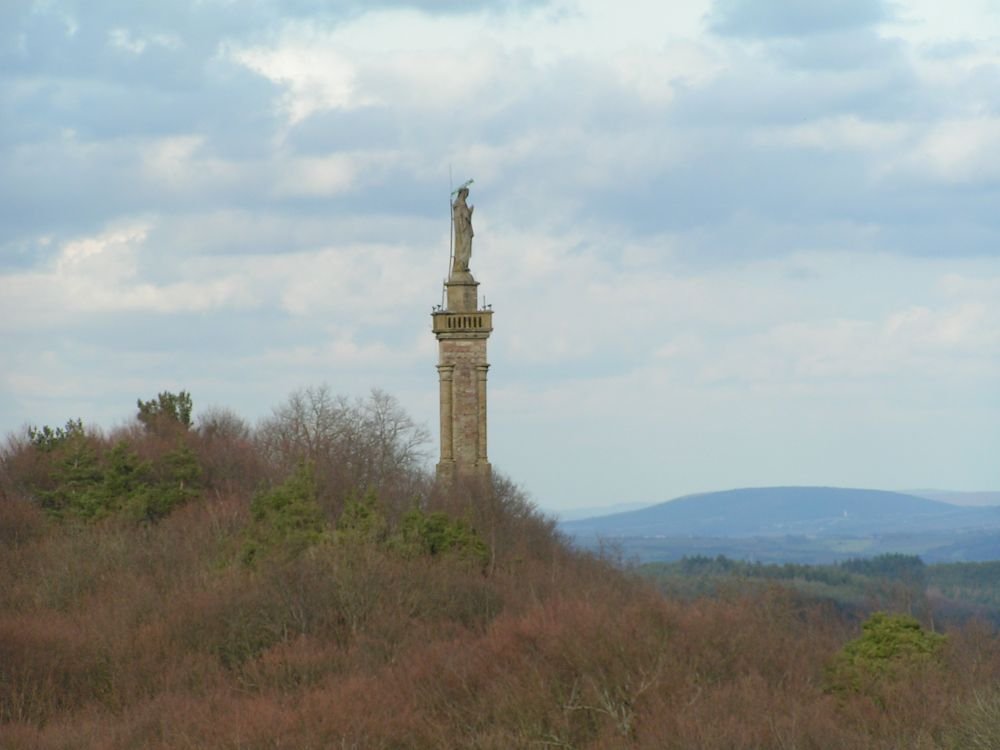
A stone column ascends toward heaven, crowning the left side of the Moselle valley. Resting upon the Pulsberg, this monument gazes over Trier from 296 meters above. Its placement feels deliberate, facing the Constantine Basilica across the town.
19th-century friction shaped its silhouette. After Prussia took control in 1815, the government granted a Catholic Jesuit church to the small Protestant group. Local Catholic souls rebelled, demanding its return. Although the King eventually secured the church's Catholic status, he granted the former Constantine Basilica to the Protestants. In defiance, the local Catholics gathered funds to erect a permanent landmark against this decree.
Work commenced in 1859 under Joseph Weis. The resulting Neo-Gothic tower features a 34-meter-high shaft topped by a statue of Mary. In the Maria orans pose, she prays without the Child Jesus. While the design for the statue was created by the sculptor Gottfried Renn from Speyer, the execution was carried out by the master sculptor Rief. Sandstone blocks from the old Roman walls anchored the 19th-century protest to the ancient Catholic Church of Trier.
Now, the spire remains a sharp profile against the horizon. A spiral staircase with 105 steps leads into the rectangular base, though the platform closed after a 1905 accident. Observers view the statue from the street below, near a bus stop and parking lot twenty meters down. Night lights glow via modern donations while stone keeps its long vigil over the water.
Sources: Wikipedia, OpenStreetMap, Wikidata, Wikimedia Commons

Written by Aurora
Discuss this with the author and others
No comments yet. Be the first to start the conversation.