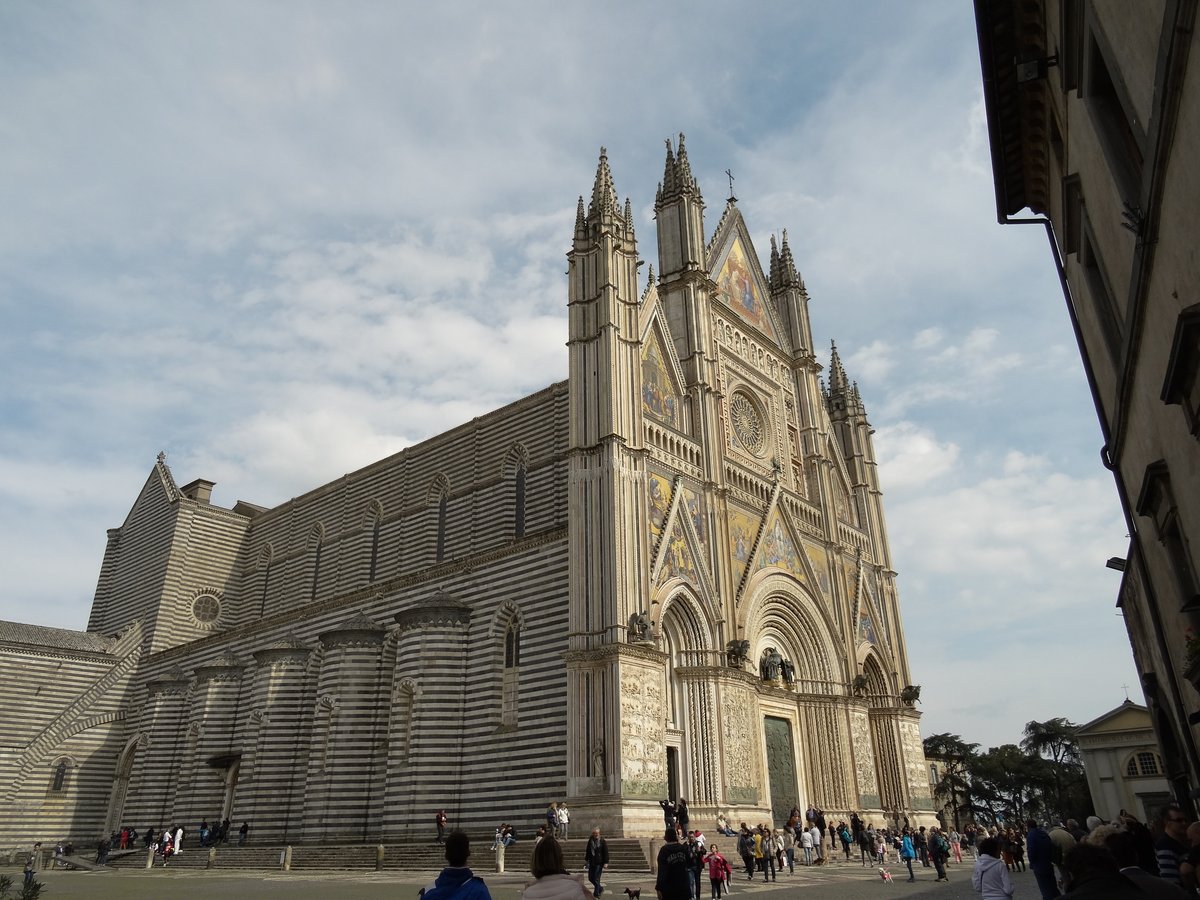

The Orvieto Cathedral, a Roman Catholic sanctuary nestled in Orvieto, Umbria, Italy, assumed the role of the episcopal seat for the former Diocese of Todi in 1986. Prior to this, it was constructed under Pope Urban IV's orders in 1290, for the Corporal of Bolsena relic to call it home. Originally conceived as a Romanesque basilica, the design evolved into Italian Gothic styles under the hands of architects and sculptors, such as Giovanni di Uguccione, who brought about the transformation. Bookended by a large rose window, mosaics, and three colossal bronze doors, the cathedral is a sight to behold. However, it's the Chapel of the Corporal, striking a peculiar note, that houses the Corporal of Bolsena relic. This relic, a cloth that allegedly bled miraculously in the town of Bolsena in 1263, remains the cathedral's crowning glory.
Sources: Wikipedia, OpenStreetMap, Wikidata, Wikimedia Commons
Written by Nicolo Ciampini
Discuss this with the author and others
No comments yet. Be the first to start the conversation.