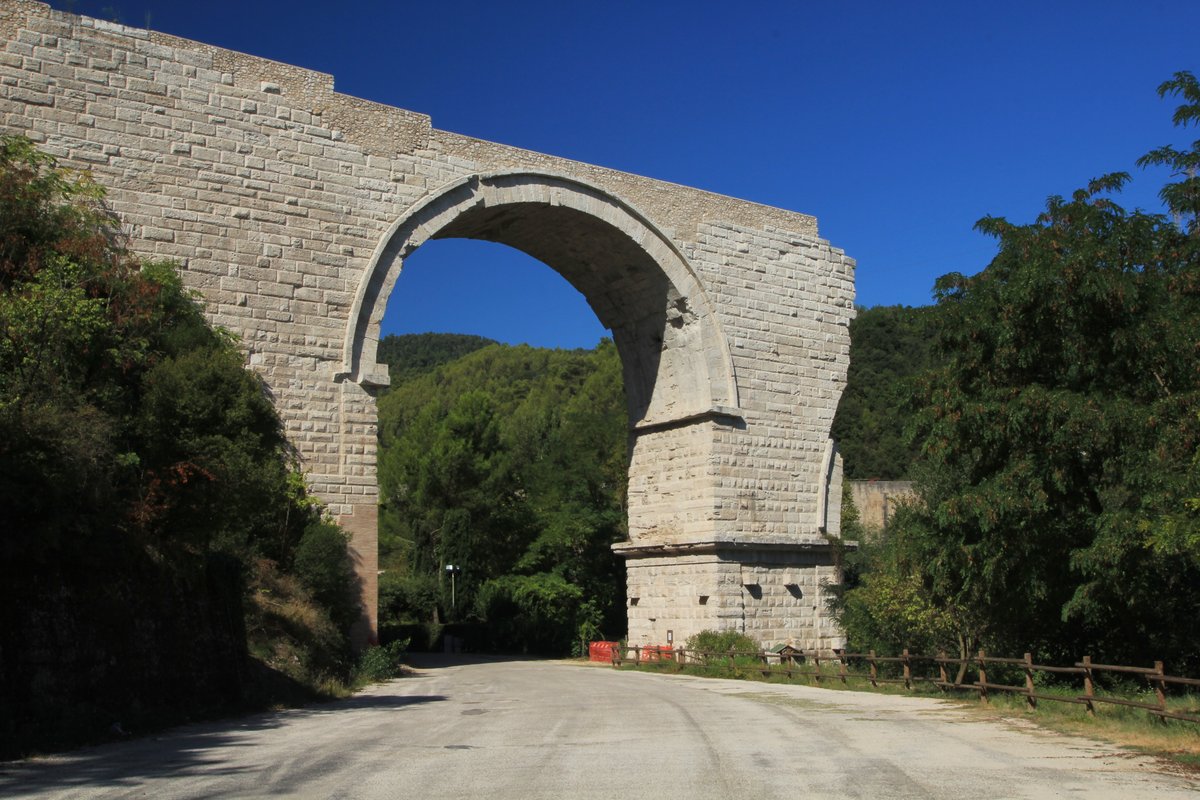

In the year 27 BC, the Bridge of Augustus, a Roman arch bridge, was completed to grace the Flaminian Way, carrying it across the River Nera in Narni, Umbria, Italy. This remarkable structure, one of the largest ever built during the Roman Empire, originally spanned 160 meters, divided into four sections. Only the southernmost pylon, third to collapse in 1855, still stands today. Despite the damages inflicted, the 1970s saw restoration work, as did efforts in the aftermath of the quake in 2000.
Nevertheless, ongoing preservation efforts are underway to safeguard the residual vestiges of this iconic bridge. The remnant pylon, bearing the scars of history since the 1800s, serves as a poignant monument to the tenacity of Roman engineering and the grandeur of their construction undertakings. Incidentally, it is constructed primarily of calcium carbonate, most commonly in the form of limestone.
Sources: Wikipedia, OpenStreetMap, Wikidata, Wikimedia Commons
Written by Nicolo Ciampini
Discuss this with the author and others
No comments yet. Be the first to start the conversation.