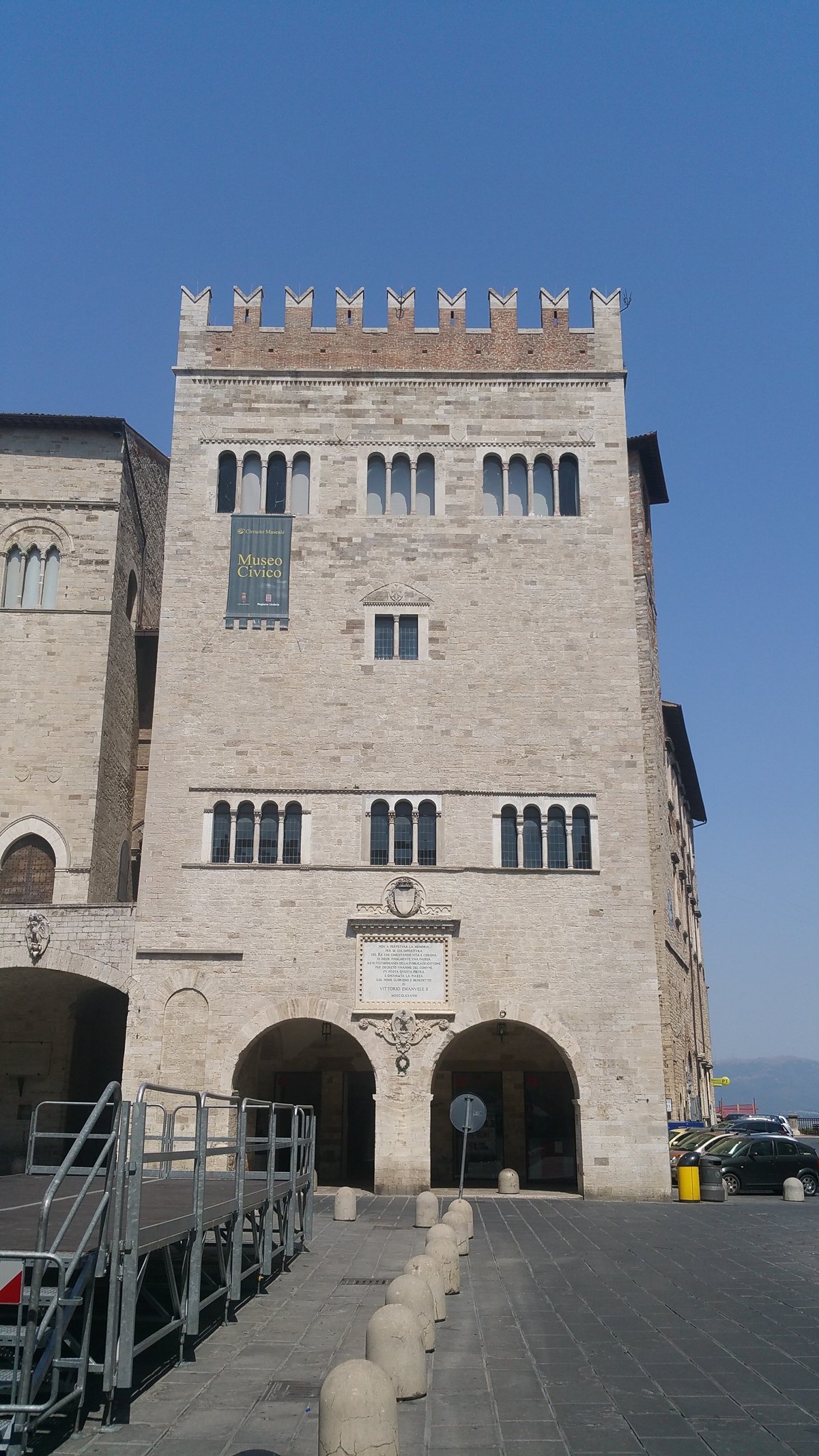

The Palazzo del Popolo, built between 1213 and 1228 in Umbria, Italy, stands as a symbol of victory and a gathering place for the city council. Erected during a period of transition in the city’s government, it served as a testament to the triumph of peace over conflict. The wide staircase, added in 1267 by Pandolfo Savelli, was designed to emphasize the palace’s role as a boundary between the ruler and the ruled. The building underwent refurbishment in the 16th and 19th centuries. Today, the upper floors house the Pinacoteca Civic Museum of Todi, showcasing an extensive collection of art, including an 11th-century bas relief, a 16th-century wood model, and an altarpiece depicting the Coronation of the Virgin.
Sources: Wikipedia, OpenStreetMap, Wikidata, Wikimedia Commons
Written by Nicolo Ciampini
Discuss this with the author and others
No comments yet. Be the first to start the conversation.