
Dinaburg Castle
55°54'40.6"N 26°43'36.2"E, Vecpils, Naujene Parish, Augšdaugava Municipality, LV-5462, Latvia
Latvia: Daugavpils - a city of many names and faces Jermaine
 For Browsing
Daugavpils, a city with many names (until 1920 — Dvinsk; until 1893 — Dinaburg, German name Dünaburg; in 1656–1667 — Borisoglebov; also Nevgin in Russian chronicles) — the second largest and most significant city in the country after Riga. A city of a difficult fate, it passed from state to state, was destroyed and rebuilt many times, changed its ethnic composition (population-wise it was a German, Jewish, and Russian city, but never Latvian), grew and shrank. The city was founded in 1275 as the fortress (castle) Dinaburg (originally located 19 km upstream from the current location of the city on the Daugava River). The population of the city at the beginning of 2024 was 77,799 people. At the same time, the share of Russians in the population of Daugavpils was the highest among large cities in Latvia — 46.6%. In 1558, the Livonian War began. In 1559, Dinaburg was ceded by the Livonians to the Polish king and Grand Duke of Lithuania Sigismund II Augustus. According to the treaty between Sigismund II and the Landmeister of the Teutonic Order in Livonia, Gotthard Kettler, concluded in 1561, Dinaburg became part of the Grand Duchy of Lithuania (from 1566 it became the center of the newly created Duchy of Inflanty, which was initially part of the Lithuanian principality, and from 1569 — the Polish–Lithuanian Commonwealth). In July 1577, the castle was taken by the troops of Tsar Ivan the Terrible and completely destroyed. Then, by Ivan the Terrible’s order, the fortress was rebuilt 19 km downstream on the Daugava (at the site of modern Daugavpils) — at the mouth of the Shunitsa River opposite the settlement of Ierusalimka. However, in 1582, according to the Treaty of Yam-Zapolsky, Dinaburg passed to the Polish–Lithuanian Commonwealth, and in the same year it was granted city rights (Magdeburg rights). During the war for the Swedish throne between King Sigismund and Duke Charles of Södermanland, as well as under Gustav II Adolf, the Swedes twice captured Dinaburg but each time returned it to the Commonwealth. Meanwhile, the Duchy of Inflanty effectively ceased to exist, and part of its former territory became the Inflanty Voivodeship with its center in Dinaburg. As a result of the Treaty of Kėdainiai in 1655, the city was occupied by the Swedes. However, a year later, during the Russo-Swedish War of 1656–1658, Dinaburg was besieged and taken by the army of Russian Tsar Alexei Mikhailovich, who renamed the city Borisoglebov (in some sources — Borisoglebsk). In 1666, during the Russo-Polish War, an attack by Lithuanians near Borisoglebov was repelled, but by the Treaty of Andrusovo the city again passed to the Polish–Lithuanian Commonwealth. As a result of the First Partition of the Polish–Lithuanian Commonwealth, Dinaburg in 1772 became part of the Russian Empire, becoming the center of the Dvinsk province of Pskov Governorate. From 1773 to 1776 — a district city of Pskov Governorate, from 1776 — Polotsk Governorate (from 1778 — Polotsk Viceroyalty), in 1796–1802 — Belarus Governorate. From 1802 — a district city of Vitebsk Governorate. From 1810 to 1832, the Dinaburg fortress was constructed in the city. By the beginning of the Patriotic War of 1812, the fortress was not completed, and although the garrison managed to repel the first assault, it was ultimately forced to abandon it, after which a significant part of the fortifications was dismantled by the French. In the mid-19th century, the city became a major railway hub: the Riga-Dinaburg and St. Petersburg-Warsaw railways passed through Dinaburg. From the second half of the 19th century, Dinaburg was one of the most important cities in the western part of the Russian Empire. On January 14 (26), 1893, by decree of Emperor Alexander III, the city of Dinaburg was renamed Dvinsk. In 1897, the city’s population was 69,675 people, including: Jews — 32,064, Russians — 19,153, Poles — 11,420, Germans — 3,126, Belarusians — 1,525, Latvians — 1,274. During World War I, most of the city’s industrial enterprises were evacuated to the inner provinces of the Russian Empire. The front approached the city in autumn 1915, when during the Svenciany breakthrough German troops were able to reach the Daugava River and Dvinsk closely. The capture of Dvinsk, as an important strategic point, would have opened the way to Petrograd. Positional battles took place around the city. After the October Revolution and the armistice on the front (Decree on Peace), in November 1917, a delegation of Soviet Russia passed through Dvinsk to Brest-Litovsk for peace negotiations with Germany. On February 18, 1918, German army units entered Dvinsk and occupied the city for several months. After the November Revolution in Germany, on December 9, 1918, German troops left Dvinsk without a fight, after which the Red Army occupied it. At the beginning of 1919, Dvinsk and Dvinsk County, as well as two other "Inflanty" (Latgale) counties of Vitebsk Governorate — Rezhitsa and Lyutsin — were effectively integrated into the Socialist Soviet Republic of Latvia, which was reflected in the republic’s constitution. During the battles for Dvinsk in the Soviet-Polish War, on January 3, 1920, the city was occupied by Polish troops under General E. Rydz-Śmigły. By the Riga Peace Treaty, concluded on August 11, 1920, between the Republic of Latvia and Soviet Russia, the city of Dvinsk and Dvinsk County became part of independent Latvia. In the same year, the city was renamed Daugavpils ("castle on the Daugava"), and the former Dvinsk County was renamed Daugavpils County (which existed until the end of 1949, when counties in the republic were abolished and district division introduced). In September 1939, after the start of World War II, some units of the Polish army crossed into Latvian territory near Daugavpils. In the autumn of the same year, a camp for interned Polish military personnel was established in the Daugavpils fortress. On June 17, 1940, Red Army units entered Daugavpils. From summer 1940, the city was part of the Latvian SSR. On June 26, 1941, at the very beginning of the Great Patriotic War, the city was captured by German troops. Mass shootings of Jews and prisoners of war took place in the Pogulyansky forest. Behind the northern rampart of the Daugavpils fortress was a camp for Soviet prisoners of war "Stalag-340" (Stalag 340). On July 27, 1944, Red Army units liberated the city from German troops, and then from August to October 1944, Daugavpils temporarily served as the capital of the Latvian SSR. During World War II, more than 165,000 people were killed on the city’s territory, and the city itself was destroyed by more than 70%. After the war, the population fell from 51,000 to 14,892, and the entire Jewish population of the city, which made up almost 50%, was annihilated. After the war, the city began to grow again. In 1979, construction of the Daugavpils Hydroelectric Power Station began in the Rugeli area, but the construction was stopped in 1987. The 1989 USSR census recorded 126,700 residents in the city. As of January 1, 1992, the city had 127,619 inhabitants, after which the population began to steadily decline (77,799 in 2024).
Jermaine Loading stories…
55°54'40.6"N 26°43'36.2"E, Vecpils, Naujene Parish, Augšdaugava Municipality, LV-5462, Latvia
Latvia: Daugavpils - a city of many names and faces Jermaine 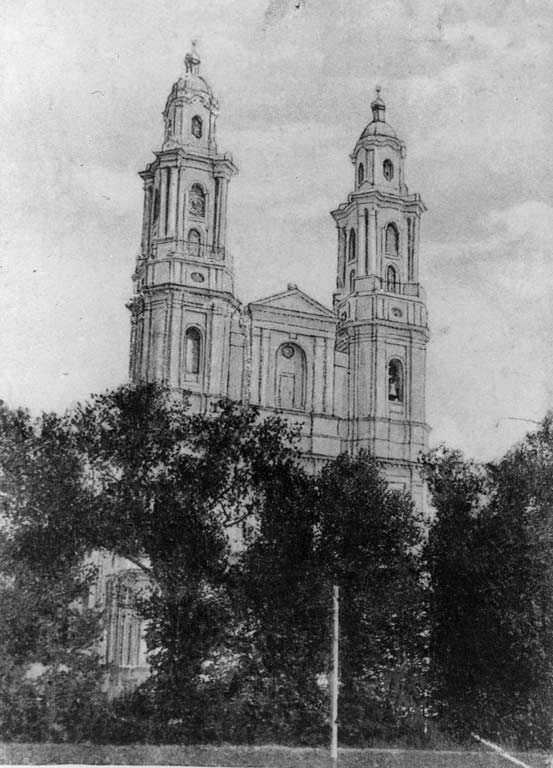
Imperatora Street 2, Daugavpils, LV-5401, Latvia
Latvia: Daugavpils - a city of many names and faces Jermaine 
Daugavas Street 38, Daugavpils, LV-5401, Latvia
Latvia: Daugavpils - a city of many names and faces Jermaine 
Komandanta Street 6, Daugavpils, LV-5401, Latvia
Latvia: Daugavpils - a city of many names and faces Jermaine 
18 November Street 17, Daugavpils, LV-5401, Latvia
Latvia: Daugavpils - a city of many names and faces Jermaine 
3 Mihaila Street, Daugavpils, LV-5401, Latvia
Latvia: Daugavpils - a city of many names and faces Jermaine