Imperial Parks of Oranienbaum and Surroundings

For Browsing

The splendid suburb of St. Petersburg — Oranienbaum and the nearby estates, where the lush vegetation of wild nature perfectly blends with the unique architecture of palaces and pavilions — are places where Russian emperors and their close associates loved to rest in their official and private residences. Oranienbaum is the only suburb of St. Petersburg that was not occupied by the Nazis during the Great Patriotic War, and therefore was not subjected to destruction. The damaged but not destroyed palace-museums of the city of Lomonosov have preserved the decorative decor of the 18th century in all its authenticity and uniqueness.

Hemorrhoidal colic of Peter III

Krasnoselskoye Highway, 1, Ropsha, Leningrad Region, Russia, 188515

For now, she, Catherine II Alekseevna, felt relieved. Let one legitimate Russian emperor, Ivan VI Antonovich, still be alive and languishing in the casemate of the Shlisselburg Fortress. But she had gotten rid of her main rival, the also legitimate emperor Peter III Fedorovich.

Petersstadt and the Palace of Peter III

Ilikovsky Ave., 18A, Saint Petersburg, Russia, 198412

The Petersstadt fortress ensemble was created between 1758 and 1762. On the right bank of the Karasta River was a mock fortress for Grand Duke Peter Fedorovich, the future Emperor Peter III.

Oranienbaum and the Grand Menshikov Palace

park, Saint Petersburg, Russia, 198412

The history of Oranienbaum began in October 1703, when Peter I personally determined the shortest route from Kronstadt to the coast. From this point, along the entire southern shore of the Gulf of Finland up to the under-construction St. Petersburg, the tsar ordered plots of land to be allocated for the country residences of his close associates. Peter reserved land for the construction of future residences in Strelna and Peterhof, while Menshikov received the first and simultaneously the furthest plot from St. Petersburg. This is where the construction of Oranienbaum began; it was conceived as part of a majestic panorama welcoming all those arriving by sea to the new Russian capital.

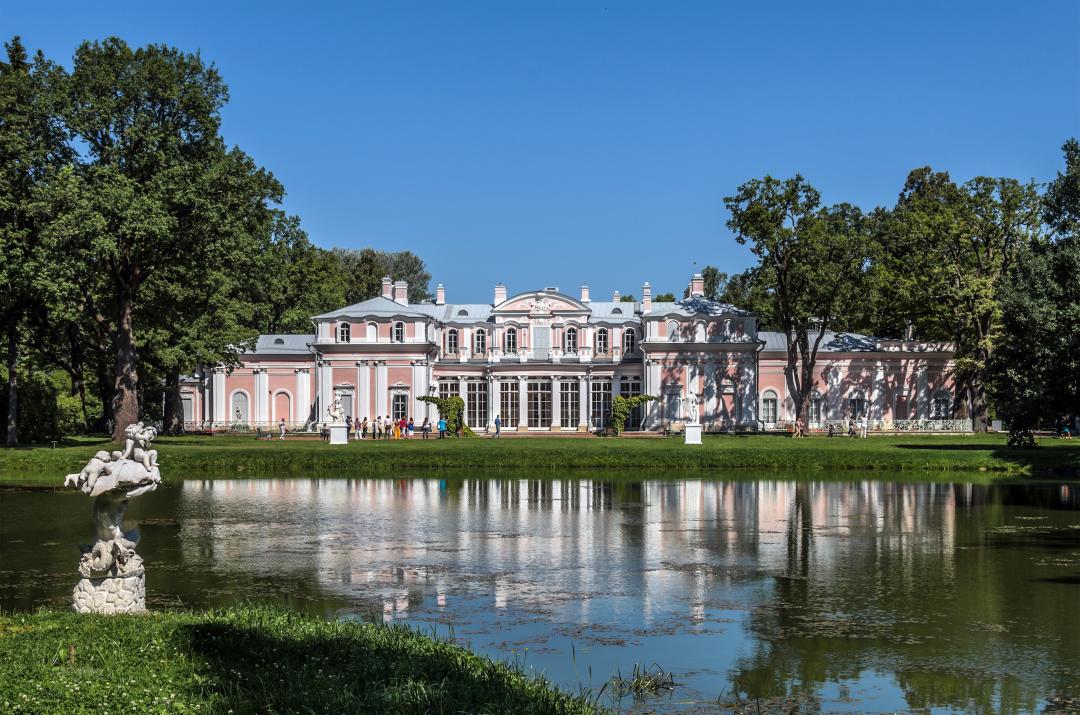
Chinese Palace

Verkhny Park, 7, Saint Petersburg, Russia, 198412

Striving to avoid participating in her husband's rough soldierly games, Catherine, still a Grand Duchess, erected on the opposite bank of Karosta, according to the same Rinaldi's design, a picturesque ensemble of the Private Dacha with the architectural masterpiece of the Chinese Palace at its center. The Chinese Palace became the favorite place of solitary retreat for the future Empress Catherine II during her "straw widowhood," at a time when her husband was throwing noisy orgies among her young and undemanding ladies-in-waiting. Here she tried to overcome the forced boredom in the narrow circle of faithful and devoted friends. Perhaps that is why there was a legend in St. Petersburg that Catherine embroidered the panels for the Beaded Cabinet of the Chinese Palace with her own hands during the long hours of enforced solitude. It is said that the shadow of the Empress still occasionally visits the Chinese Palace and wanders through its enfilades.

So are the slides Russian or American after all? Pavilion "Sliding Hill"

Krasnoflotskoye Highway, 6, Saint Petersburg, Russia, 198412

One of the most popular attractions in amusement parks is known worldwide by different names. In Russia, it is called "американские горки" (American mountains), in France — *les montagnes russes* ("Russian mountains"), and in the USA — roller coaster or Russian mountains. The confusion with the names is clarified by the history of the attraction: the "горки" (slides) appeared in Russia as a folk pastime, gained mass popularity in Europe, and the attraction with turns resembling the infinity symbol was patented in America.

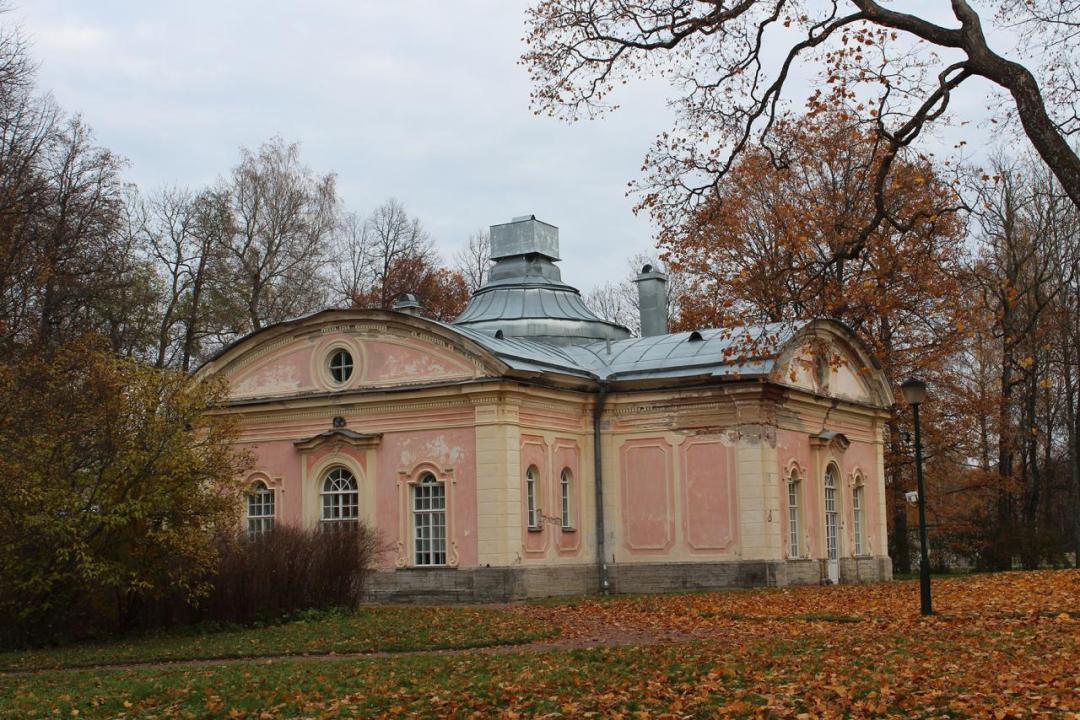
Chinese cuisine

WP5V+MR Petrodvortsovy District, Saint Petersburg, Russia

Chinese cuisine – a small one-story, with a mezzanine floor, cruciform pavilion. The pavilion is crowned with a wide, sprawling dome.

Cavalry Corps

WP5W+XJ Petrodvortsovy District, Saint Petersburg, Russia

Former kitchen building of the Chinese Palace. In 1808, the central part was reconstructed into a hospital, which existed until 1842. It was named the Courtyard Building, and later the Cavalry Building, as in the second half of the 19th century it housed apartments for palace servants.

Stone Hall

Krasnoflotskoye Highway, 7, Saint Petersburg, Russia, 198412

On the axis of the Triple Linden Alley, at the edge of the natural coastal ridge, stands the Concert Hall. In front of it stretches a U-shaped pond, over which two stone bridges with granite pedestals and iron railings are thrown. This entire composition already existed in the mid-18th century.

Sea (Oranienbaum) Canal

WQ84+VJ Petrodvortsovy District, Saint Petersburg, Russia

A canal in the city of Lomonosov, Petrodvortsovy District of Saint Petersburg. It begins at Dvortsovy Prospekt and flows into the Neva Bay of the Gulf of Finland.

Japanese (Eastern) Pavilion or Porcelain Tower

WQ74+W8 Petrodvortsovy District, Saint Petersburg, Russia

The Japanese Pavilion of the Grand Menshikov Palace was originally called the "Eastern" pavilion. Its interior rooms were richly decorated with porcelain—predominantly Japanese. Porcelain decorative items, placed on special shelves, filled almost the entire wall space. Hence the second name—the Porcelain Tower. It was here that Emperor Peter III signed his abdication: on June 29, 1762, the emperor, who had reigned for only 186 days, signed his abdication in favor of his wife, who became Empress Catherine II.

Picture House

Dvortsovy Ave., 50, Saint Petersburg, Russia, 198412

The "Picture House" building was constructed according to the design of the architect F. B. Rastrelli's workshop in the mid-18th century. This small building served from 1754 to 1761 as a venue for the court theater, an art collection, a library, and a cabinet of curiosities of Grand Duke Peter Fyodorovich.

Ruined (Stone) Bridge or New Bridge

Waterfall Red Pond, Soykinskaya Road, Saint Petersburg, Russia, 198412

The Ruin Bridge is located in one of the most beautiful places of the Upper Park of Oranienbaum — it spans the Karosta River and is situated in the Petrovsky Park area, which is often called the Russian Switzerland.

Petrovsky Park

WQ83+GM Petrodvortsovy District, Saint Petersburg, Russia

Petrovsky Park is one of the best examples of a small-sized (only 15 hectares) landscape park in Russia. Created in the 1830s by Joseph Busch, it has preserved its appearance to this day. The compositional foundation of Petrovsky Park consists of the extensive Lower and Upper Ponds and the winding Karost River flowing through the valley. On this shallow river, which flows from south to north toward the Gulf of Finland, two large reservoirs—the Lower and Upper Ponds—were created in the 18th century using dams.

Church of Saint Panteleimon the Healer - church pavilion of the Grand Menshikov Palace

WQ83+74 Petrodvortsovy District, Saint Petersburg, Russia

The Church of Saint Panteleimon the Healer is the oldest of the Oranienbaum churches that have survived the years of militant atheism and have come down to us. For more than two and a half centuries (in 1994, the church celebrated its 267th anniversary), this holy House of God has stood above Oranienbaum, and although Divine services have not been held there for over 60 years and its doors are closed, the cross crowning its dome testifies that this is a house of God.

Silver storerooms

WQ73+8G Petrodvortsovy District, Saint Petersburg, Russia

In the inner courtyard of the Grand Menshikov Palace stands an unassuming one-story building. This is the Silver Storerooms, recognized as a cultural heritage site.

Palace Power Station

WQ63+82 Petrodvortsovy District, Saint Petersburg, Russia

In our age, when industrial sites are transformed into exhibition halls, and monuments of industrial architecture hold no less interest for the inquisitive traveler than royal residences and museums, the Oranienbaum palace power station complex could have found a second life. But, alas, at present it is in a rather deplorable condition.

Lower Pond

WQ74+CX Petrodvortsovy District, Saint Petersburg, Russia

The Lower Pond – one of the main components of Petrovsky Park – is not natural. The Karost River was dammed back in Menshikov's time, meaning the pond has existed since the very beginning of the development of Oranienbaum.

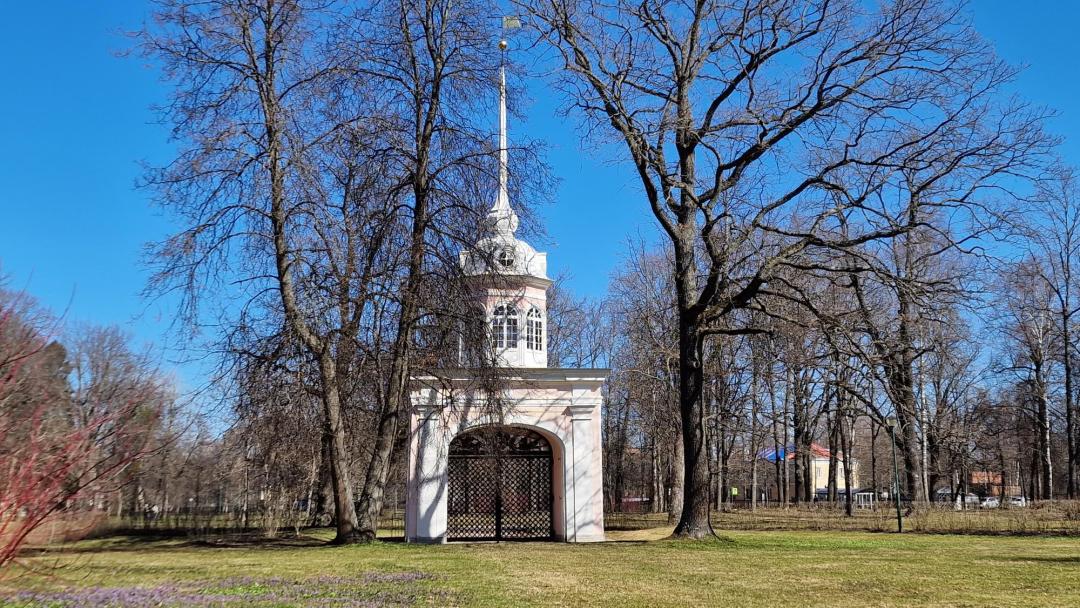
Entrance Honor Gates

Museum-Reserve "Oranienbaum", Saint Petersburg, Russia, 198412

The gates of Peter III's toy fortress on the territory of Oranienbaum are a characteristic example of small-scale architecture. They served as the entrance to a miniature training ground built for the young heir to the throne. Here, the future emperor studied military science in a recreated setting of a fortification. The entire complex occupied an area of 2 hectares.

Petrovsky Bridge

WQ64+J7 Petrodvortsovy District, Saint Petersburg, Russia

A pedestrian stone arch bridge over the Karasta River on the territory of the Oranienbaum palace and park ensemble, in Lomonosov. It connects the Upper and Petrovsky parks. The existing bridge was built in 1910. It is the largest bridge constructed within the park.

Chinese Pond

WP5V+P5 Petrodvortsovy District, Saint Petersburg, Russia

In the southwest of the Oranienbaum museum-reserve, Antonio Rinaldi created a beautiful ensemble, with the central role given to the Chinese Pond. Like the Lower Pond, it is not natural but man-made, created somewhat later than the Lower Pond during the reorganization of the estate by the architect Antonio Rinaldi. The pond's name comes from its location – near the Chinese Palace.

Lower houses

Verkhny Park, Palace Avenue, 48, St. Petersburg, St. Petersburg, Russia, 198412

Stone Bench of Catherine II

WP5R+RW Petrodvortsovy District, Saint Petersburg, Russia

Not far from the pergola is the Stone Bench of Catherine II, carved from a glacial boulder. On the surface, a partially faded inscription is visible: "To the Great Sovereign Empress Catherine Alexeyevna, built for the Private Garden in the year 1762."

Pergola

WP5V+Q3 Petrodvortsovy District, Saint Petersburg, Russia

Pergola (from the Italian *Pergola* – annex, canopy) is a gazebo covered with greenery, forming corridors along the western shore of the pond located in front of the Chinese Palace. It consists of fifty-four pylons, each 2.55 meters high. The pylons are made of Pudost stone and topped with a wooden lattice for climbing plants. The pergola consists of 54 stone pylons over 2.5 meters tall, constructed from Pudost stone, and covered on top with wooden latticework. In the shade of the climbing plants, one could find shelter from the sun on a summer day.

Glacier

WP5V+HQ Petrodvortsovy District, Saint Petersburg, Russia

Next to the Chinese Cuisine building, a Glacier and wine cellar were constructed. This small, unremarkable-looking structure, made of red brick, was intended for food storage. The building had a purely practical purpose, was simple in design, and was rectangular in shape.