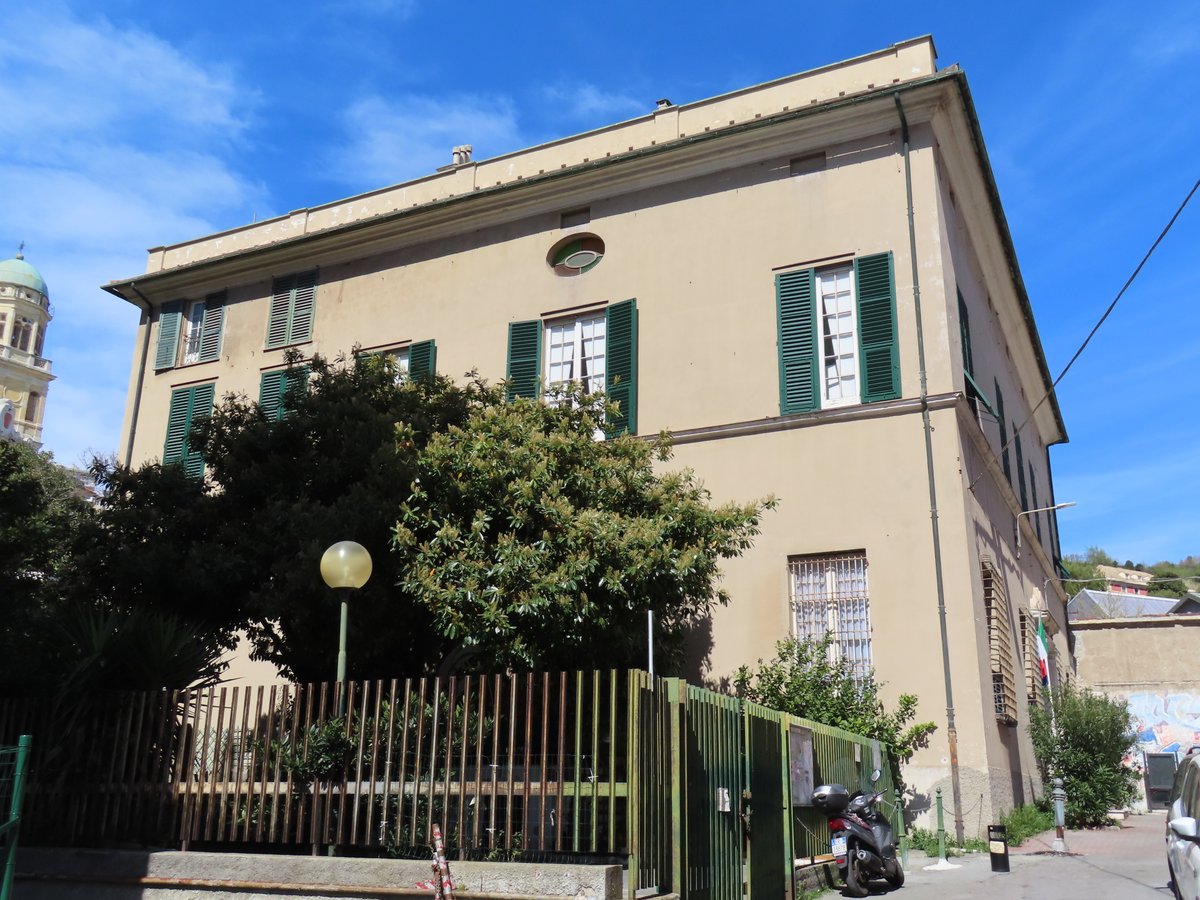

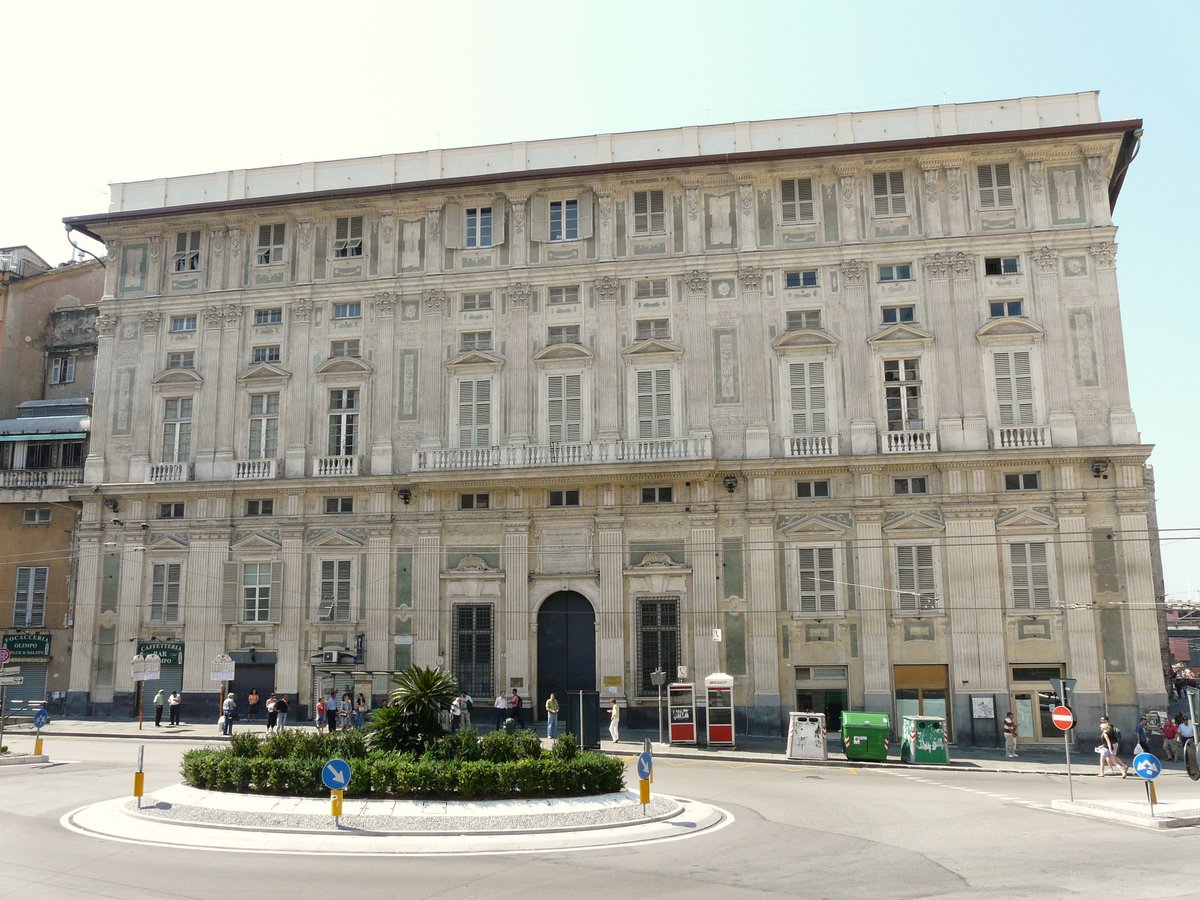
From 1559 to 1563, Paolo Spinola commissioned the architect Giovanni Ponzello to build a manor in the Cornigliano district of Genoa, along the ancient via San Giacomo. The design included rooms decorated by Ottavio Semino with chiaroscuro figures and Alessandro de Brignolis with grotesque paintings. In 1585, Ponzello added a large tower next to the palace, replacing an older structure.
In 1796, officers were accommodated in the villa. During this period, Paolo Francesco Spinola paid a picket of soldiers to guard the building, likely to preserve it from the devastations of the troops. By 1798, the property was documented as a three-story palace with an attached tower, stables, and a granary.
Ownership shifted to the Bisso family in the 1870s, who were furniture makers. Towards the end of the century, the Bisso sold the property to Gaetano Narisano. In 1895, the Narisano leased part of the building to a school for girls. By 1938, the ground floor housed a pasta factory. Today, the building serves as a civic center.
Sources: Wikipedia, OpenStreetMap, Wikidata, Wikimedia Commons

Written by Nicolo Ciampini
Discuss this with the author and others
No comments yet. Be the first to start the conversation.