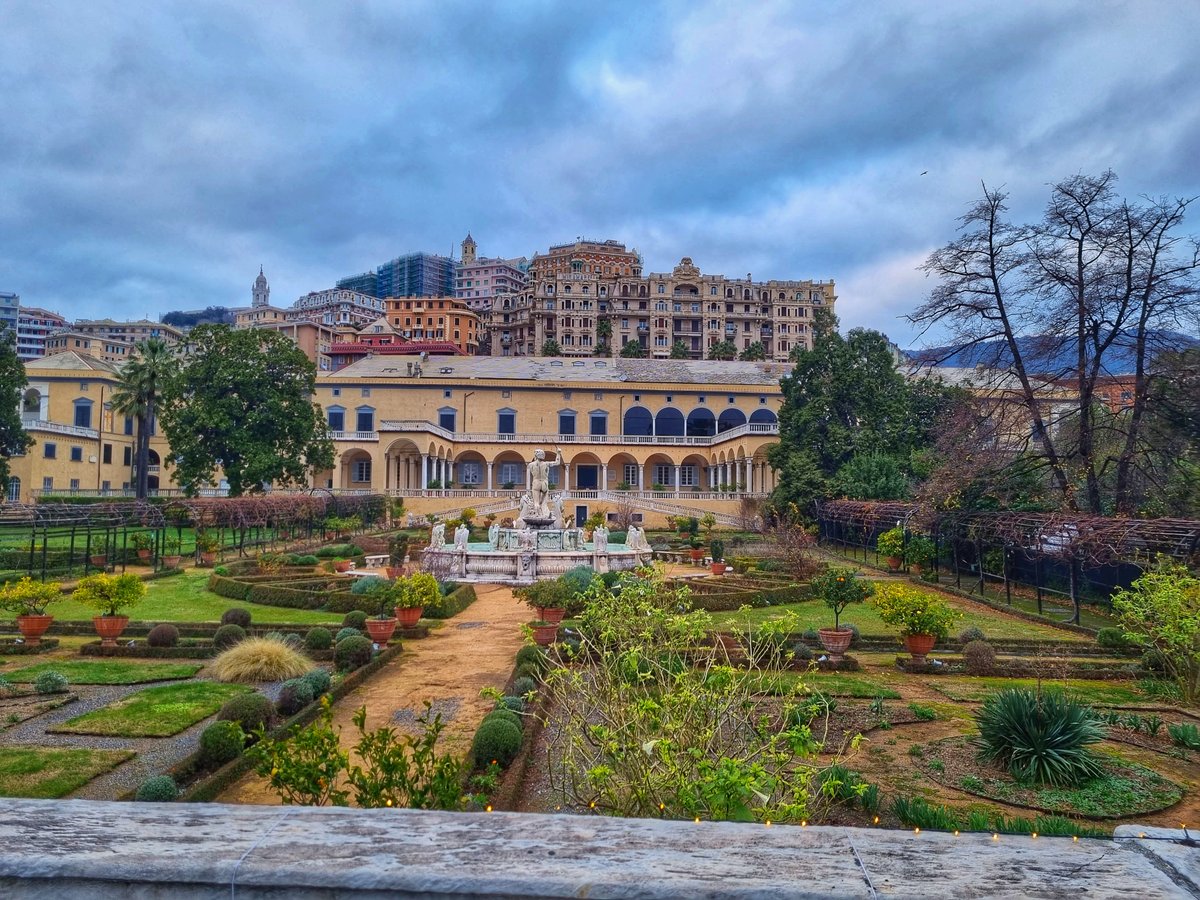

Andrea Doria, a Genoese aristocrat and naval commander, chose to live in a villa in Fassolo to exert strong political influence on the city while staying away from the treacherous political life of the Doge's Palace. He purchased the estate in 1521 from the Lomellini family. This residence allowed him to remain outside the city walls while remaining a central figure in the Republic's life, ultimately being consecrated as Censor for life and Father of the Motherland.
After liberating Genoa from French occupation in 1528, Doria declined the offer to become Head of State, stating he was not interested in the perks of power but only in the independence and prosperity of the Republic. He preferred his suburban home to the Lazzaro Doria Palace in the city center. To enhance his residence, Doria purchased the neighboring villa Giustinani Furneto and commissioned Perino del Vaga to restore the combined two villas from 1529 to 1533.
The villa remained at the center of political and artistic life throughout the 16th century, hosting Holy Roman Emperor Charles V and King Philip II. During these visits, the prince organized sumptuous seashore receptions, jousts, and fireworks. The villa is considered a masterpiece of the Italian Renaissance, featuring Perino del Vaga's frescoes in the Salone dei Giganti and the Loggia degli Eroi. Today, it belongs to the Doria Pamphili family and is open to the public as a museum.
Sources: Wikipedia, OpenStreetMap, Wikidata, Wikimedia Commons
Written by Nicolo Ciampini
Discuss this with the author and others
No comments yet. Be the first to start the conversation.