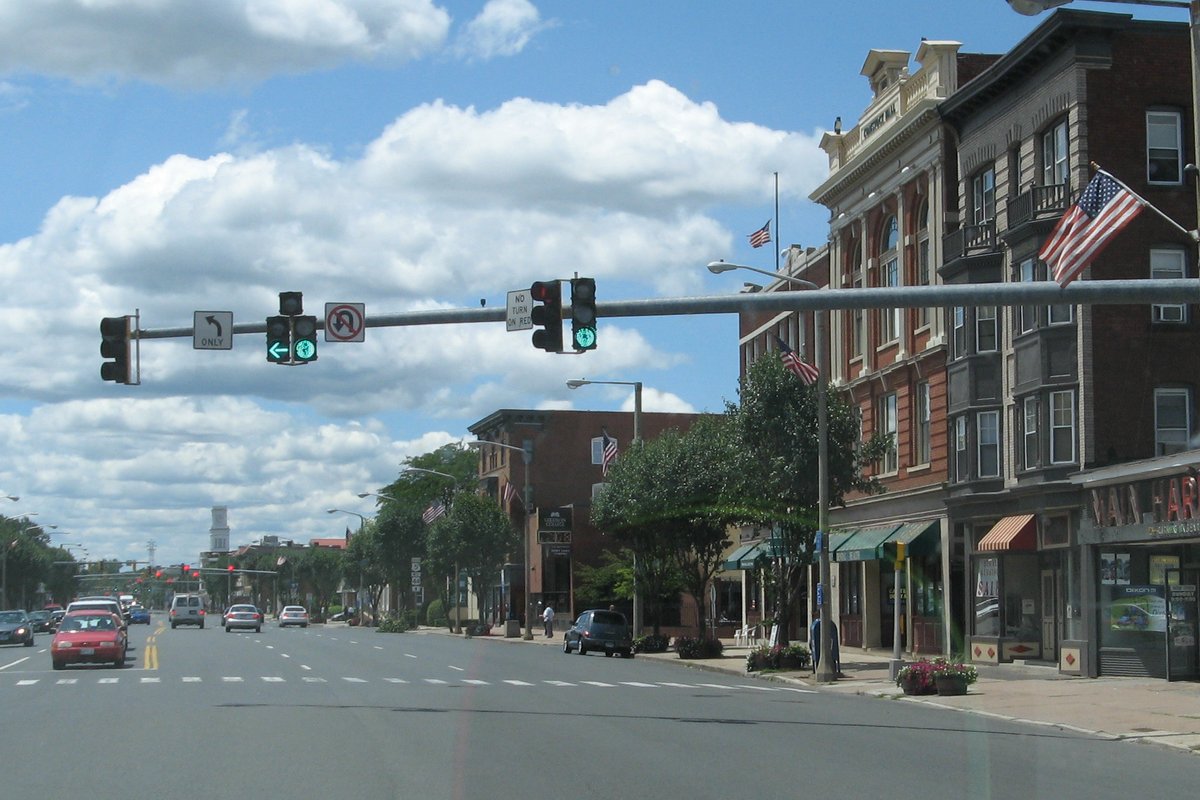
Main Street was laid out in the 1670s. It served as a major roadway between Hartford and communities to the east. For many decades, the economy remained agricultural, transitioning from a subsistence farming economy to one based on tobacco farming in the late 19th century.
Change arrived in about 1890. A streetcar railway provided ready access to Hartford, and a major railroad depot was developed. The completion of the Bulkeley Bridge across the Connecticut River also spurred growth. These events prompted the town's transition away from agriculture toward becoming a modern suburb.
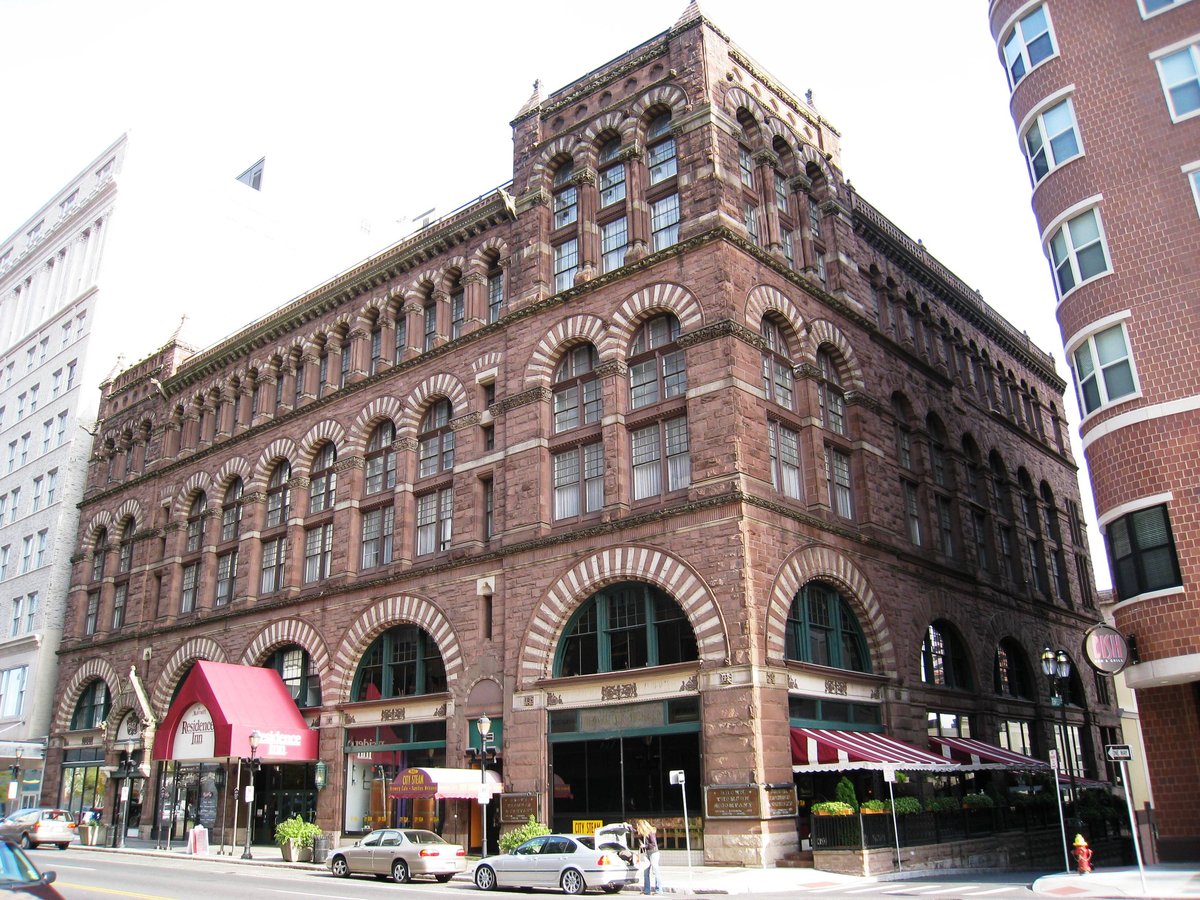
Buildings in the district show this transition. Most commercial structures date from 1890 to 1925. The oldest buildings are the Comstock House from 1830 and Wells Hall from 1832. Wells Hall was built as a private academy and now serves as town hall.
St. John's Episcopal Church stands out as a fine example of Gothic Revival architecture built in 1867. The district was listed on the National Register of Historic Places in 1996.
Sources: Wikipedia, OpenStreetMap, Wikidata, Wikimedia Commons
Written by Leroy
Discuss this with the author and others
No comments yet. Be the first to start the conversation.