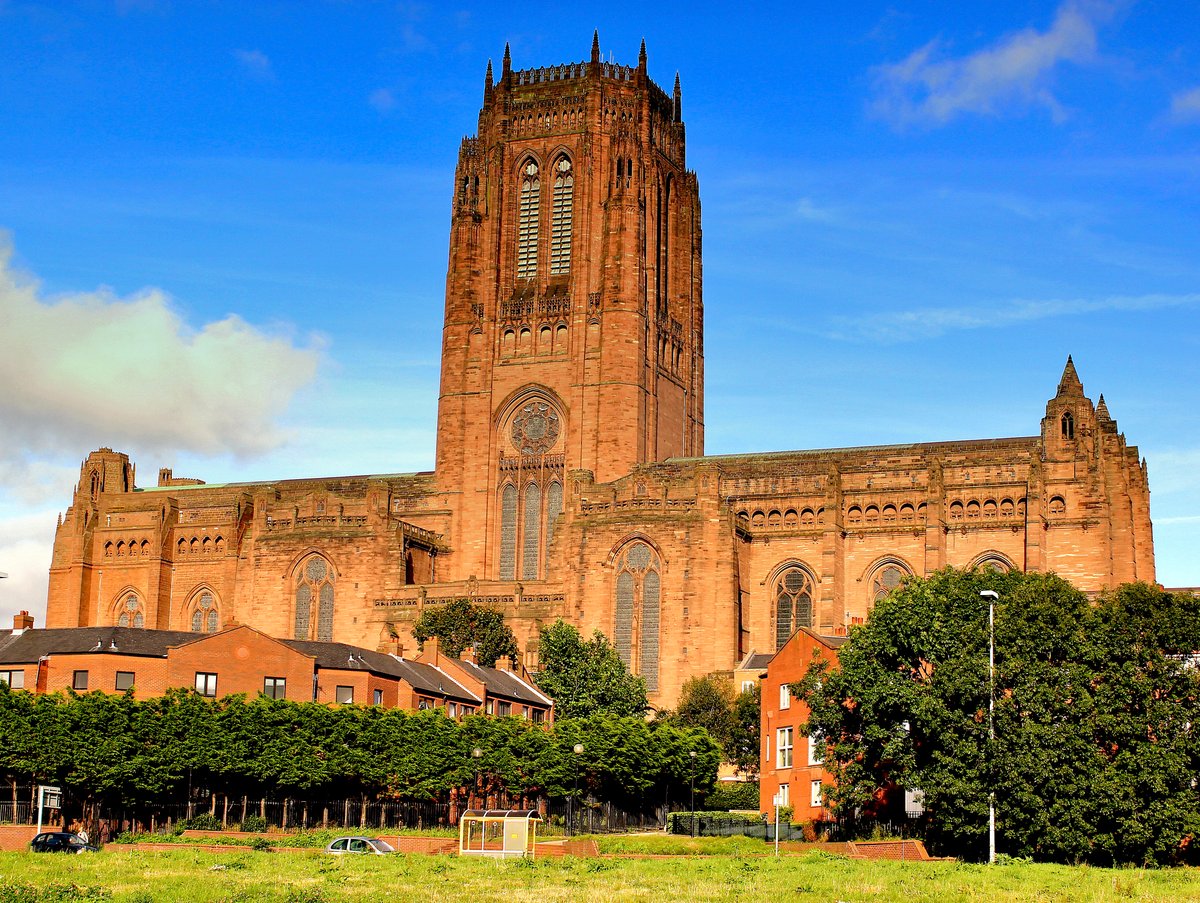

Liverpool Cathedral, officially the Cathedral Church of Christ in Liverpool, is a Church of England cathedral and the seat of the Anglican Bishop of Liverpool. It is Britain's largest cathedral and religious building, and the eighth largest church in the world. Based on a design by Giles Gilbert Scott, the building was constructed between 1904 and 1978. It is the longest cathedral in the world, with a total external length of 621 feet (189 m) including the Lady Chapel, and an internal length of 480 feet (150 m).
With a height of 331 feet (101 m), it is one of the world's tallest non-spired church buildings and the fourth-tallest structure in the city of Liverpool. The cathedral is recorded in the National Heritage List for England as a designated Grade I listed building. It ranks as the fifth-largest cathedral in the world by volume and contests the title of largest Anglican church building with the incomplete Cathedral of St. John the Divine in New York City.
The project began in earnest when Francis Chavasse succeeded J. C. Ryle as Bishop in 1900. Chavasse regarded the building of a great church as a visible witness to God in the midst of a great city, despite opposition from some clergy who argued against the expense. A committee identified four possible locations, eventually recommending St James's Mount because the cost of the London Road site was too great. This site was described by historian Vere Cotton as a stroke of good fortune for its visibility from both a distance and its immediate vicinity.
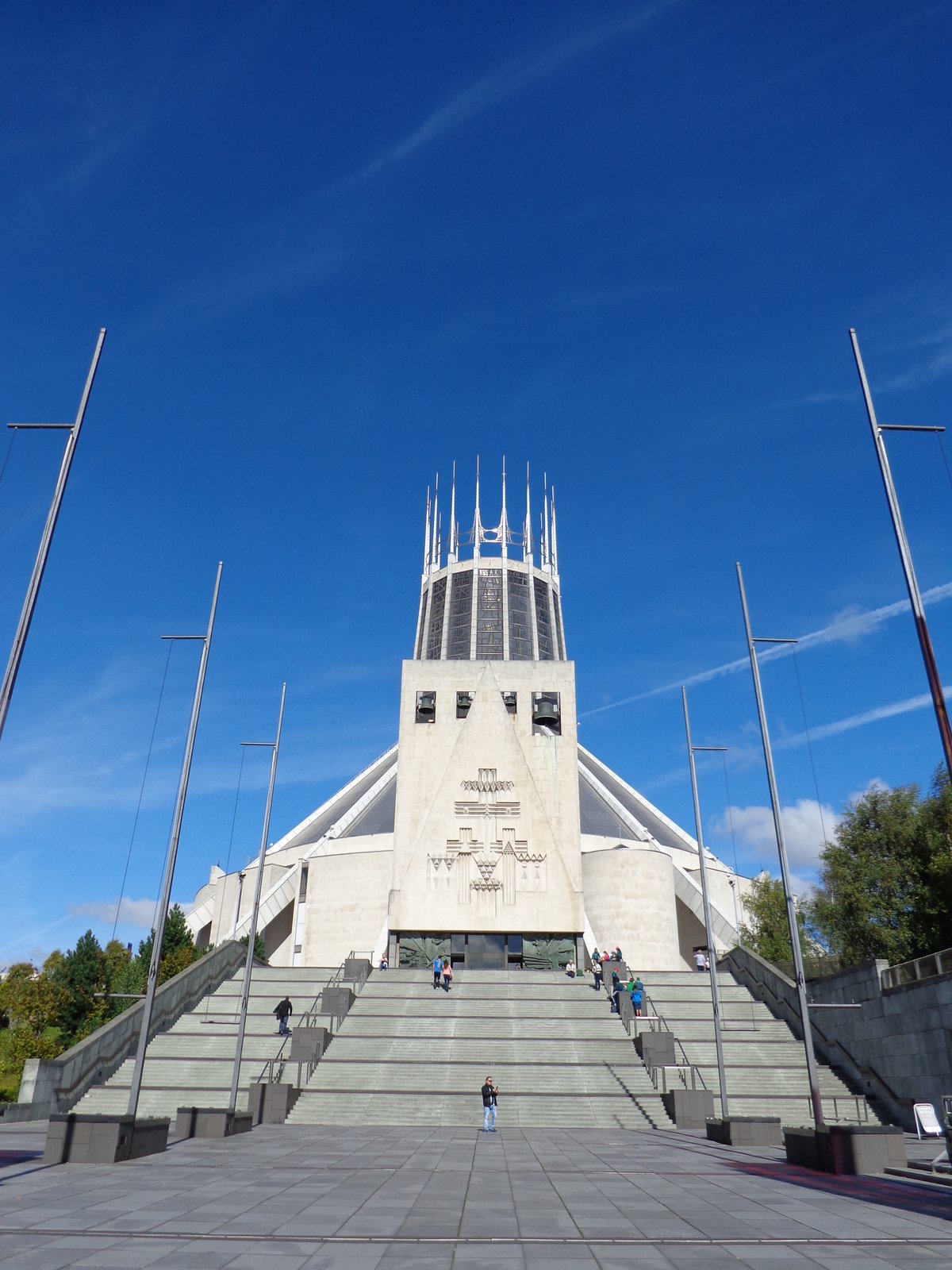
Fund-raising began alongside new legislation passed by Parliament in 1902. This act authorized the purchase of the site and the building of the cathedral, with the proviso that St Peter's Church would be demolished once any part of the new cathedral opened for worship. St Peter's closed in 1919 and was demolished in 1922, with its site sold to provide the endowment for the new cathedral's chapter. The cathedral remains a prominent landmark on St James Road, situated near the Roman Catholic Metropolitan Cathedral of Christ the King to the north.
Sources: Wikipedia, OpenStreetMap, Wikidata, Wikimedia Commons
Written by Nicolo Ciampini
Discuss this with the author and others
No comments yet. Be the first to start the conversation.