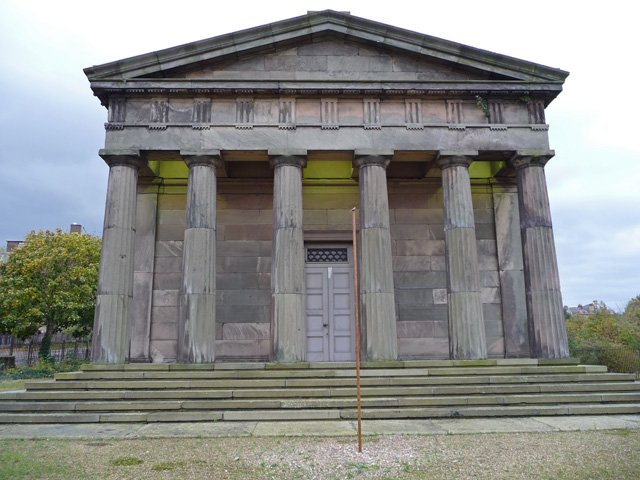

The Oratory looks like a Greek Doric temple with two porticos of six columns and no windows. It was constructed in 1829 as a mortuary chapel for the adjacent St James Cemetery, where it was used for funeral services before burials in the cemetery.
Designed by John Foster, the building features a coffered ceiling supported by Ionic columns inside. The structure is lit from above. Pollard and Pevsner consider this to be Foster's best surviving building. It is described in the National Heritage List for England as one of the purest monuments of the Greek Revival in England.
After the cemetery closed, the building fell into disuse until 1986, when it came under the care of National Museums Liverpool. It now contains a collection of sculptures and statues as part of the Walker Art Gallery, including Neoclassical reliefs brought from demolished buildings in the 1980s.
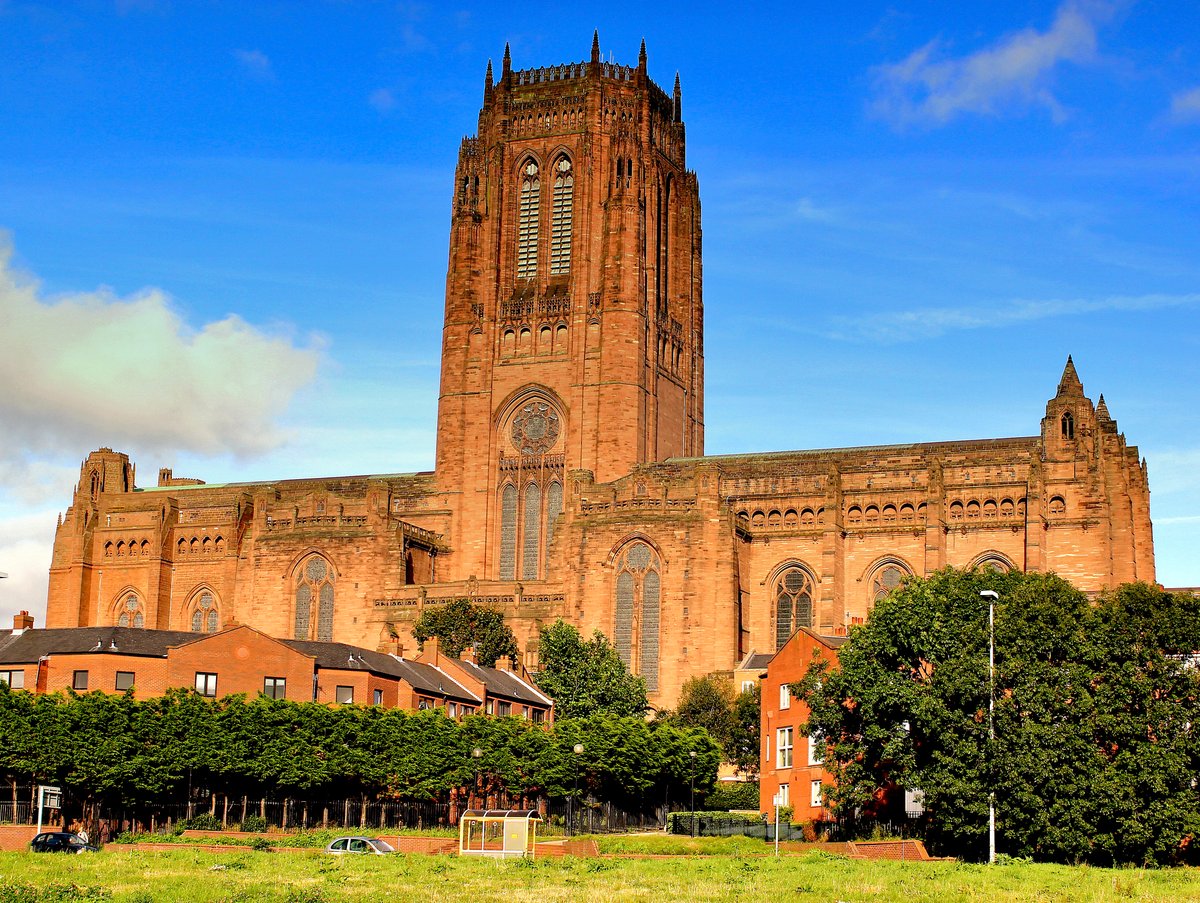
Located to the north of the Liverpool Anglican Cathedral, the Grade I listed building is surrounded by listed Grade II cast iron railings and gate piers. The interior houses various monuments, including a 1834 monument to the Nicholson family and several others dedicated to individuals who died between 1823 and 1868.
Sources: Wikipedia, OpenStreetMap, Wikidata, Wikimedia Commons

Written by Nicolo Ciampini
Discuss this with the author and others
No comments yet. Be the first to start the conversation.